Hey there! As a supplier of QY Submersible Pumps, I often get asked about the performance curve of these pumps. It's a crucial topic, as understanding the performance curve can help you make the right choice when it comes to selecting a pump for your specific needs. So, let's dive right in and explore what the performance curve of the QY Submersible Pump is all about.
What is a Performance Curve?
Before we talk about the QY Submersible Pump specifically, let's quickly go over what a performance curve is. In simple terms, a performance curve is a graphical representation that shows how a pump performs under different operating conditions. It typically plots the pump's flow rate (usually measured in gallons per minute or cubic meters per hour) on the horizontal axis and the head (the height the pump can lift the water) on the vertical axis. Other important data, like power consumption, efficiency, and NPSH (Net Positive Suction Head), might also be included in these curves.
Understanding the QY Submersible Pump Performance Curve
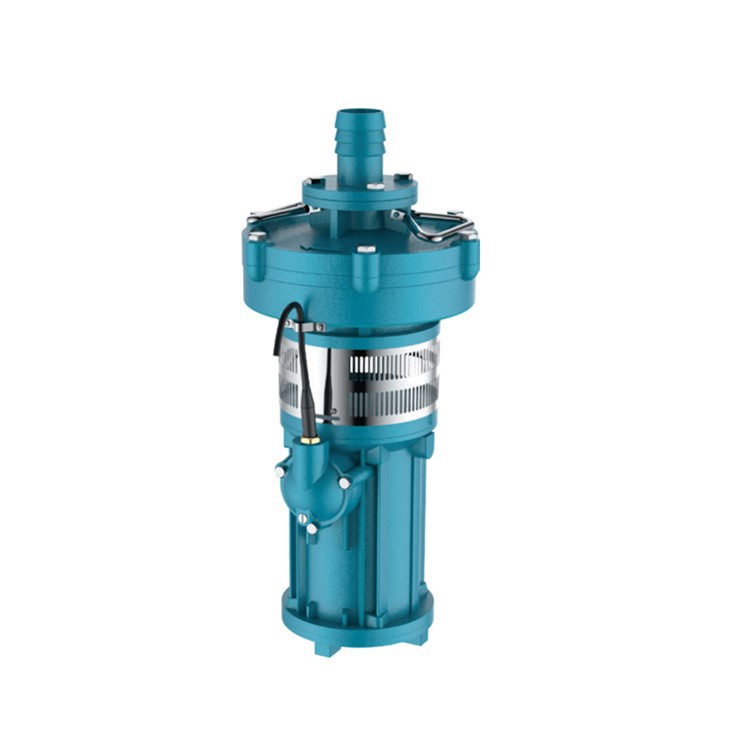
The QY Submersible Pump is designed for various applications, including drainage, irrigation, and water supply. Its performance curve provides valuable insights into how well it can handle these tasks.
Flow Rate vs. Head
The most basic part of the QY Submersible Pump performance curve is the relationship between flow rate and head. Generally, as the head (the height the water needs to be pumped) increases, the flow rate decreases. This is because the pump has to work harder to push the water to a greater height, and as a result, it can't move as much water per unit of time.
For example, at a low head, say 5 meters, the QY Submersible Pump might be able to achieve a high flow rate of 50 cubic meters per hour. But if you need to pump the water to a height of 20 meters, the flow rate might drop to 20 cubic meters per hour. This relationship is crucial to understand because it helps you determine if the pump can meet your specific flow and head requirements.
Efficiency
Another important aspect of the performance curve is the pump's efficiency. Efficiency is the ratio of the useful power output (the power used to move the water) to the power input (the electrical power consumed by the pump). The QY Submersible Pump typically has an efficiency curve that shows how efficient it is at different flow rates and heads.
There's usually an optimal point on the curve where the pump operates at its highest efficiency. This is the sweet spot where you get the most water moved for the least amount of energy consumed. When selecting a QY Submersible Pump, it's a good idea to try to operate it as close to this optimal point as possible to save on energy costs.
Power Consumption
The performance curve also shows how much power the QY Submersible Pump consumes at different operating points. As you might expect, the power consumption increases as the head and flow rate increase. This is because the pump has to work harder to move more water to a greater height.
Knowing the power consumption is important for budgeting and ensuring that you have an appropriate power supply for the pump. If you're using the pump in a remote location or on a limited power source, you'll want to pay close attention to this part of the curve.
Comparing with Other Submersible Pumps
It's also interesting to compare the QY Submersible Pump with other types of submersible pumps, like the QD Submersible Pump and the QDX Submersible Pump.
The QD Submersible Pump is known for its simple structure and reliable performance. Its performance curve might show a different relationship between flow rate and head compared to the QY Submersible Pump. For instance, it might have a steeper drop in flow rate as the head increases, which could make it more suitable for applications where the head is relatively constant.
The QDX Submersible Pump, on the other hand, is often designed for more demanding applications. Its performance curve might show higher flow rates and heads compared to the QY Submersible Pump, but it might also consume more power.
Factors Affecting the Performance Curve
There are several factors that can affect the performance curve of the QY Submersible Pump.
Fluid Properties
The properties of the fluid being pumped, such as its density and viscosity, can have a significant impact on the pump's performance. For example, if you're pumping a thick, viscous fluid, the pump will have to work harder to move it, which can result in a lower flow rate and higher power consumption.
Pump Speed
The speed at which the pump operates also affects its performance. Most QY Submersible Pumps are designed to operate at a specific speed, but if you change the speed (for example, by using a variable frequency drive), the performance curve will change. Generally, increasing the pump speed will increase the flow rate and head, but it will also increase the power consumption.
Wear and Tear
Over time, the components of the QY Submersible Pump will wear out, which can affect its performance. For example, if the impeller is worn, it won't be able to move the water as efficiently, which can result in a lower flow rate and reduced efficiency. Regular maintenance and inspection are important to ensure that the pump continues to operate within its designed performance curve.

How to Use the Performance Curve
So, now that you understand what the performance curve of the QY Submersible Pump is and what factors can affect it, how do you use this information?
Selecting the Right Pump
When you're selecting a QY Submersible Pump for your application, you need to determine your specific flow rate and head requirements. Then, you can look at the performance curve to see if the pump can meet these requirements. Make sure to also consider the pump's efficiency and power consumption to ensure that it's cost-effective to operate.
Troubleshooting
If you're experiencing problems with the QY Submersible Pump, such as low flow rate or high power consumption, you can refer to the performance curve to diagnose the issue. For example, if the pump is operating at a lower flow rate than expected, you can check the head and see if it's within the normal range. If the head is too high, you might need to adjust the system to reduce the head.
Conclusion
The performance curve of the QY Submersible Pump is a valuable tool that provides important information about how the pump performs under different operating conditions. By understanding this curve, you can select the right pump for your application, operate it efficiently, and troubleshoot any problems that might arise.
If you're in the market for a QY Submersible Pump or have any questions about its performance curve, don't hesitate to reach out. We're here to help you make the best choice for your needs. You can visit our QY Submersible Pump page to learn more about our products and get in touch with us for procurement and further discussions.
References
- Pump Handbook, Karassik, I. J., Messina, J. P., Cooper, P. T., & Heald, C. C. (2008).
- Hydraulic Institute Standards for Pumps, Hydraulic Institute (2012).