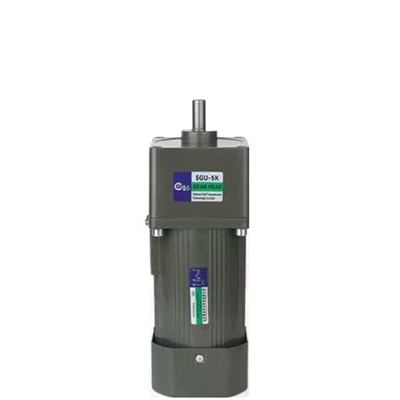
Hey there! As a supplier of 220V AC Gear Motors, I often get asked about how to connect these motors to a controller. It may seem a bit tricky at first, but with the right guidance, you can do it like a pro.
Understanding the Basics
First off, let's talk about what a 220V AC Gear Motor is. It's a motor that runs on a 220 - volt alternating current and comes with a gear mechanism. This gear mechanism helps in reducing the speed of the motor while increasing its torque. You can find different power options like the 400W AC Gear Motor and the 200W AC Gear Motor depending on your specific needs. These motors are used in a wide range of applications, from industrial machinery to home appliances.
The controller, on the other hand, is like the brain of the operation. It helps regulate the speed, direction, and sometimes even the torque of the motor. You can think of it as a way to make your motor do exactly what you want it to do.
Tools You'll Need
Before you start connecting your 220V AC Gear Motor to the controller, you'll need a few tools. Here's a quick list:
- A screwdriver set: You'll need this to open the motor and controller enclosures and to make the necessary electrical connections.
- Wire strippers: These are used to remove the insulation from the electrical wires so you can make proper connections.
- Electrical tape: It's essential for insulating the connections and preventing any short - circuits.
- A multimeter: This tool helps you measure voltage, current, and resistance. It's useful for checking if the connections are correct and if the power supply is stable.
Safety First
Working with 220V AC power is dangerous, so it's crucial to take all the necessary safety precautions. Here are some tips:
- Always turn off the power supply before making any connections. This will prevent you from getting an electric shock.
- Wear insulated gloves and safety glasses to protect yourself.
- Make sure the work area is dry and well - ventilated.
- Double - check all the connections before turning the power back on.
Steps to Connect the Motor to the Controller
Step 1: Identify the Wires
The first thing you need to do is identify the wires on both the motor and the controller. Usually, the motor will have at least three wires: a live wire, a neutral wire, and a ground wire. The live wire carries the 220V AC power, the neutral wire completes the electrical circuit, and the ground wire provides a safe path for the electricity in case of a short - circuit.
The controller will also have its own set of wires for power input, motor output, and control signals. Refer to the user manuals of both the motor and the controller to make sure you know which wire is which.


Step 2: Prepare the Wires
Using your wire strippers, carefully remove about half an inch of insulation from the ends of the wires you need to connect. Be careful not to cut the actual wire strands. After stripping the insulation, twist the wire strands together to make sure they are tight and won't come apart easily.
Step 3: Connect the Power Wires
Connect the live and neutral wires from the power supply to the corresponding input terminals on the controller. Make sure to tighten the screws on the terminals so that the wires are held firmly in place. Then, connect the ground wire to the ground terminal on the controller.
Step 4: Connect the Motor to the Controller
Now, it's time to connect the motor to the controller. Locate the motor output terminals on the controller and connect the live, neutral, and ground wires from the motor to these terminals. Again, make sure the connections are secure.
Step 5: Check the Connections
Once you've made all the connections, use your multimeter to check if the connections are correct. Check the voltage at the input terminals of the controller to make sure it's 220V AC. Then, check the resistance between the motor terminals to make sure there are no short - circuits.
Step 6: Turn on the Power
If everything checks out, you can now turn on the power supply. But be careful! Watch the motor and the controller carefully for any signs of overheating, sparking, or abnormal noise. If you notice anything wrong, turn off the power immediately and double - check your connections.
Troubleshooting
Sometimes, things may not go as smoothly as planned. Here are some common problems and their solutions:
- The motor doesn't start: Check if the power supply is working and if all the connections are secure. Also, check if the controller is set to the correct mode.
- The motor runs too fast or too slow: Adjust the speed control settings on the controller. If the problem persists, there may be an issue with the controller or the motor itself.
- There is a sparking or overheating: This could be a sign of a short - circuit. Turn off the power immediately and check all the connections. Make sure there are no loose wires or exposed conductors.
Why Choose Our 220V AC Gear Motors?
As a supplier, we take pride in offering high - quality Gear Reduction Motor. Our motors are designed to be reliable, efficient, and easy to use. We have a wide range of power options and gear ratios to choose from, so you can find the perfect motor for your application. Whether you're working on a small DIY project or a large industrial installation, our motors will get the job done.
Contact Us for Purchase and Consultation
If you're interested in purchasing our 220V AC Gear Motors or need more information on how to connect them to a controller, don't hesitate to reach out. We have a team of experts ready to assist you with all your motor needs. Whether you have questions about installation, operation, or maintenance, we're here to help.
References
- General knowledge about electrical engineering and motor technology.
- User manuals of 220V AC Gear Motors and controllers.