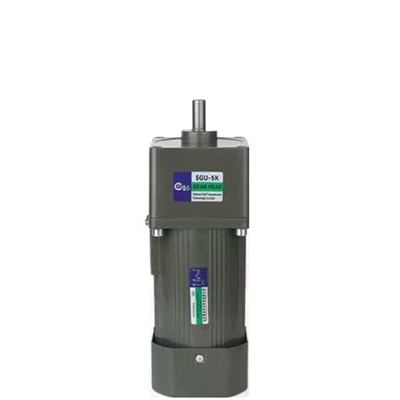
Hey there! I'm a supplier of 220V AC Gear Motors. In this blog, I'm gonna share some tips on how to protect a 220V AC Gear Motor from short - circuit. As someone who deals with these motors on a daily basis, I've seen firsthand the damage a short - circuit can cause. So, let's dig in!
Understanding Short - Circuits in 220V AC Gear Motors
First off, what exactly is a short - circuit? Well, it's basically an abnormal connection between two points in an electrical circuit that have different voltages. In a 220V AC Gear Motor, this can happen due to a bunch of reasons. For instance, damaged insulation on the motor's wires can expose the conductors, allowing them to touch each other and create a short - circuit. Moisture or dirt getting into the motor can also cause electrical paths to form where they shouldn't, leading to a short.
When a short - circuit occurs in a 220V AC Gear Motor, it can lead to a huge surge in current. This high - current flow can overheat the motor's components, damage the windings, and even cause a fire in extreme cases. It's not something to take lightly, that's for sure!
Using Circuit Breakers
One of the most common and effective ways to protect a 220V AC Gear Motor from short - circuits is by using circuit breakers. Circuit breakers are like the bodyguards of your electrical system. They're designed to automatically shut off the power when they detect an abnormal current flow, like the one caused by a short - circuit.
There are different types of circuit breakers available, and you need to choose the right one for your 220V AC Gear Motor. For example, thermal - magnetic circuit breakers are a popular choice. They use a combination of thermal and magnetic elements to trip the breaker. The thermal element responds to long - term overcurrents, while the magnetic element reacts quickly to short - circuit currents.
When selecting a circuit breaker for your motor, make sure to consider the motor's rated current. You don't want a breaker that trips too easily, but you also need one that will protect the motor in case of a short. A good rule of thumb is to choose a circuit breaker with a rated current slightly higher than the motor's full - load current.
Installing Fuses
Fuses are another great option for protecting your 220V AC Gear Motor. They work in a similar way to circuit breakers, but they're a bit more of a one - time deal. A fuse contains a thin wire that melts when it's exposed to a high - current flow, like during a short - circuit. Once the wire melts, the circuit is broken, and the power to the motor is cut off.
There are different types of fuses, such as fast - acting fuses and time - delay fuses. Fast - acting fuses are designed to blow quickly when they detect a short - circuit, which is great for protecting sensitive components. Time - delay fuses, on the other hand, can withstand temporary current surges without blowing. They're often used in motors that experience high inrush currents when starting up.
Just like with circuit breakers, you need to choose the right fuse for your motor. Consider the motor's current rating and the type of load it's driving. You can find fuses in different ampere ratings, so make sure to pick the one that's suitable for your 220V AC Gear Motor.
Insulation Monitoring
Proper insulation is crucial for preventing short - circuits in a 220V AC Gear Motor. Over time, the insulation on the motor's wires can degrade due to factors like heat, moisture, and mechanical stress. That's why it's important to regularly monitor the insulation resistance of the motor.
You can use an insulation resistance tester to measure the resistance between the motor's windings and the ground. A low insulation resistance value can indicate that the insulation is damaged and there's a risk of a short - circuit. If you find that the insulation resistance is below the recommended level, you may need to repair or replace the damaged insulation.
It's also a good idea to keep the motor clean and dry. Moisture can seep into the motor and cause the insulation to break down more quickly. Make sure the motor is installed in a well - ventilated area to prevent overheating, which can also damage the insulation.
Grounding the Motor
Grounding is an essential safety measure when it comes to protecting a 220V AC Gear Motor from short - circuits. Grounding provides a path for electrical current to flow safely into the ground in case of a short - circuit.
To ground your motor, you need to connect it to a proper grounding system. This usually involves connecting the motor's frame to a grounding electrode, such as a ground rod. The grounding wire should be of an appropriate size to handle the fault current.
A good grounding system not only protects the motor from short - circuits but also reduces the risk of electrical shock to people working around the motor. It's a simple yet effective way to enhance the safety of your electrical system.
Using Surge Protectors
Surges in voltage can also contribute to short - circuits in a 220V AC Gear Motor. Lightning strikes, power grid fluctuations, and other electrical events can cause voltage spikes. These spikes can damage the motor's insulation and lead to short - circuits.
Surge protectors are designed to divert the excess voltage away from the motor and into the ground. They act as a buffer between the motor and the power source, protecting the motor from these harmful voltage surges.
There are different types of surge protectors available, including whole - house surge protectors and point - of - use surge protectors. For a 220V AC Gear Motor, a point - of - use surge protector installed near the motor is often a good choice. It provides targeted protection for the motor.
Regular Maintenance and Inspection
Regular maintenance and inspection are key to keeping your 220V AC Gear Motor in good condition and preventing short - circuits. You should visually inspect the motor regularly for any signs of damage, such as cracked insulation, loose connections, or burnt components.


Check the motor's wiring for any signs of wear and tear. Make sure all the connections are tight and secure. Loose connections can cause arcing, which can lead to short - circuits.
Also, keep the motor clean and free from dirt and debris. A dirty motor can overheat more easily, which can damage the insulation and increase the risk of a short - circuit.
Conclusion
Protecting a 220V AC Gear Motor from short - circuits is essential for its longevity and safety. By using circuit breakers, fuses, monitoring insulation, grounding the motor, using surge protectors, and performing regular maintenance, you can significantly reduce the risk of short - circuits.
If you're in the market for a high - quality 220V AC Gear Motor, we've got you covered. We offer a wide range of motors, including the 200W AC Gear Motor, Worm Gear Reduction Motor, and Gear Reduction Motor. Our motors are built to last and come with all the necessary protection features.
If you have any questions or want to discuss your specific requirements, don't hesitate to reach out. We're here to help you find the perfect motor for your needs and ensure its proper protection.
References
- Electrical Installation Handbook, Schneider Electric
- Motor Protection Guide, Eaton
- Insulation Resistance Testing, Megger