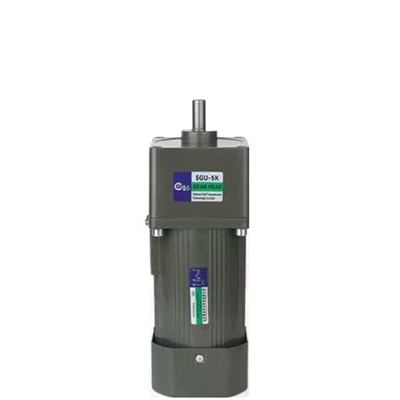
As a trusted supplier of Spindle Servo Motor, I understand the critical importance of monitoring the temperature of these motors. In industrial applications, spindle servo motors are often subjected to high loads and continuous operation, which can lead to excessive heat generation. If not properly monitored and controlled, high temperatures can significantly reduce the motor's lifespan, cause malfunctions, and even pose safety risks. In this blog post, I will share some effective methods for monitoring the temperature of a spindle servo motor.
Why Temperature Monitoring is Crucial
Before delving into the monitoring methods, it's essential to understand why temperature monitoring is so crucial for spindle servo motors. Spindle servo motors are designed to operate within a specific temperature range. When the temperature exceeds this range, several problems can occur.
First, high temperatures can cause the insulation materials in the motor to degrade. The insulation is vital for preventing electrical shorts and ensuring the motor's proper functioning. As the insulation breaks down, the risk of short circuits increases, which can lead to motor failure and potentially damage other components in the system.
Second, excessive heat can affect the magnetic properties of the motor's permanent magnets. Permanent Magnet Motor Synchronous motors rely on the stable magnetic field provided by these magnets to generate torque. When the temperature rises, the magnetic strength can decrease, resulting in a reduction in motor performance and efficiency.
Finally, overheating can lead to thermal expansion of the motor's components. This expansion can cause mechanical stress, misalignment, and increased wear and tear on the motor's bearings and other moving parts, ultimately shortening the motor's lifespan.
Methods of Temperature Monitoring
Thermocouples
Thermocouples are one of the most commonly used temperature sensors for monitoring spindle servo motors. A thermocouple consists of two different metals joined together at one end. When there is a temperature difference between the junction and the other end of the thermocouple, a voltage is generated. This voltage is proportional to the temperature difference, allowing for accurate temperature measurement.
One of the advantages of thermocouples is their wide temperature range. They can measure temperatures from -200°C to over 2000°C, making them suitable for a variety of applications. They are also relatively inexpensive and durable, with a long lifespan.
To use a thermocouple for monitoring a spindle servo motor, it is typically installed in close proximity to the motor's windings or other critical components. The thermocouple is connected to a temperature controller or data acquisition system, which reads the voltage and converts it into a temperature value.

Resistance Temperature Detectors (RTDs)
Resistance Temperature Detectors, or RTDs, are another popular choice for temperature monitoring. RTDs work based on the principle that the electrical resistance of a metal changes with temperature. Most RTDs are made of platinum, which has a very stable and predictable resistance-temperature relationship.
Compared to thermocouples, RTDs offer higher accuracy and better stability. They are also less affected by electromagnetic interference, making them suitable for use in electrically noisy environments. However, RTDs are generally more expensive than thermocouples and have a more limited temperature range, typically from -200°C to 850°C.
When using an RTD to monitor a spindle servo motor, it is usually embedded in the motor's stator or other key areas. The RTD is connected to a measuring circuit, which measures the resistance and calculates the corresponding temperature.
Infrared Thermometers
Infrared thermometers are non-contact temperature sensors that measure the infrared radiation emitted by an object to determine its temperature. They are particularly useful for monitoring the surface temperature of a spindle servo motor without the need for direct contact.
One of the main advantages of infrared thermometers is their ability to provide instant temperature readings. They can also measure the temperature of moving or hard-to-reach objects, making them suitable for monitoring motors in operation. However, infrared thermometers are affected by factors such as emissivity, distance, and the presence of intervening materials, which can introduce measurement errors.
To use an infrared thermometer for monitoring a spindle servo motor, the user simply aims the thermometer at the motor's surface and takes a reading. It is important to ensure that the thermometer is properly calibrated and that the measurement conditions are appropriate to obtain accurate results.
Thermal Imaging Cameras
Thermal imaging cameras are similar to infrared thermometers in that they also detect infrared radiation to create a thermal image of an object. However, thermal imaging cameras can provide a more detailed and comprehensive view of the temperature distribution across the surface of a spindle servo motor.
Thermal imaging cameras are particularly useful for identifying hot spots and areas of uneven temperature distribution in a motor. This information can help diagnose potential problems, such as overloaded windings or blocked cooling channels, before they lead to more serious issues.
Using a thermal imaging camera to monitor a spindle servo motor involves capturing a thermal image of the motor's surface. The image can then be analyzed using specialized software to identify areas of concern and track changes in temperature over time.
Implementing a Temperature Monitoring System
Once you have chosen the appropriate temperature monitoring method, the next step is to implement a temperature monitoring system. Here are some key considerations:
Sensor Placement
Proper sensor placement is crucial for accurate temperature monitoring. The sensors should be installed in areas where the temperature is most likely to be critical, such as near the motor's windings, bearings, or other heat-generating components. It is also important to ensure that the sensors are securely mounted and protected from mechanical damage and environmental factors.
Data Acquisition and Analysis
The temperature data collected by the sensors needs to be acquired and analyzed in real-time. This can be done using a temperature controller, data acquisition system, or a programmable logic controller (PLC). The system should be able to display the temperature readings, set alarm thresholds, and record the data for future analysis.
Alarm and Control Functions
A temperature monitoring system should include alarm and control functions to alert operators when the temperature exceeds a safe level. When an alarm is triggered, appropriate actions can be taken, such as reducing the motor's load, increasing the cooling rate, or shutting down the motor to prevent damage.
Conclusion
Monitoring the temperature of a spindle servo motor is essential for ensuring its reliable operation and longevity. By using the appropriate temperature monitoring methods and implementing a comprehensive monitoring system, you can detect potential problems early, prevent costly breakdowns, and optimize the performance of your motor.
As a leading supplier of Spindle Servo Motor, we are committed to providing high-quality products and comprehensive support to our customers. If you have any questions about temperature monitoring or need assistance in selecting the right motor for your application, please feel free to contact us. We look forward to the opportunity to discuss your specific requirements and help you find the best solutions for your business.
References
- "Electric Motor Temperature Monitoring and Protection" by IEEE Industry Applications Society.
- "Temperature Sensors: Principles, Characteristics, and Applications" by John W. N. Sullivan.
- Product manuals and technical documents from spindle servo motor manufacturers.