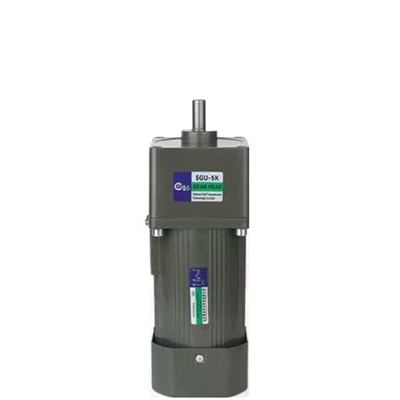
Hey there! As a supplier of Inverter Duty Motors, I've seen firsthand how electromagnetic interference (EMI) can be a real headache for users. In this blog, I'm gonna share some tips on how to reduce the electromagnetic interference of an inverter duty motor.
First off, let's understand what EMI is. Electromagnetic interference is basically the disturbance that affects an electrical circuit due to either electromagnetic induction or electromagnetic radiation emitted from an external source. In the case of inverter duty motors, this interference can cause all sorts of problems, like malfunctions in control systems, reduced motor efficiency, and even damage to sensitive electronic components.
1. Proper Grounding
One of the simplest yet most effective ways to reduce EMI is proper grounding. A good ground provides a low - impedance path for the unwanted electrical currents to flow safely to the earth. When installing an inverter duty motor, make sure the motor frame, inverter enclosure, and all associated electrical equipment are properly grounded. Use high - quality grounding conductors with sufficient cross - sectional area to handle the fault currents. A common mistake is to use a thin or corroded grounding wire, which can increase the impedance and defeat the purpose of grounding.
2. Shielding
Shielding is another great way to combat EMI. We can use shielded cables for the motor power supply and control signals. The shield acts as a barrier, preventing the electromagnetic fields from escaping or entering the cable. For the motor itself, some manufacturers offer motors with built - in shielding. This can be in the form of a conductive coating on the motor housing or a shielded winding. When using shielded cables, it's important to properly terminate the shield. The shield should be connected to the ground at both ends of the cable to ensure maximum effectiveness.
3. Filtering
Filtering is an essential technique to reduce EMI. There are different types of filters that can be used in an inverter duty motor system. Line filters, for example, can be installed between the power source and the inverter. These filters are designed to block high - frequency noise while allowing the power frequency (usually 50 or 60 Hz) to pass through. There are also output filters that can be placed between the inverter and the motor. These filters can help smooth out the voltage and current waveforms, reducing the electromagnetic emissions.
4. Layout and Installation
The layout and installation of the inverter duty motor system also play a crucial role in reducing EMI. Keep the power cables and control cables separate. Running them in the same conduit or tray can cause the electromagnetic fields from the power cables to induce interference in the control cables. Also, try to minimize the length of the cables. Shorter cables mean less area for electromagnetic radiation and induction. When installing the inverter and the motor, make sure they are properly spaced apart. This can reduce the coupling of electromagnetic fields between them.
5. Selecting the Right Motor
As a supplier, I know that not all motors are created equal when it comes to EMI. Some motors, like the IE1 Three Phase Motor, Y2 Three Phase Motor, and Cast Iron Three Phase Motor, are designed with features that can help reduce EMI. These motors often have better winding designs and insulation materials that can minimize the electromagnetic emissions. When choosing a motor, look for ones that meet the relevant EMI standards.
6. Software and Control Strategies
In modern inverter duty motor systems, software and control strategies can also be used to reduce EMI. Some inverters have built - in algorithms that can adjust the switching frequency to avoid frequencies that are known to cause interference. For example, by changing the switching frequency slightly, we can move the electromagnetic emissions to a frequency range where they are less likely to cause problems. Also, advanced control strategies like vector control can help optimize the motor operation, reducing the irregularities in the current and voltage waveforms that can lead to EMI.
7. Maintenance
Regular maintenance is important to keep the EMI levels in check. Over time, the shielding, grounding, and filtering components can degrade. Check the grounding connections for tightness and corrosion regularly. Inspect the shielded cables for any damage to the shield. Replace any worn - out filters. A well - maintained motor system is less likely to generate excessive EMI.


In conclusion, reducing the electromagnetic interference of an inverter duty motor requires a combination of proper grounding, shielding, filtering, layout, motor selection, software strategies, and maintenance. By following these tips, you can ensure that your inverter duty motor system operates smoothly, with minimal interference.
If you're in the market for an inverter duty motor or have any questions about reducing EMI, don't hesitate to reach out. We're here to help you find the best solution for your needs. Let's start a conversation about your motor requirements and how we can work together to make your system more efficient and reliable.
References
- "Electromagnetic Compatibility Engineering" by Henry W. Ott
- "Electric Motors and Drives: Fundamentals, Types, and Applications" by Austin Hughes and Bill Drury