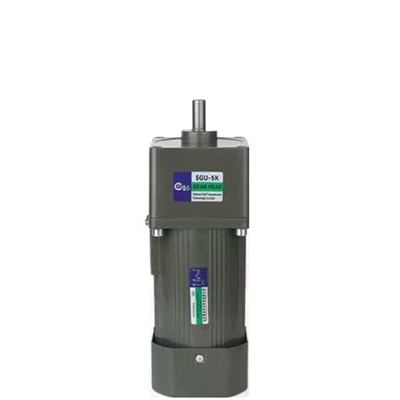
As a seasoned supplier of single phase motors, I've witnessed firsthand the critical role that thermal protectors play in these essential pieces of equipment. In this blog, I'll delve into the function of thermal protectors in single phase motors, explaining why they are so important and how they contribute to the overall performance and longevity of the motor.
Understanding Single Phase Motors
Before we dive into the role of thermal protectors, let's briefly recap what single phase motors are. Single phase motors are widely used in a variety of applications, from household appliances like refrigerators and fans to small industrial machinery. They operate on a single alternating current (AC) power supply, making them simpler and more cost - effective compared to three - phase motors.
However, single phase motors also have their limitations. They often face challenges such as starting torque issues and are more prone to overheating due to the nature of their design and the load they carry. This is where thermal protectors come into play.
The Function of Thermal Protectors
Overheat Protection
The primary function of a thermal protector in a single phase motor is to protect the motor from overheating. Overheating can occur due to several reasons, including excessive load, poor ventilation, or a malfunction in the motor's electrical components. When a motor overheats, the insulation on the motor's windings can start to break down. This can lead to short - circuits, which not only damage the motor but can also pose a safety hazard, such as the risk of fire.
A thermal protector is typically a temperature - sensitive device. It is designed to detect when the temperature of the motor exceeds a certain safe limit. Once this limit is reached, the thermal protector will automatically interrupt the electrical circuit, cutting off the power supply to the motor. This action stops the motor from running and allows it to cool down. Once the motor has cooled to a safe temperature, the thermal protector will reset, and the motor can resume normal operation.
For example, in our YL Series Single Phase Motor, the thermal protector ensures that the motor does not get damaged due to overheating, even when operating under heavy loads for extended periods.
Preventing Motor Burn - out
Motor burn - out is a serious issue that can result in significant financial losses for users. A burned - out motor often needs to be replaced, which can be expensive and time - consuming. Thermal protectors act as a safeguard against motor burn - out by preventing the motor from operating in an overheated state for too long.
By interrupting the power supply when the temperature is too high, the thermal protector reduces the stress on the motor's components. This helps to extend the lifespan of the motor and reduces the likelihood of premature failure. Our ML Series Single Phase Motor is equipped with a high - quality thermal protector that provides reliable protection against motor burn - out, ensuring long - term performance and cost - effectiveness for our customers.
Enhancing Safety
Safety is of utmost importance when it comes to electrical equipment. Overheating motors can pose a fire risk, especially in environments where there are flammable materials or in residential settings. Thermal protectors significantly enhance the safety of single phase motors by preventing overheating and the associated risks.
In addition to preventing fires, thermal protectors also protect users from electrical shocks. When the motor is overheating, there is an increased risk of electrical faults, which can expose users to dangerous electrical currents. By cutting off the power supply, the thermal protector reduces this risk and ensures a safer operating environment. Our 220 Volt Single Phase Motor is designed with safety in mind, and the thermal protector is a key component in ensuring that the motor meets high - safety standards.
Types of Thermal Protectors
There are two main types of thermal protectors commonly used in single phase motors: automatic reset thermal protectors and manual reset thermal protectors.
Automatic Reset Thermal Protectors
Automatic reset thermal protectors are designed to reset themselves once the motor has cooled down to a safe temperature. This type of thermal protector is convenient because it allows the motor to resume operation without the need for manual intervention. However, it can also be a disadvantage in some cases. For example, if the cause of the overheating has not been addressed, the motor may overheat again soon after the thermal protector resets.
Manual Reset Thermal Protectors
Manual reset thermal protectors require the user to manually reset the device after the motor has cooled down. This type of thermal protector is more conservative and provides an extra layer of safety. It forces the user to investigate the cause of the overheating before restarting the motor, which can help prevent further damage.
Factors Affecting Thermal Protector Performance
Several factors can affect the performance of a thermal protector in a single phase motor.
Ambient Temperature
The ambient temperature in which the motor operates can have a significant impact on the thermal protector's performance. In high - temperature environments, the motor may reach the temperature limit more quickly, causing the thermal protector to trip more frequently. On the other hand, in very cold environments, the thermal protector may not trip as expected, even if the motor is overheating due to other factors.
Motor Load
The load on the motor is another important factor. A motor operating under a heavy load will generate more heat than a motor operating under a light load. If the load on the motor is consistently high, the thermal protector may need to trip more often to protect the motor from overheating.


Ventilation
Proper ventilation is crucial for the effective operation of a single phase motor and its thermal protector. If the motor is not well - ventilated, heat will build up more quickly, increasing the likelihood of the thermal protector tripping. Ensuring that the motor has adequate ventilation can help reduce the frequency of thermal protector trips and improve the overall performance of the motor.
Conclusion
In conclusion, thermal protectors are an essential component of single phase motors. They play a vital role in protecting the motor from overheating, preventing motor burn - out, and enhancing safety. As a single phase motor supplier, we understand the importance of high - quality thermal protectors and ensure that all our motors, including the YL Series Single Phase Motor, ML Series Single Phase Motor, and 220 Volt Single Phase Motor, are equipped with reliable thermal protection.
If you are in the market for single phase motors and are looking for a supplier that prioritizes quality and safety, we would love to hear from you. Whether you need a motor for a small household appliance or an industrial application, we have the expertise and products to meet your needs. Contact us today to discuss your requirements and start a procurement negotiation.
References
- "Electric Motors and Drives: Fundamentals, Types and Applications" by Austin Hughes and Bill Drury.
- "Motor Protection Handbook" by various industry experts.