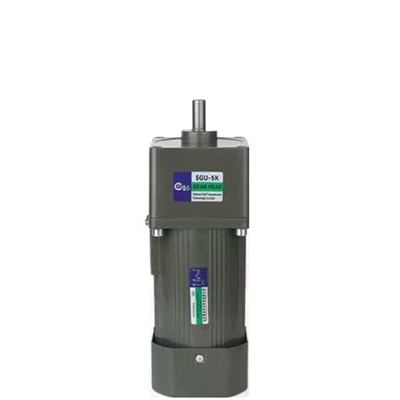
In the realm of industrial machinery, electric motors play a pivotal role in powering a wide array of equipment. The efficiency of these motors not only impacts operational costs but also has far - reaching implications for energy conservation and environmental sustainability. As a proud supplier of IE4 Electric Motors, I am excited to delve into a detailed comparison of the IE4 Electric Motor's efficiency with that of other motors commonly found in the market.
Understanding Motor Efficiency Standards
Before we embark on the comparison, it's essential to understand the motor efficiency standards. The International Electrotechnical Commission (IEC) has established a series of efficiency classes for motors, denoted as IE1, IE2, IE3, and IE4, with each higher - numbered class representing a more efficient motor. IE1 motors are the least efficient, while IE4 motors are at the pinnacle of efficiency in the current standard hierarchy.
Comparison with Y2 Three Phase Motor
The Y2 Three Phase Motor has been a workhorse in industrial applications for many years. It is a type of three - phase asynchronous motor known for its reliability and robustness. However, when it comes to efficiency, the Y2 motor falls short compared to the IE4 Electric Motor.
The Y2 Three Phase Motor typically operates at an efficiency level that may be classified as IE1 or IE2. These motors are designed to meet basic industrial requirements, but they consume more energy during operation. In contrast, the IE4 Electric Motor is engineered with advanced technology and high - quality materials to minimize energy losses. The core of an IE4 motor is made of low - loss electrical steel, which reduces hysteresis and eddy - current losses. Additionally, the winding design in IE4 motors is optimized to lower resistance losses.
Let's take a practical example. Consider a factory that uses a 10 - kilowatt motor to power a conveyor belt system. If a Y2 motor is used, it may have an efficiency of around 85% (a typical value for an IE1 or IE2 motor). This means that for every 10 kilowatts of electrical power input, only 8.5 kilowatts are converted into useful mechanical power, and 1.5 kilowatts are lost as heat. On the other hand, an IE4 Electric Motor with an efficiency of 94% will convert 9.4 kilowatts of the 10 - kilowatt input into mechanical power, with only 0.6 kilowatts lost. Over a year of continuous operation, the energy savings with the IE4 motor can be substantial, resulting in significant cost savings for the factory.
Comparison with IE2 Electric Motor
The IE2 Electric Motor represents an improvement over the lower - efficiency motors like the Y2. It is designed to meet the requirements of the IE2 efficiency class, which is more energy - efficient than IE1. But again, the IE4 Electric Motor outperforms it.
IE2 motors have better - designed cores and windings compared to IE1 motors, which helps in reducing energy losses. However, the IE4 Electric Motor takes efficiency to the next level. The IE4 motor uses more advanced insulation materials, which can withstand higher temperatures without significant degradation. This allows for a more compact design and better heat dissipation, further improving efficiency.
In terms of performance, an IE2 motor may have an efficiency of around 90% for a medium - sized motor. While this is a significant improvement over IE1 motors, the IE4 motor can achieve efficiencies of up to 96% or more. This difference in efficiency means that for the same amount of mechanical work, the IE4 motor will consume less electrical energy. For industries that rely on multiple motors for their operations, the cumulative energy savings from using IE4 motors instead of IE2 motors can be game - changing.
Factors Contributing to IE4 Electric Motor Efficiency
There are several key factors that contribute to the high efficiency of the IE4 Electric Motor. Firstly, the use of permanent magnets in some IE4 motor designs eliminates the need for field windings, reducing electrical losses. Permanent - magnet motors have a higher power - to - weight ratio and can operate at a higher efficiency over a wider range of loads.
Secondly, the advanced manufacturing processes used in the production of IE4 motors ensure precise tolerances. This reduces mechanical losses due to friction and vibration. The bearings in IE4 motors are of high quality and are designed to minimize frictional losses, allowing the motor to run smoothly and efficiently.
Another important factor is the intelligent control systems that can be integrated with IE4 motors. These control systems can adjust the motor's speed and torque according to the actual load requirements. For example, in a variable - speed application such as a pump or a fan, the control system can reduce the motor speed when the load is low, further saving energy.
Environmental and Economic Benefits
The high efficiency of the IE4 Electric Motor brings both environmental and economic benefits. From an environmental perspective, the reduced energy consumption means less demand for electricity generation. Since a large portion of electricity is still generated from fossil fuels, using IE4 motors helps in reducing greenhouse gas emissions. This is in line with global efforts to combat climate change and promote sustainable development.


Economically, the energy savings achieved by using IE4 motors translate into lower operating costs for businesses. The initial investment in an IE4 motor may be higher than that of a lower - efficiency motor, but the payback period is relatively short. Over the long term, the savings in energy costs far outweigh the additional upfront cost. Moreover, in some regions, there are incentives and subsidies available for businesses that adopt energy - efficient technologies, which further enhances the economic viability of using IE4 motors.
Conclusion and Call to Action
In conclusion, the IE4 Electric Motor is significantly more efficient than other motors such as the Y2 Three Phase Motor and the IE2 Electric Motor. Its advanced design, use of high - quality materials, and intelligent control systems make it a superior choice for industrial applications. The environmental and economic benefits it offers are undeniable.
If you are in the market for electric motors and are looking to reduce your energy costs, improve your environmental footprint, and enhance the performance of your industrial equipment, the IE4 Electric Motor is the ideal solution. I encourage you to reach out to us to discuss your specific requirements and explore how our IE4 Electric Motors can meet your needs. We are ready to provide you with detailed product information, technical support, and competitive pricing. Let's work together to build a more energy - efficient and sustainable future.
References
- International Electrotechnical Commission (IEC) standards on motor efficiency.
- Technical literature on three - phase asynchronous motors and permanent - magnet motors.
- Case studies on energy savings in industrial applications using high - efficiency motors.