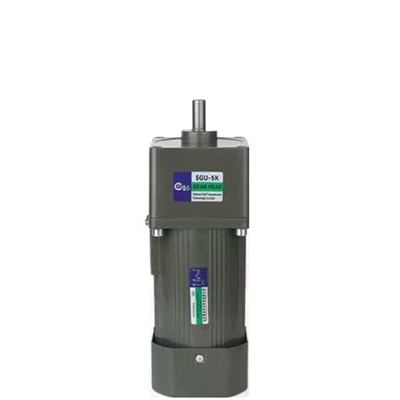
Hey there! As a supplier of 220V AC Gear Motors, I often get asked about the braking torque of these motors. So, I thought I'd take a moment to break it down for you and explain what it is, why it matters, and how it relates to our 220V AC Gear Motors.
First things first, let's talk about what braking torque actually is. In simple terms, braking torque is the amount of force that a motor's brake can apply to stop the motor's rotation. It's measured in Newton-meters (Nm) and is a crucial factor in determining how effectively a motor can be stopped and held in place when needed.
Why does braking torque matter? Well, in many applications, it's essential to be able to stop a motor quickly and accurately. For example, in conveyor systems, you need to be able to stop the conveyor belt immediately to prevent product damage or accidents. In robotics, precise control of the motor's movement is necessary, and the ability to stop the motor quickly can improve the overall performance and safety of the robot.


Now, let's get into how braking torque relates to our 220V AC Gear Motors. Our motors are designed to provide reliable and efficient performance in a wide range of applications. The braking torque of our 220V AC Gear Motors can vary depending on the specific model and configuration.
One of the factors that can affect the braking torque is the type of brake used. We offer different types of brakes for our motors, including electromagnetic brakes and mechanical brakes. Electromagnetic brakes are commonly used because they can provide quick and precise braking action. They work by using an electromagnetic field to engage the brake pads, which then apply friction to the motor's shaft to stop its rotation. Mechanical brakes, on the other hand, rely on physical mechanisms such as springs or levers to apply the braking force.
Another factor that can influence the braking torque is the motor's power rating. Generally, higher power motors will have a higher braking torque because they are capable of generating more force. For example, our 400W AC Gear Motor will typically have a higher braking torque compared to a lower power motor. This is important to consider when choosing a motor for your application, as you need to ensure that the braking torque is sufficient to meet your requirements.
The gear ratio of the motor also plays a role in the braking torque. A higher gear ratio can increase the braking torque because it multiplies the force applied by the brake. Our Worm Gear Reduction Motor and Gear Reduction Motor offer different gear ratios, allowing you to select the one that best suits your needs.
When it comes to selecting the right 220V AC Gear Motor with the appropriate braking torque for your application, there are a few things you need to consider. First, you need to determine the maximum load that the motor will need to stop. This includes the weight of the object being moved, as well as any additional forces such as inertia. Once you have an estimate of the load, you can then calculate the required braking torque.
You also need to think about the stopping time. How quickly do you need the motor to stop? A shorter stopping time will require a higher braking torque. Additionally, consider the frequency of braking. If the motor will be stopping and starting frequently, you need to ensure that the brake can handle the repeated stress without wearing out too quickly.
At our company, we understand that every application is unique, and we're here to help you find the perfect 220V AC Gear Motor with the right braking torque for your needs. Our team of experts can provide you with detailed technical information and guidance to ensure that you make the best choice.
If you're interested in learning more about our 220V AC Gear Motors or have any questions about braking torque, don't hesitate to reach out. We're always happy to have a chat with you and discuss your specific requirements. Whether you're working on a small DIY project or a large industrial application, we have the motors and expertise to support you.
In conclusion, braking torque is a critical aspect of 220V AC Gear Motors. It determines how effectively a motor can be stopped and held in place, which is essential for the safety and performance of many applications. By understanding the factors that affect braking torque and carefully considering your application's requirements, you can select the right motor for your needs. And if you need any assistance along the way, we're just a message away.
References
- General knowledge of electrical engineering and motor technology
So, if you're in the market for a 220V AC Gear Motor, get in touch with us today, and let's start a conversation about how we can help you with your project.