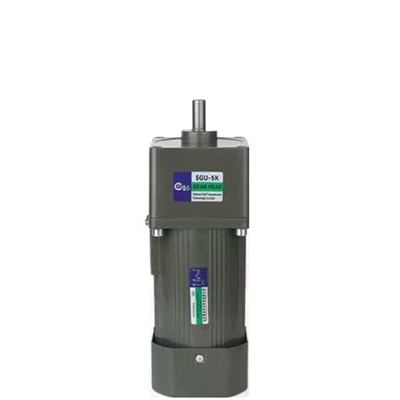
Hey there! As a supplier of Spindle Servo Motor, I often get asked about the stiffness of a spindle servo motor. So, I thought I'd write this blog to break it down for you in a simple and easy - to - understand way.
Let's start by talking about what stiffness means in the context of a spindle servo motor. Stiffness refers to the motor's ability to resist deformation or deflection when a load is applied. In other words, it's how well the motor can maintain its position and speed under different operating conditions.
Think of it like this: if you have a really stiff motor, it's like a strong athlete. When you throw a heavy load at it, it doesn't buckle or lose its rhythm. It keeps chugging along, doing its job just as it should. On the other hand, a motor with low stiffness is like a weakling. It might wobble and struggle when faced with a tough task, leading to inaccurate positioning and inconsistent performance.
There are a few key factors that contribute to the stiffness of a spindle servo motor. One of the most important is the motor's design and construction. Motors with a more robust mechanical structure tend to be stiffer. For example, a motor with a thick and well - engineered housing can better withstand external forces and vibrations.
The type of materials used in the motor also plays a big role. High - quality magnetic materials and strong shafts can enhance the motor's stiffness. Permanent Magnet Motor Synchronous motors, for instance, often have good stiffness because of the strong magnetic fields generated by the permanent magnets. These magnetic fields help to keep the rotor in place and reduce any unwanted movement.
Another factor is the control system of the motor. A well - tuned control system can improve the motor's stiffness by adjusting the current and voltage in real - time to counteract any disturbances. It's like having a smart coach that tells the motor exactly what to do to stay on track.
Now, why is the stiffness of a spindle servo motor so important? Well, in many industrial applications, precision is key. Whether it's in a CNC machine, a robotics system, or a printing press, the motor needs to be able to move accurately and consistently. A stiff motor ensures that the spindle can hold its position precisely, which is crucial for producing high - quality products.
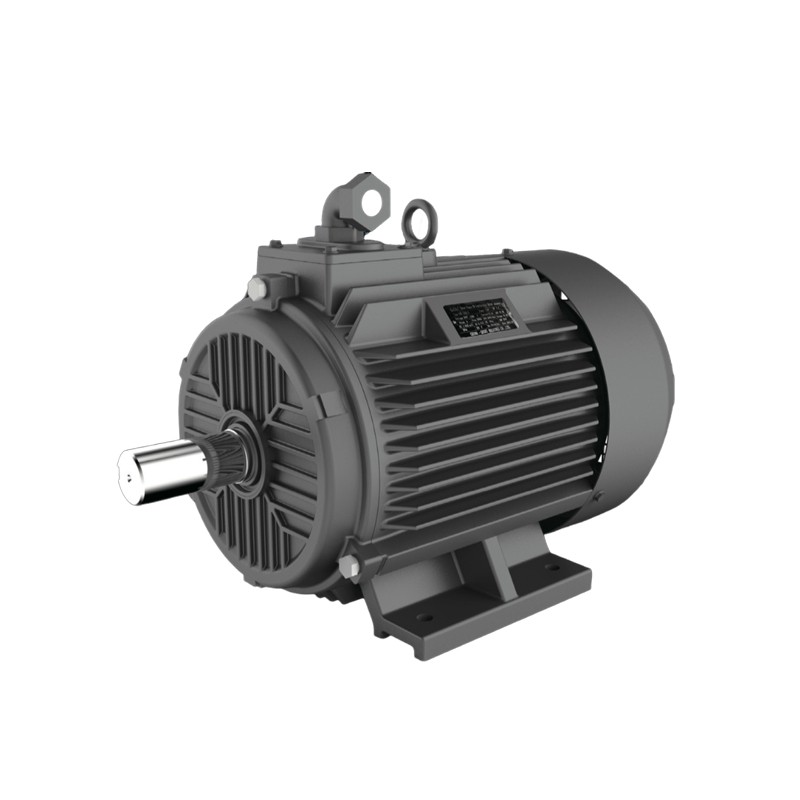

For example, in a CNC milling machine, if the spindle servo motor isn't stiff enough, the cutting tool might move slightly off - course, resulting in rough edges or inaccurate dimensions on the workpiece. This can lead to wasted materials and increased production costs.
In robotics, a motor with good stiffness allows the robot arm to move smoothly and precisely. It can pick up and place objects with high accuracy, which is essential for tasks like assembly and packaging.
Let's also talk about how we measure the stiffness of a spindle servo motor. One common way is to look at the torque - to - deflection ratio. This ratio tells us how much torque is required to cause a certain amount of deflection in the motor's shaft. A higher torque - to - deflection ratio means a stiffer motor.
We can also use specialized testing equipment to measure the motor's response to different loads and vibrations. These tests can give us a detailed picture of the motor's stiffness characteristics and help us identify any areas for improvement.
As a supplier, I always make sure that our Spindle Servo Motor s are designed and manufactured with high stiffness in mind. We use the latest materials and advanced manufacturing techniques to ensure that our motors can handle the toughest industrial applications.
Our R & D team is constantly working on improving the stiffness of our motors. We conduct extensive testing and optimization to make sure that our products meet the highest standards of performance and reliability.
If you're in the market for a spindle servo motor, it's important to consider the stiffness factor. Don't just focus on the price or the power rating. A motor with good stiffness can save you a lot of headaches in the long run by providing more accurate and consistent performance.
So, if you're interested in learning more about our spindle servo motors or have any questions about stiffness, feel free to reach out. We're always happy to have a chat about how our products can meet your specific needs. Whether you're a small - scale manufacturer or a large industrial company, we've got the right motor for you.
Let's work together to find the perfect spindle servo motor solution for your business. Just get in touch, and we'll start the conversation.
References
- Textbooks on motor engineering
- Industry research papers on servo motor performance