As a leading supplier of IE4 Electric Motors, I am often asked about the stator construction of these high - efficiency motors. In this blog, I'll delve deep into the details of the stator construction of IE4 Electric Motors, explaining its significance, components, and how it contributes to the overall performance of the motor.
The Significance of Stator in IE4 Electric Motors
The stator is one of the most crucial components of an electric motor. In an IE4 Electric Motor, which is known for its high energy efficiency and superior performance, the stator plays a pivotal role. It is responsible for creating a rotating magnetic field that interacts with the rotor to generate torque and ultimately drive the motor. A well - designed stator construction is essential for achieving the high efficiency levels that IE4 motors are renowned for.
Components of the Stator in IE4 Electric Motors
Stator Core
The stator core is typically made of laminated electrical steel sheets. These laminations are thin, usually around 0.35 - 0.5 mm thick, and are coated with an insulating layer. The use of laminations helps to reduce eddy current losses. Eddy currents are induced in the core when it is exposed to a changing magnetic field. By laminating the core, the path of these eddy currents is restricted, thereby minimizing the associated power losses.
In IE4 Electric Motors, high - grade electrical steel is often used for the stator core. These steels have low core loss characteristics, which means they can operate more efficiently even under high - frequency magnetic fields. The shape of the stator core is also carefully designed. It usually has a cylindrical shape with slots on the inner surface. These slots are used to house the stator windings.
Stator Windings
The stator windings are another critical part of the stator construction. They are made of copper or aluminum conductors. Copper is a popular choice due to its high electrical conductivity, which results in lower resistive losses. The windings are inserted into the slots of the stator core.
There are different types of stator windings, such as single - layer and double - layer windings. In IE4 Electric Motors, double - layer windings are often preferred. Double - layer windings offer better distribution of the magnetic field, which leads to a more sinusoidal magnetic flux density in the air - gap between the stator and the rotor. This, in turn, reduces harmonic losses and improves the overall efficiency of the motor.
The windings are also insulated to prevent short - circuits. High - quality insulation materials are used to ensure reliable operation, especially under high - voltage and high - temperature conditions. For example, materials like polyester film or mica tape are commonly used for insulation.
Stator Frame
The stator frame provides mechanical support for the stator core and windings. It also helps in dissipating heat generated during the operation of the motor. In IE4 Electric Motors, the stator frame is designed to be lightweight yet strong. Aluminum or cast iron is often used for the stator frame.
Aluminum frames are lightweight and have good thermal conductivity, which helps in efficient heat dissipation. Cast iron frames, on the other hand, are more robust and offer better vibration damping. The design of the frame also takes into account factors such as ventilation. Many IE4 motor frames have ventilation ducts or fins to enhance the cooling effect.
Comparison with Other Motor Types
When comparing the stator construction of IE4 Electric Motors with other motor types like IE2 Electric Motor and IE3 Electric Motor, several differences can be noted.

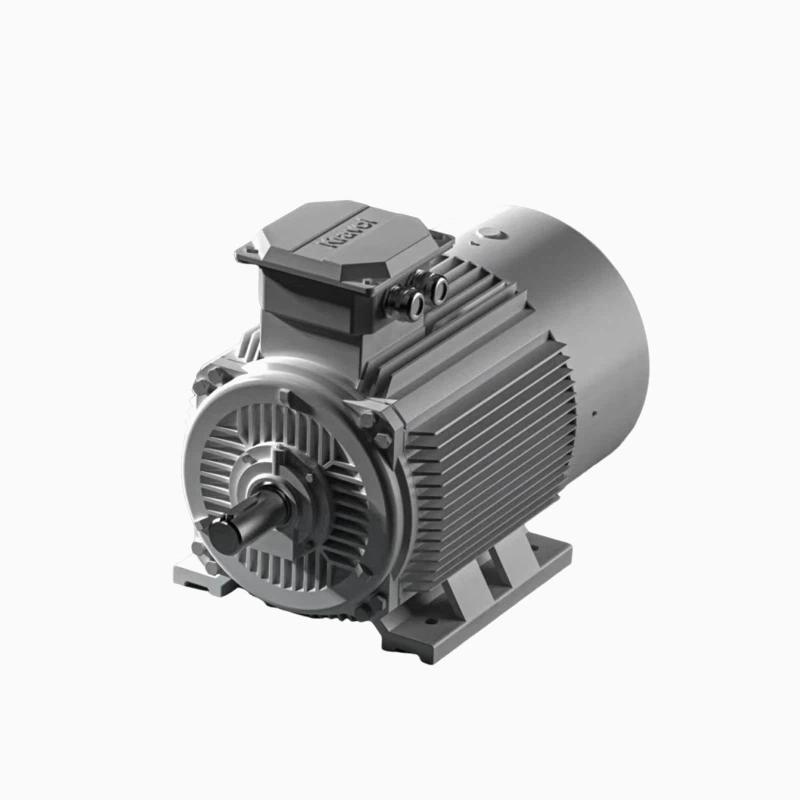
IE2 and IE3 motors have stator designs that are optimized for lower efficiency levels compared to IE4 motors. In terms of the stator core, IE2 and IE3 motors may use lower - grade electrical steel, which has relatively higher core losses. The stator windings in these motors may also have a simpler design, resulting in less efficient magnetic field distribution.
For example, the winding arrangement in IE2 motors might be more basic, leading to a less sinusoidal magnetic flux density in the air - gap. This can cause higher harmonic losses and lower overall efficiency. In contrast, IE4 motors are designed with more advanced stator construction techniques to minimize these losses and achieve high - efficiency operation.
Applications and Benefits of IE4 Electric Motors with Advanced Stator Construction
IE4 Electric Motors with their advanced stator construction find applications in a wide range of industries. For instance, in industrial pumps and fans, these motors can significantly reduce energy consumption. The high - efficiency stator design allows the motors to convert a larger proportion of electrical energy into mechanical energy, which means less energy is wasted as heat.
In the manufacturing industry, where motors are used for various processes, IE4 Electric Motors can improve the overall productivity and reduce operating costs. Their reliable stator construction also ensures long - term operation with minimal maintenance requirements.
Another important application is in the Three Phase Brake Motor systems. The high - performance stator of IE4 motors can provide better control and response in braking applications. The well - designed magnetic field created by the stator allows for more precise torque generation, which is crucial for effective braking.
Conclusion
In conclusion, the stator construction of IE4 Electric Motors is a sophisticated combination of advanced materials and design techniques. The stator core, windings, and frame are all carefully engineered to achieve high efficiency, low losses, and reliable operation. Compared to other motor types like IE2 and IE3 motors, IE4 motors offer significant advantages in terms of energy efficiency and performance.
If you are in the market for high - quality electric motors, our IE4 Electric Motors are an excellent choice. Their advanced stator construction ensures long - term savings on energy costs and reliable operation in various applications. Whether you need motors for industrial pumps, fans, or brake systems, we can provide you with the right solution. Please feel free to contact us for further information and to discuss your specific requirements for procurement. We look forward to working with you to meet your motor needs.
References
- Fitzgerald, A. E., Kingsley, C., & Umans, S. D. (2003). Electric Machinery. McGraw - Hill.
- Chapman, S. J. (2012). Electric Machinery Fundamentals. McGraw - Hill.