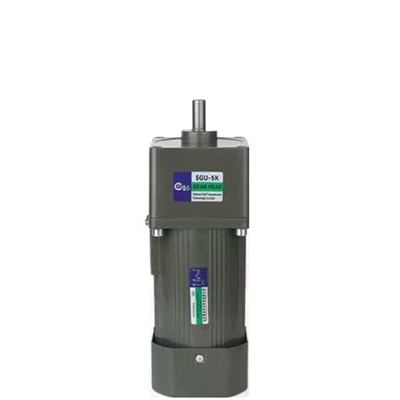
The IE4 electric motor represents the pinnacle of efficiency in the modern electric motor market. As a supplier of these high - performance motors, I often get asked about various technical aspects, and one question that frequently pops up is: "What is the starting torque of the IE4 Electric Motor?"


Understanding Torque
Before delving into the starting torque of IE4 electric motors, it's essential to understand what torque is. Torque is a measure of the force that can cause an object to rotate around an axis. In the context of an electric motor, torque is what enables the motor to start and drive a load. It is typically measured in Newton - meters (N·m).
There are different types of torque in an electric motor, including starting torque, running torque, and breakdown torque. Starting torque, as the name suggests, is the torque produced by the motor at the instant it starts from rest. This is crucial because it determines whether the motor can overcome the inertia of the load and start the machinery it is connected to.
Starting Torque of IE4 Electric Motors
IE4 electric motors are designed to meet the highest energy - efficiency standards. When it comes to starting torque, these motors offer a unique combination of high efficiency and sufficient torque to start a wide range of loads.
The starting torque of an IE4 electric motor can vary depending on several factors. One of the primary factors is the motor's design and construction. IE4 motors often use advanced materials and innovative winding techniques. For example, some IE4 motors use high - quality copper windings, which have lower resistance compared to other materials. This not only improves the motor's efficiency but also has a positive impact on the starting torque.
Another factor that affects the starting torque is the type of load the motor is driving. Different loads have different starting requirements. For instance, a conveyor belt may require a relatively high starting torque to overcome the static friction and start moving the materials on it. On the other hand, a fan may have a lower starting torque requirement as it mainly has to overcome the air resistance.
In general, IE4 electric motors are engineered to provide a starting torque that is sufficient for most industrial applications. They can typically deliver a starting torque that is between 1.5 to 2.5 times the rated torque of the motor. This range allows them to start a variety of loads, from light - duty to heavy - duty applications.
Comparison with Other Motor Types
To better understand the significance of the starting torque of IE4 electric motors, it's useful to compare them with other motor types. Let's take a look at some common motor types in the market.
Aluminium Electric Motor
Aluminium electric motors are known for their lightweight and corrosion - resistant properties. However, when it comes to starting torque, they may not always match the performance of IE4 motors. Aluminium has a higher resistivity compared to copper, which can result in slightly lower starting torque in some cases. You can learn more about Aluminium Electric Motor.
Y2 Three Phase Motor
The Y2 three - phase motor is a widely used motor in industrial applications. While it offers good performance, it may not have the same level of energy efficiency as IE4 motors. In terms of starting torque, the Y2 motor may have a similar range, but the overall efficiency and performance of IE4 motors make them a more attractive option for many users. You can find more details about Y2 Three Phase Motor.
Three Phase Brake Motor
Three - phase brake motors are designed with a braking mechanism to quickly stop the motor when required. These motors often have a relatively high starting torque to ensure that they can start the load even with the added resistance of the braking system. However, IE4 electric motors can still compete in terms of starting torque while offering the advantage of higher energy efficiency. Check out Three Phase Brake Motor for more information.
Importance of Starting Torque in Industrial Applications
In industrial settings, the starting torque of an electric motor is of utmost importance. If the starting torque is too low, the motor may not be able to start the load, or it may start very slowly, which can lead to inefficiencies and potential damage to the motor and the connected machinery.
For example, in manufacturing plants, motors are used to drive various types of equipment such as pumps, compressors, and conveyors. A pump may need to start quickly to maintain the flow of fluids, and a compressor may require a high starting torque to compress the gas. In these cases, an IE4 electric motor with its sufficient starting torque can ensure smooth and reliable operation.
In addition, in some applications where the load has a high inertia, such as large - scale fans or crushers, a motor with a high starting torque is essential. IE4 motors can handle these high - inertia loads effectively, reducing downtime and improving productivity.
Factors Affecting Starting Torque Optimization
As a supplier of IE4 electric motors, we are constantly looking for ways to optimize the starting torque of our products. There are several factors that we consider during the design and manufacturing process.
One of the key factors is the motor's magnetic circuit design. By optimizing the shape and size of the magnetic poles, we can improve the magnetic flux distribution, which in turn can increase the starting torque. Another important factor is the control system. Advanced control systems can adjust the motor's voltage and frequency during the starting process, allowing for better control of the starting torque.
We also pay close attention to the cooling system of the motor. A well - designed cooling system can prevent the motor from overheating during the starting process, which can have a negative impact on the starting torque. By ensuring that the motor operates at an optimal temperature, we can maintain the performance of the motor and its starting torque.
Conclusion
In conclusion, the starting torque of an IE4 electric motor is a critical parameter that determines its ability to start and drive a load. These motors are designed to provide a sufficient starting torque for a wide range of industrial applications while maintaining high energy efficiency. Compared to other motor types, IE4 motors offer a unique combination of performance and efficiency.
If you are in the market for high - quality electric motors with excellent starting torque and energy efficiency, we invite you to contact us for procurement and further discussions. Our team of experts is ready to assist you in selecting the right IE4 electric motor for your specific application.
References
- "Electric Motors and Drives: Fundamentals, Types, and Applications" by Austin Hughes and Bill Drury.
- Industry reports on electric motor efficiency and performance standards.