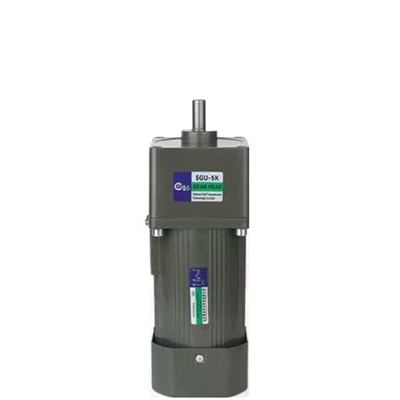
Hey there! As a supplier of ISW Vertical Pumps, I often get asked about the starting mode of these pumps. So, I thought I'd write this blog to give you all the low - down on it.
First things first, let's understand what an ISW Vertical Pump is. The ISW Vertical Pump is a popular type of pump in the industry. It's widely used in various applications like water supply, HVAC systems, and industrial processes. Its vertical design makes it space - efficient, and it can handle different types of fluids, including clean water, mildly corrosive liquids, and more.
Now, onto the starting modes. There are mainly three common starting modes for an ISW Vertical Pump: direct starting, star - delta starting, and soft - starting.
Direct Starting
Direct starting is the simplest and most straightforward way to start an ISW Vertical Pump. In this method, the pump motor is directly connected to the power supply. When you turn on the switch, the full voltage is applied to the motor right away.
The advantage of direct starting is its simplicity. There's no need for complex control circuits or additional equipment. It's cost - effective, too, since you don't have to invest in extra components. For small - sized ISW Vertical Pumps with relatively low power requirements, direct starting is a great option. It allows the pump to reach its full speed quickly, which means it can start pumping the fluid in no time.
However, direct starting also has its drawbacks. When the full voltage is applied suddenly, it causes a large inrush current. This high - current surge can put a strain on the electrical system, including the power supply, cables, and the motor itself. Over time, it may lead to premature wear and tear of these components. Also, the sudden torque applied to the pump can cause mechanical stress on the pump shaft, bearings, and other parts, potentially reducing the pump's lifespan.
Star - Delta Starting
Star - delta starting is a more sophisticated method compared to direct starting. This method is commonly used for medium - sized ISW Vertical Pumps.
In star - delta starting, the motor is initially connected in a star configuration when it starts. In a star connection, the voltage across each phase of the motor is reduced to 1/√3 (about 58%) of the line voltage. This reduces the inrush current significantly. As the motor reaches about 80% of its rated speed, the connection is then switched to a delta configuration, where the motor operates at full voltage.
The main advantage of star - delta starting is the reduction of the inrush current. By starting the motor in a star configuration, the current drawn is much lower than in direct starting. This helps to protect the electrical system and reduces the stress on the motor. It also results in a smoother start for the pump, which is better for the mechanical components.


But there are some limitations. Star - delta starting requires additional control equipment, such as contactors and a timer, to switch between the star and delta connections. This increases the cost and complexity of the starting system. Also, the starting torque in the star configuration is relatively low. So, it may not be suitable for pumps that require a high starting torque to overcome the initial resistance.
Soft - Starting
Soft - starting is the most advanced starting mode for ISW Vertical Pumps. A soft - starter is used to gradually increase the voltage applied to the motor over a certain period. This allows the motor to start smoothly and reach its full speed gradually.
One of the biggest advantages of soft - starting is the extremely low inrush current. Since the voltage is increased gradually, the current drawn by the motor also increases steadily. This reduces the stress on the electrical system and the motor. Soft - starting also provides precise control over the starting process. You can adjust the starting time and the acceleration rate according to the specific requirements of the pump and the application.
Soft - starting is also beneficial for the mechanical components of the pump. The smooth start reduces the mechanical stress on the pump shaft, bearings, and other parts, which can extend the pump's service life. It can also minimize the water hammer effect in the piping system, which is a sudden pressure surge that can damage the pipes and valves.
However, soft - starters are more expensive than the other starting methods. They also require more technical knowledge to install and maintain. But for large - sized ISW Vertical Pumps or applications where a smooth start is crucial, the benefits of soft - starting outweigh the costs.
When choosing the starting mode for an ISW Vertical Pump, you need to consider several factors. The power rating of the pump is a key factor. Smaller pumps may be fine with direct starting, while medium - and large - sized pumps usually require star - delta or soft - starting. The characteristics of the fluid being pumped, such as its viscosity and density, also matter. If the fluid is thick or has a high resistance, a starting mode that provides a higher starting torque may be necessary.
Another important factor is the electrical system's capacity. If the power supply can't handle a large inrush current, you should avoid direct starting. And of course, your budget plays a role. If you're on a tight budget, direct starting or star - delta starting may be more suitable. But if you can afford it and want the best performance and longevity for your pump, soft - starting is the way to go.
At our company, we offer a wide range of Industrial Vertical Pipeline Pump and Vertical Pipeline Pump options, including the ISW Vertical Pump. We can help you choose the right starting mode based on your specific needs. Whether you're using the pump for a small - scale water supply project or a large - scale industrial process, we've got you covered.
If you're interested in purchasing an ISW Vertical Pump or have any questions about the starting modes or other aspects of the pump, don't hesitate to get in touch. We're here to assist you in making the best decision for your application. We can provide you with detailed product information, technical support, and competitive pricing. So, reach out to us today and let's start a great partnership!
References
- Pump Handbook, Third Edition by Igor J. Karassik, Joseph P. Messina, Paul Cooper, and Charles C. Heald.
- Centrifugal Pumps: Design and Application by Jack P. Morrison.