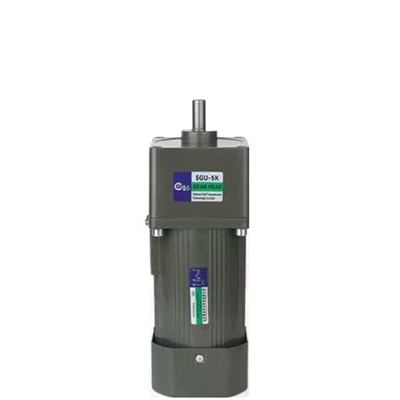
Hey there! As a supplier of Spindle Servo Motors, I've been getting a lot of questions about what these motors actually do in a lathe. So, I thought I'd take a few minutes to break it down for you.
First off, let's talk about what a lathe is. A lathe is a machine tool that rotates a workpiece about an axis of rotation to perform various operations such as cutting, sanding, knurling, drilling, or deformation. It's a pretty versatile tool used in a wide range of industries, from woodworking to metalworking.
Now, where does the Spindle Servo Motor come in? Well, the spindle is the heart of the lathe. It's the part that holds the workpiece and rotates it at the desired speed. And that's where the Spindle Servo Motor plays a crucial role.
One of the main functions of a Spindle Servo Motor in a lathe is to provide precise speed control. Different machining operations require different rotational speeds. For example, when you're doing a rough cut on a piece of metal, you might need a lower speed to handle the high cutting forces. But when you're finishing the surface, you'll want a higher speed for a smoother finish. A Spindle Servo Motor can adjust its speed quickly and accurately based on the requirements of the operation. It can also maintain a constant speed even under varying loads, which is super important for consistent and high - quality machining.
Another key role is torque control. Torque is the rotational force that the motor can apply. In a lathe, you need enough torque to start the rotation of the workpiece and to keep it turning smoothly during the cutting process. The Spindle Servo Motor can provide the right amount of torque at different speeds. When starting the lathe, it can deliver high torque to overcome the inertia of the spindle and the workpiece. As the speed increases, it can adjust the torque output to match the cutting requirements. This ensures that the cutting process is efficient and that the tool doesn't break or wear out too quickly.
Accuracy is also a big deal in lathe operations. A Spindle Servo Motor can position the spindle with high precision. This is essential for tasks like threading, where the pitch and depth of the threads need to be exact. The motor can control the angular position of the spindle to within a very small margin of error, allowing for the creation of complex and accurate parts.
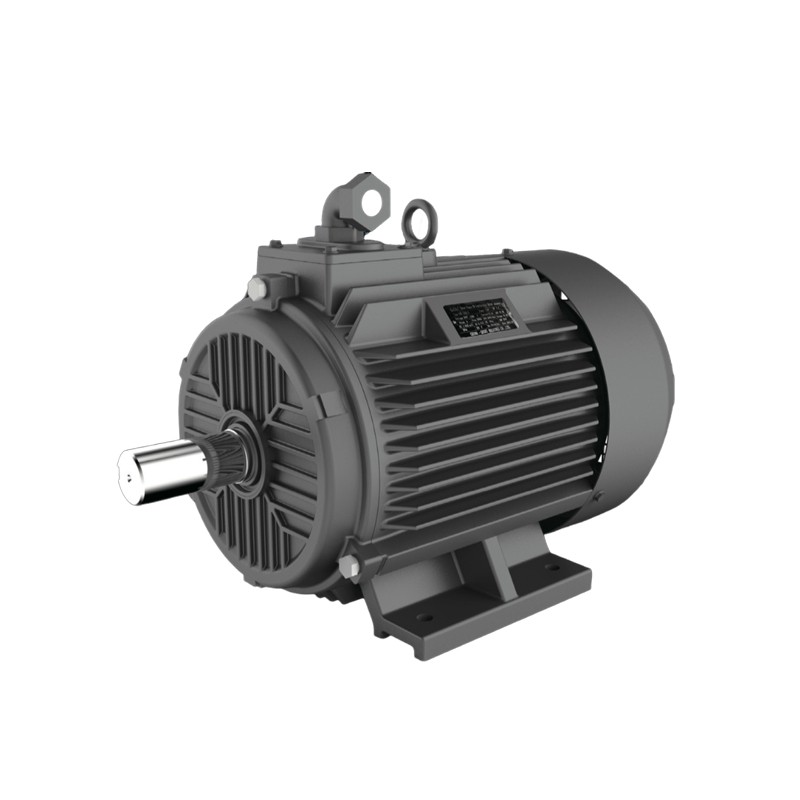
Let's compare it with some other types of motors. For instance, a regular induction motor might not be as good at speed and torque control. Induction motors are great for simple, constant - speed applications, but they struggle to adjust quickly to changing loads and speeds. On the other hand, a Permanent Magnet Motor Synchronous has some similarities with a Spindle Servo Motor in terms of efficiency and performance. However, a Spindle Servo Motor is specifically designed for the dynamic requirements of a lathe, with advanced control algorithms that allow for more precise and responsive operation.
In addition to these technical aspects, there are also some practical benefits of using a Spindle Servo Motor in a lathe. For one, it can improve the overall productivity of the lathe. With faster speed adjustments and better torque control, the machining time can be reduced. You can also run the lathe at optimal conditions for longer periods, which means more parts can be produced in a given time frame.
It also reduces maintenance costs. Since the motor can operate more smoothly and under more controlled conditions, there is less wear and tear on the spindle and other components of the lathe. This means fewer breakdowns and less time spent on repairs and replacements.
Now, if you're in the market for a Spindle Servo Motor for your lathe, you might be wondering what to look for. First, consider the power rating. You need to make sure the motor has enough power to handle the size and type of workpieces you'll be machining. Next, look at the speed range. A wider speed range gives you more flexibility in different machining operations. Also, check the control features. Some motors come with advanced control interfaces that allow for easy programming and integration with other machine tools.
As a supplier, I've seen firsthand how a good Spindle Servo Motor can transform the performance of a lathe. Whether you're a small - scale workshop or a large manufacturing plant, having the right motor can make a huge difference in the quality and efficiency of your production.
If you're interested in learning more about our Spindle Servo Motors or want to discuss your specific needs, I'd love to hear from you. Just reach out to us, and we can start a conversation about how we can help you take your lathe operations to the next level.
In conclusion, the Spindle Servo Motor is an essential component in a lathe. It provides precise speed and torque control, high accuracy, and numerous practical benefits. If you're looking to upgrade your lathe or build a new one, don't overlook the importance of choosing the right Spindle Servo Motor.

References
- General knowledge of lathe operations and motor technology from industry experience.
- Technical specifications and performance data from motor manufacturers.