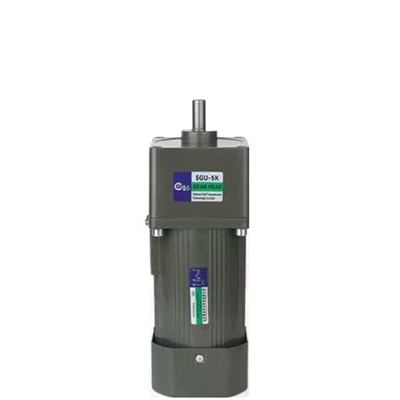
The lifespan of a 200W AC Gear Motor is a crucial consideration for both manufacturers and end - users. As a supplier of 200W AC Gear Motors, I have witnessed firsthand the importance of understanding this aspect, which can significantly impact the efficiency, reliability, and cost - effectiveness of various applications.
Factors Affecting the Lifespan of a 200W AC Gear Motor
1. Quality of Components
The quality of the materials used in the construction of the motor plays a vital role in determining its lifespan. High - grade copper windings, for example, offer better electrical conductivity and heat dissipation. This reduces the risk of overheating, which is one of the main causes of motor failure. In addition, high - quality bearings can withstand greater loads and friction, ensuring smooth operation over an extended period. At our company, we source only the best components for our 200W AC Gear Motor to guarantee long - term performance.
2. Operating Conditions
The environment in which the motor operates has a profound impact on its lifespan. Motors used in harsh industrial settings, such as those exposed to dust, moisture, and extreme temperatures, are likely to experience a shorter lifespan compared to those in more controlled environments. For instance, a motor in a food processing plant may need to be resistant to water and cleaning agents, while a motor in a mining operation must be able to withstand high levels of dust and vibration. Proper ventilation and cooling are also essential to prevent overheating. Inadequate ventilation can cause the motor to overheat, leading to insulation breakdown and ultimately, motor failure.
3. Load and Usage Patterns
The load that the motor is required to carry and the frequency of its use are significant factors. A motor that is constantly operating at or near its maximum capacity will experience more wear and tear than one that operates under lighter loads. Similarly, motors that are frequently started and stopped, such as those used in conveyor systems, will have a shorter lifespan compared to those that run continuously. It is important to select a motor with an appropriate power rating for the specific application to ensure optimal performance and longevity.
4. Maintenance and Lubrication
Regular maintenance is key to extending the lifespan of a 200W AC Gear Motor. This includes tasks such as checking the motor's electrical connections, inspecting the bearings for wear, and ensuring proper lubrication. Lubrication reduces friction between moving parts, preventing excessive wear and heat generation. Over time, lubricants can break down and lose their effectiveness, so it is necessary to replace them at regular intervals. Failure to perform routine maintenance can lead to premature motor failure.
Average Lifespan Estimates
On average, a well - maintained 200W AC Gear Motor can last anywhere from 10,000 to 30,000 hours of operation. However, this is a very general estimate, and the actual lifespan can vary widely depending on the factors mentioned above. In ideal operating conditions, with high - quality components and regular maintenance, a motor may even exceed 30,000 hours. Conversely, in harsh environments or with improper usage, the motor may fail well before reaching 10,000 hours.


Comparison with Other Types of Gear Motors
When compared to other types of gear motors, such as Worm Gear Reduction Motor and Gear Reduction Motor, the 200W AC Gear Motor has its own unique lifespan characteristics. Worm gear reduction motors, for example, are known for their high torque output but may have a shorter lifespan due to the high levels of friction in the worm gear system. On the other hand, some gear reduction motors may be more suitable for specific applications and may offer a longer lifespan under certain conditions.
Extending the Lifespan of a 200W AC Gear Motor
1. Proper Installation
Correct installation is the first step in ensuring a long lifespan for the motor. This includes proper alignment of the motor with the load, secure mounting to prevent vibration, and correct wiring to avoid electrical problems. Incorrect installation can lead to premature wear and tear on the motor components.
2. Monitoring and Diagnostic Tools
Using monitoring and diagnostic tools can help detect potential problems early. For example, temperature sensors can be installed to monitor the motor's temperature, and vibration sensors can detect abnormal vibrations that may indicate a problem with the bearings or other components. By detecting issues early, corrective action can be taken before significant damage occurs.
3. Upgrading and Retrofits
In some cases, upgrading or retrofitting the motor can extend its lifespan. This may involve replacing worn - out components with higher - quality ones or adding additional features such as improved cooling systems. Upgrading the motor's control system can also optimize its performance and reduce wear.
Importance of Choosing the Right Supplier
As a supplier of 200W AC Gear Motors, I understand the importance of providing high - quality products and excellent customer service. When choosing a supplier, it is essential to consider factors such as the supplier's reputation, the quality of their products, and their after - sales support. A reliable supplier will not only provide a motor with a long lifespan but also offer technical support and assistance in case of any problems.
Conclusion
The lifespan of a 200W AC Gear Motor is influenced by a variety of factors, including the quality of components, operating conditions, load and usage patterns, and maintenance. By understanding these factors and taking appropriate measures, such as proper installation, regular maintenance, and the use of monitoring tools, the lifespan of the motor can be extended. As a trusted supplier of 200W AC Gear Motor, we are committed to providing high - quality products that meet the needs of our customers. If you are in the market for a 200W AC Gear Motor or have any questions about motor lifespan and performance, we encourage you to contact us for a detailed discussion and to explore how our products can best suit your requirements.
References
- "Electric Motor Handbook" by Arnold Tustin
- "Industrial Motor Drives: Analysis, Design, and Application" by Paul C. Krause, Oleg Wasynczuk, and Scott D. Sudhoff
- Industry reports on gear motor performance and reliability from various trade associations