Hey there! As a supplier of horizontal pumps, I often get asked about the difference between single - stage and multi - stage horizontal pumps. So, I thought I'd write this blog to clear up any confusion and help you make an informed decision when it comes to choosing the right pump for your needs.
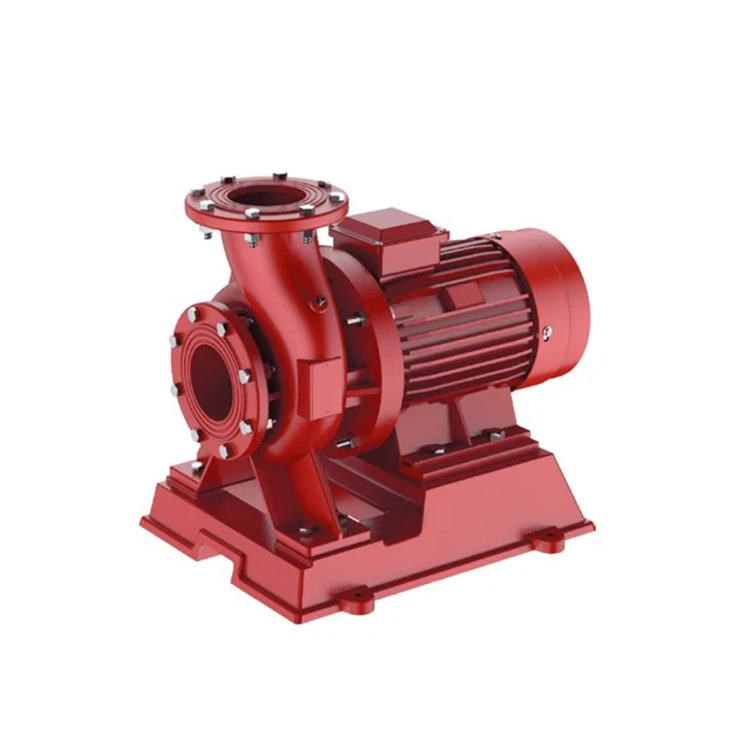
Let's start with the basics. A horizontal pump, as the name suggests, has a horizontal shaft. These pumps are widely used in various industries, from water supply and drainage to chemical processing and power generation. We offer a range of horizontal pumps, including the Horizontal Pipeline Pump, ISW Horizontal Pump, and Industrial Horizontal Pipeline Pump.
Single - Stage Horizontal Pumps
A single - stage horizontal pump has only one impeller. The impeller is the part of the pump that rotates and creates the centrifugal force to move the fluid. This type of pump is relatively simple in design and operation.
Advantages
- Simplicity: Single - stage pumps are easy to understand and maintain. There are fewer parts compared to multi - stage pumps, which means less chance of something going wrong. If there's an issue, it's usually easier to diagnose and fix.
- Cost - effective: They are generally cheaper to purchase and operate. Since there's only one impeller, the initial cost is lower, and they also consume less energy in many cases. This makes them a great choice for applications where the pressure requirements are not too high.
- High flow rate: Single - stage pumps are capable of providing a high flow rate of fluid. If your application requires moving a large volume of liquid quickly, a single - stage horizontal pump might be the way to go.
Disadvantages
- Limited pressure: The main drawback of single - stage pumps is their limited ability to generate high pressure. They are suitable for low - to medium - pressure applications. If you need to pump fluid over long distances or to a high elevation, a single - stage pump may not be sufficient.
Multi - Stage Horizontal Pumps
Multi - stage horizontal pumps, on the other hand, have two or more impellers arranged in series. Each impeller adds to the pressure of the fluid as it passes through the pump.
Advantages
- High pressure: The most significant advantage of multi - stage pumps is their ability to generate high pressure. They can handle applications where the fluid needs to be pumped over long distances or to high - rise buildings. For example, in a water supply system for a tall skyscraper, a multi - stage horizontal pump would be essential.
- Versatility: These pumps can be used in a wide range of applications with different pressure requirements. You can adjust the number of impellers to meet the specific needs of your project.
- Efficiency: In some cases, multi - stage pumps can be more energy - efficient than single - stage pumps when high pressure is required. They can achieve the same pressure with less power consumption compared to using multiple single - stage pumps.
Disadvantages
- Complexity: Multi - stage pumps are more complex in design and operation. With more impellers and components, there's a higher chance of mechanical failures. Maintenance can also be more challenging and time - consuming.
- Higher cost: The initial purchase price of multi - stage pumps is usually higher than that of single - stage pumps. Additionally, the maintenance and repair costs can also be more expensive.
Applications
Single - Stage Horizontal Pumps
- Water supply for small buildings: If you're supplying water to a small residential building or a single - story commercial establishment, a single - stage pump can provide enough pressure and flow.
- Irrigation systems: For small - scale irrigation, where the water doesn't need to be pumped over long distances or to a great height, a single - stage pump is often sufficient.
- Drainage: In applications where you need to remove water from a low - lying area, such as a basement or a construction site, a single - stage pump can quickly move the water out.
Multi - Stage Horizontal Pumps
- High - rise building water supply: As mentioned earlier, multi - stage pumps are essential for supplying water to tall buildings. They can generate the high pressure needed to reach the upper floors.
- Industrial processes: In industries such as oil and gas, chemical processing, and power generation, multi - stage pumps are used for applications that require high - pressure fluid transfer.
- Boiler feed: They are also commonly used to feed water into boilers at high pressure.
Choosing the Right Pump
When deciding between a single - stage and a multi - stage horizontal pump, you need to consider several factors:
- Pressure requirements: Determine the pressure needed for your application. If you need high pressure, a multi - stage pump is likely the better choice.
- Flow rate: Consider how much fluid you need to move. If a high flow rate is the priority and the pressure requirements are low, a single - stage pump may be sufficient.
- Budget: Your budget plays a crucial role. If cost is a major concern and the pressure requirements are not too high, a single - stage pump might be the more economical option.
In conclusion, both single - stage and multi - stage horizontal pumps have their own advantages and disadvantages. Understanding these differences will help you choose the right pump for your specific needs. Whether you're looking for a simple and cost - effective solution or a high - pressure pumping system, we've got you covered with our range of horizontal pumps.

If you're interested in learning more about our horizontal pumps or need help in choosing the right one for your application, don't hesitate to get in touch. We're here to assist you in making the best decision for your project.
References
- "Pump Handbook" by Igor J. Karassik et al.
- Industry standards and guidelines for horizontal pumps.