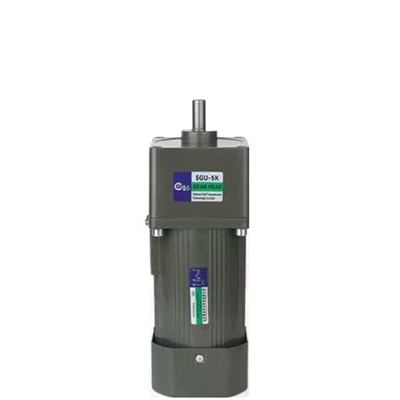
Hey there! As a supplier of IE2 Electric Motors, I often get asked about the insulation class of these motors. So, I thought I'd take a few minutes to break it down for you.
First off, let's talk about what insulation class means. In simple terms, the insulation class of an electric motor refers to the maximum temperature that the motor's insulation system can withstand over a long period without significant degradation. This is super important because if the insulation gets too hot, it can break down, leading to short circuits, motor failure, and even safety hazards.
Now, IE2 Electric Motors are known for their high efficiency and reliability, and their insulation class plays a big role in that. There are several common insulation classes for electric motors, including Class A, Class E, Class B, Class F, and Class H. Each class has a specific temperature rating, which is based on the type of insulation material used and its ability to handle heat.
Class A
Class A insulation has a maximum temperature rating of 105°C. This type of insulation is made from materials like cotton, silk, and paper, which are impregnated with a varnish to improve their heat resistance. While Class A insulation was once commonly used in electric motors, it's not as popular today because it has a relatively low temperature rating compared to other classes.
Class E
Class E insulation has a maximum temperature rating of 120°C. It's made from materials like polyester film and epoxy resin, which offer better heat resistance than Class A insulation. Class E insulation is still used in some applications, but it's also being phased out in favor of higher-class insulation materials.
Class B
Class B insulation has a maximum temperature rating of 130°C. It's made from materials like mica, glass fiber, and asbestos (although asbestos is no longer used due to health concerns). Class B insulation is widely used in electric motors because it offers a good balance between cost and performance.
Class F
Class F insulation has a maximum temperature rating of 155°C. It's made from materials like silicone rubber and polyester resin, which have excellent heat resistance and electrical properties. Class F insulation is commonly used in high-performance electric motors, including IE2 Electric Motors, because it can handle higher temperatures without degrading.
Class H
Class H insulation has a maximum temperature rating of 180°C. It's made from materials like silicone resin and fiberglass, which can withstand extremely high temperatures. Class H insulation is used in applications where the motor is exposed to harsh environments or high loads, such as in industrial machinery and electric vehicles.
So, which insulation class is used in IE2 Electric Motors? Well, most IE2 Electric Motors use Class F insulation. This is because Class F insulation offers a good balance between performance and cost, and it can handle the higher temperatures generated by high-efficiency motors.
In addition to the insulation class, there are other factors that can affect the temperature of an electric motor, such as the ambient temperature, the load on the motor, and the ventilation system. That's why it's important to choose an electric motor with the right insulation class for your application.
At our company, we offer a wide range of IE2 Electric Motors, including Cast Iron Three Phase Motor, Y2 Three Phase Motor, and Inverter Duty Motor. All of our motors are designed to meet the highest standards of quality and performance, and they come with Class F insulation as standard.
If you're in the market for an IE2 Electric Motor, or if you have any questions about insulation class or other motor-related topics, please don't hesitate to contact us. We'd be happy to help you find the right motor for your application and answer any questions you may have.


In conclusion, the insulation class of an IE2 Electric Motor is an important factor to consider when choosing a motor. Class F insulation is the most common insulation class used in IE2 Electric Motors because it offers a good balance between performance and cost, and it can handle the higher temperatures generated by high-efficiency motors. By choosing an electric motor with the right insulation class, you can ensure that your motor will operate reliably and safely for many years to come.
References
- Electric Motor Handbook, Third Edition by Paul C. Krause, Oleg Wasynczuk, and Scott D. Sudhoff
- Electric Machinery Fundamentals, Fourth Edition by Stephen J. Chapman