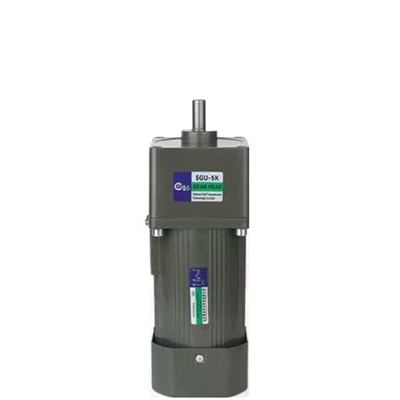
As a seasoned single-phase motor supplier, I've witnessed firsthand the critical role these motors play in various industries. Single-phase motors are widely used in household appliances, small machinery, and other applications due to their simplicity and cost-effectiveness. However, improving the overall efficiency of a single-phase motor is a challenge that many users face. In this blog post, I'll share some practical tips and strategies to help you enhance the efficiency of your single-phase motor.
Understanding Single-Phase Motors
Before diving into the ways to improve efficiency, it's essential to understand how single-phase motors work. A single-phase motor operates on a single alternating current (AC) power supply. Unlike three-phase motors, single-phase motors require an additional mechanism to start rotating because a single-phase AC supply creates a pulsating magnetic field rather than a rotating one. This starting mechanism can be a capacitor, a shaded pole, or a repulsion-start induction-run design.
Selecting the Right Motor
The first step in improving efficiency is to select the right single-phase motor for your application. Choosing a motor with the appropriate power rating, speed, and torque characteristics is crucial. An oversized motor will consume more energy than necessary, while an undersized motor may not be able to handle the load, leading to overheating and reduced efficiency.
When selecting a motor, consider the following factors:
- Power Rating: Choose a motor with a power rating that matches the load requirements. You can calculate the power needed by considering the mechanical power required to drive the load, taking into account factors such as friction, inertia, and the desired speed.
- Efficiency Rating: Look for motors with high efficiency ratings. The efficiency of a motor is the ratio of the output power (mechanical power) to the input power (electrical power). Higher efficiency motors convert more electrical energy into mechanical energy, resulting in lower energy consumption.
- Speed and Torque: Ensure that the motor's speed and torque characteristics are suitable for your application. Different applications require different speed and torque profiles. For example, a fan may require a motor with a constant speed, while a conveyor belt may need a motor with variable speed and high starting torque.
We offer a wide range of single-phase motors, including the YL Series Single Phase Motor, 220 Volt Single Phase Motor, and ML Series Single Phase Motor. These motors are designed to meet various application requirements and offer high efficiency and reliability.
Proper Installation and Maintenance
Proper installation and maintenance are essential for ensuring the efficient operation of a single-phase motor. Here are some tips to keep in mind:
- Installation: Install the motor in a clean, dry, and well-ventilated area. Make sure the motor is properly aligned with the load to avoid excessive vibration and wear. Use the correct mounting hardware and follow the manufacturer's installation instructions carefully.
- Belt and Pulley Alignment: If the motor is connected to the load via a belt and pulley system, ensure that the belts are properly tensioned and the pulleys are aligned. Misaligned belts and pulleys can cause increased friction, which leads to energy losses and reduced efficiency.
- Lubrication: Regularly lubricate the motor's bearings according to the manufacturer's recommendations. Proper lubrication reduces friction and wear, extending the motor's lifespan and improving efficiency.
- Cleaning and Inspection: Keep the motor clean and free of dirt, dust, and debris. Regularly inspect the motor for signs of damage, such as loose connections, worn-out brushes, or overheating. Address any issues promptly to prevent further damage and ensure optimal performance.
Optimizing the Electrical Supply
The quality of the electrical supply can have a significant impact on the efficiency of a single-phase motor. Here are some ways to optimize the electrical supply:
- Voltage Regulation: Ensure that the motor is operating at the correct voltage. A voltage that is too high or too low can cause the motor to draw more current than necessary, leading to increased energy consumption and reduced efficiency. Use a voltage regulator if necessary to maintain a stable voltage supply.
- Power Factor Correction: Single-phase motors often have a low power factor, which means that they draw more current from the electrical supply than is actually needed to do the work. Power factor correction can help improve the power factor, reducing the reactive power and thus lowering the energy consumption. You can use power factor correction capacitors to achieve this.
- Harmonic Filtering: Harmonics in the electrical supply can cause additional losses in the motor and other electrical equipment. Install harmonic filters to reduce the harmonic content in the electrical supply, improving the overall efficiency and reliability of the motor.
Using Variable Speed Drives
Variable speed drives (VSDs) can be an effective way to improve the efficiency of a single-phase motor, especially in applications where the load varies. A VSD allows you to adjust the motor's speed according to the load requirements, reducing energy consumption when the load is low.
For example, in a fan application, the motor can be run at a lower speed when the demand for air is reduced, rather than running at full speed all the time. This not only saves energy but also reduces wear and tear on the motor, extending its lifespan.
Monitoring and Control
Implementing a monitoring and control system can help you keep track of the motor's performance and identify any issues early on. Here are some monitoring and control techniques:
- Energy Monitoring: Use energy meters to measure the energy consumption of the motor. By monitoring the energy usage over time, you can identify trends and determine if the motor is operating efficiently.
- Temperature Monitoring: Monitor the motor's temperature to detect any signs of overheating. Overheating can indicate a problem with the motor, such as a mechanical issue or an electrical fault. Addressing overheating issues promptly can prevent damage to the motor and improve its efficiency.
- Automated Control: Use automated control systems to adjust the motor's operation based on the load requirements. For example, you can use sensors to detect the load and automatically adjust the motor's speed or power output accordingly.
Conclusion
Improving the overall efficiency of a single-phase motor requires a combination of proper selection, installation, maintenance, and optimization of the electrical supply. By following the tips and strategies outlined in this blog post, you can reduce the energy consumption of your single-phase motor, lower your operating costs, and extend the motor's lifespan.


If you're looking for high-quality single-phase motors or need advice on improving the efficiency of your existing motors, we're here to help. As a leading single-phase motor supplier, we offer a wide range of products and services to meet your needs. Contact us today to discuss your requirements and start optimizing your motor's performance.
References
- Electric Motor Handbook, Third Edition, by Arnold E. Fitzgerald, Charles Kingsley Jr., and Stephen D. Umans
- IEEE Standard 112 - Standard Test Procedures for Polyphase Induction Motors and Generators
- NEMA Standards Publication MG 1 - Motors and Generators