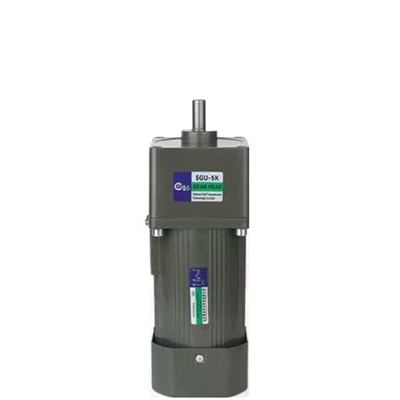
As a supplier of IE2 Electric Motors, I've witnessed firsthand the significance of understanding how motor speed varies with frequency. This knowledge is crucial for engineers, technicians, and anyone involved in the operation and selection of electric motors. In this blog post, I'll delve into the relationship between the speed of an IE2 Electric Motor and frequency, exploring the underlying principles, practical implications, and real-world applications.
Understanding the Basics of an IE2 Electric Motor
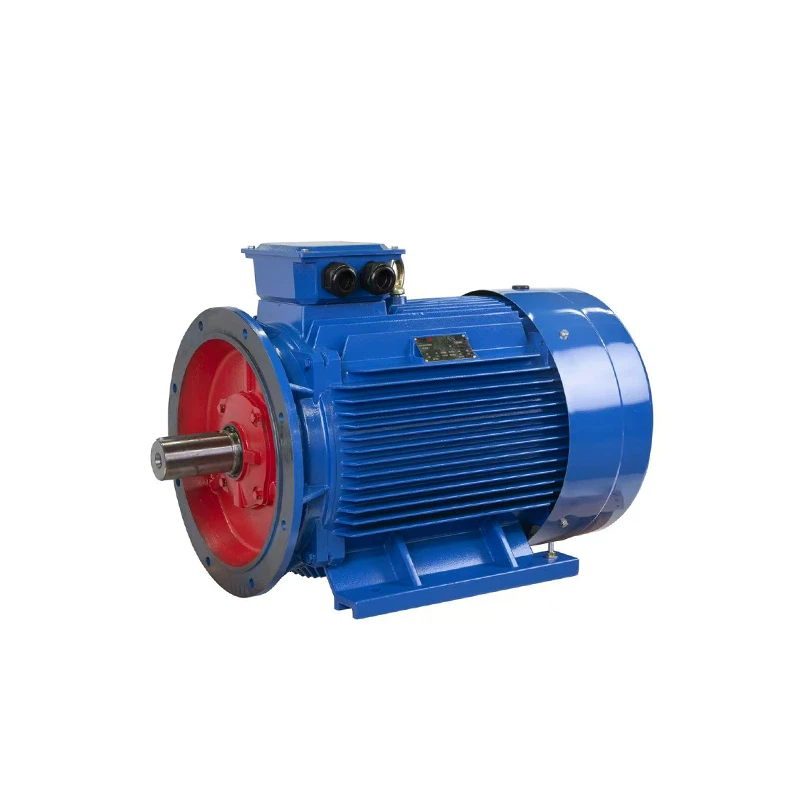
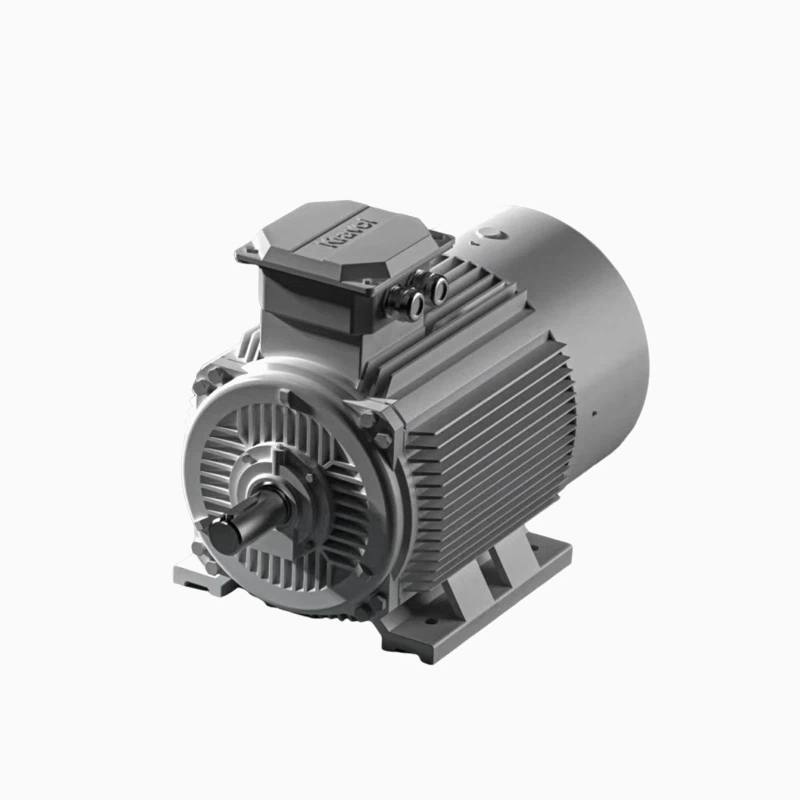
Before we dive into the relationship between speed and frequency, let's first understand what an IE2 Electric Motor is. An IE2 Electric Motor, as defined by the International Electrotechnical Commission (IEC), is a high-efficiency three-phase asynchronous motor. It offers significant energy savings compared to its predecessors, such as the IE1 Three Phase Motor. These motors are widely used in various industrial applications, including pumps, fans, compressors, and conveyor systems, due to their reliability, durability, and energy efficiency.
The Synchronous Speed Formula
The speed of an electric motor is primarily determined by the frequency of the power supply and the number of poles in the motor. The synchronous speed ($N_s$) of an AC motor can be calculated using the following formula:
[N_s=\frac{120f}{P}]
Where:
- $N_s$ is the synchronous speed in revolutions per minute (RPM)
- $f$ is the frequency of the power supply in Hertz (Hz)
- $P$ is the number of poles in the motor
From this formula, we can see that the synchronous speed is directly proportional to the frequency and inversely proportional to the number of poles. This means that as the frequency increases, the synchronous speed of the motor also increases, assuming the number of poles remains constant.
Slip and Actual Motor Speed
In a real-world scenario, the actual speed of an IE2 Electric Motor is slightly less than the synchronous speed. This difference is known as slip ($s$), which is expressed as a percentage. The actual speed ($N$) of the motor can be calculated using the following formula:
[N = N_s(1 - s)]
The slip occurs because the rotor of an asynchronous motor must rotate at a speed slightly less than the synchronous speed to induce a current in the rotor windings, which in turn creates the magnetic field necessary for the motor to operate. The amount of slip depends on various factors, including the load on the motor, the design of the motor, and the quality of the motor's components.
The Effect of Frequency on Motor Speed
Now that we understand the basic principles of motor speed and slip, let's explore how the frequency of the power supply affects the speed of an IE2 Electric Motor. As mentioned earlier, the synchronous speed of the motor is directly proportional to the frequency. Therefore, if the frequency of the power supply increases, the synchronous speed of the motor will also increase.
For example, consider a four-pole IE2 Electric Motor operating on a 50 Hz power supply. Using the synchronous speed formula, we can calculate the synchronous speed as follows:
[N_s=\frac{120\times50}{4}=1500\text{ RPM}]
If the frequency of the power supply is increased to 60 Hz, the synchronous speed of the motor will increase to:
[N_s=\frac{120\times60}{4}=1800\text{ RPM}]
Assuming a constant slip of 3%, the actual speed of the motor at 50 Hz would be:
[N = 1500(1 - 0.03)=1455\text{ RPM}]
And at 60 Hz, the actual speed of the motor would be:
[N = 1800(1 - 0.03)=1746\text{ RPM}]
This example illustrates how a change in frequency can significantly affect the speed of an IE2 Electric Motor.
Practical Implications of Changing Frequency
The ability to control the speed of an IE2 Electric Motor by changing the frequency has several practical implications in industrial applications. One of the most common applications of frequency control is in variable speed drives (VSDs), also known as adjustable speed drives (ASDs). VSDs allow the speed of the motor to be adjusted to match the requirements of the load, which can result in significant energy savings and improved process control.
For example, in a pump application, a VSD can be used to adjust the speed of the motor to match the flow rate required by the system. By reducing the speed of the motor when the flow rate is low, the energy consumption of the pump can be significantly reduced. Similarly, in a fan application, a VSD can be used to adjust the speed of the motor to match the ventilation requirements of the space, which can result in energy savings and improved indoor air quality.
Another practical implication of changing frequency is in the starting and stopping of the motor. By gradually increasing the frequency of the power supply during startup, the motor can be started smoothly, reducing the mechanical stress on the motor and the connected equipment. Similarly, by gradually decreasing the frequency of the power supply during shutdown, the motor can be stopped smoothly, reducing the risk of damage to the motor and the connected equipment.
Considerations When Changing Frequency
While changing the frequency of the power supply can be an effective way to control the speed of an IE2 Electric Motor, there are several considerations that need to be taken into account. One of the most important considerations is the motor's insulation class. The insulation class of the motor determines the maximum temperature that the motor can safely operate at. If the frequency of the power supply is increased, the motor may operate at a higher temperature, which can reduce the lifespan of the motor's insulation and increase the risk of motor failure.
Another consideration is the motor's torque characteristics. The torque output of an IE2 Electric Motor is affected by the frequency of the power supply. At low frequencies, the motor may experience a reduction in torque, which can result in poor performance and increased energy consumption. Therefore, it's important to ensure that the motor is properly sized and rated for the specific application and the frequency range in which it will be operating.
Real-World Applications
The ability to control the speed of an IE2 Electric Motor by changing the frequency has numerous real-world applications across various industries. In the manufacturing industry, VSDs are commonly used to control the speed of conveyor belts, pumps, and fans, which can improve productivity, reduce energy consumption, and extend the lifespan of the equipment.
In the HVAC industry, VSDs are used to control the speed of air handling units, chillers, and pumps, which can improve the energy efficiency of the system and provide better temperature and humidity control. In the water and wastewater treatment industry, VSDs are used to control the speed of pumps and blowers, which can reduce energy consumption and improve the performance of the treatment process.
Conclusion
In conclusion, the speed of an IE2 Electric Motor is directly affected by the frequency of the power supply. By understanding the relationship between frequency and motor speed, engineers and technicians can optimize the performance of IE2 Electric Motors in various applications, resulting in significant energy savings, improved process control, and extended equipment lifespan.
As a supplier of IE2 Electric Motors, we are committed to providing our customers with high-quality, energy-efficient motors that meet their specific requirements. If you're interested in learning more about our IE2 Electric Motors or have any questions about motor speed and frequency control, please don't hesitate to contact us. We'd be happy to discuss your needs and provide you with a customized solution.
References
- International Electrotechnical Commission (IEC). IEC 60034-30-1:2014. Rotating electrical machines - Part 30-1: Efficiency classes of single-speed, three-phase, cage induction motors (IE code).
- Electric Motor Handbook. Various authors. This handbook provides in-depth information on the design, operation, and maintenance of electric motors.
- Variable Speed Drives: Principles, Applications, and Technologies. By Bimal K. Bose. This book offers a comprehensive overview of variable speed drives and their applications in industrial and commercial settings.