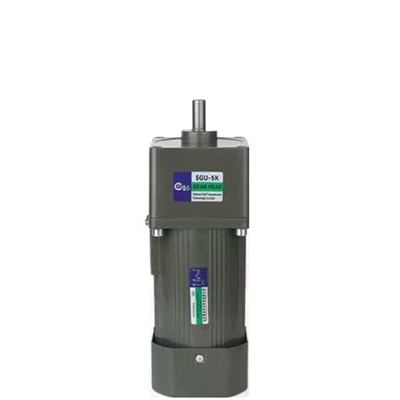
Hey there! As a supplier of IE2 Electric Motors, I've been getting a lot of questions lately about how the inertia of these motors affects their performance. So, I thought I'd sit down and write a blog post to share some insights on this topic.
First off, let's talk about what inertia is. In simple terms, inertia is the tendency of an object to resist changes in its state of motion. In the context of an electric motor, inertia refers to the motor's ability to resist changes in its rotational speed. It's determined by the mass and distribution of the rotating parts in the motor, such as the rotor and the shaft.
Now, you might be wondering why inertia matters when it comes to motor performance. Well, it turns out that inertia plays a crucial role in several aspects of how an IE2 Electric Motor operates.
Starting and Stopping
One of the most significant impacts of inertia is on the motor's starting and stopping capabilities. When you start an IE2 Electric Motor, you need to overcome its inertia to get it up to speed. A motor with high inertia will take longer to start because it requires more energy to overcome the resistance to motion. On the other hand, a motor with low inertia can start more quickly because there's less resistance to overcome.
The same principle applies when stopping the motor. A motor with high inertia will take longer to come to a complete stop because it has more momentum. This can be a problem in applications where you need the motor to stop quickly, such as in conveyor systems or robotic arms. In these cases, a motor with lower inertia might be a better choice.
Acceleration and Deceleration
Inertia also affects the motor's ability to accelerate and decelerate. When you want to increase the speed of an IE2 Electric Motor, you need to apply a torque to overcome its inertia. A motor with high inertia will require more torque to accelerate at the same rate as a motor with low inertia. This means that you might need a more powerful motor or a larger drive to achieve the desired acceleration.
Similarly, when you want to decelerate the motor, a high-inertia motor will require more braking torque to slow down quickly. This can put additional stress on the braking system and increase the wear and tear on the motor.
Load Handling
Another important aspect of motor performance is its ability to handle different loads. Inertia can have a significant impact on how well an IE2 Electric Motor can handle varying loads. A motor with high inertia is better suited for applications with constant or slowly changing loads because it can maintain its speed more easily. It has enough momentum to keep rotating even when the load changes slightly.
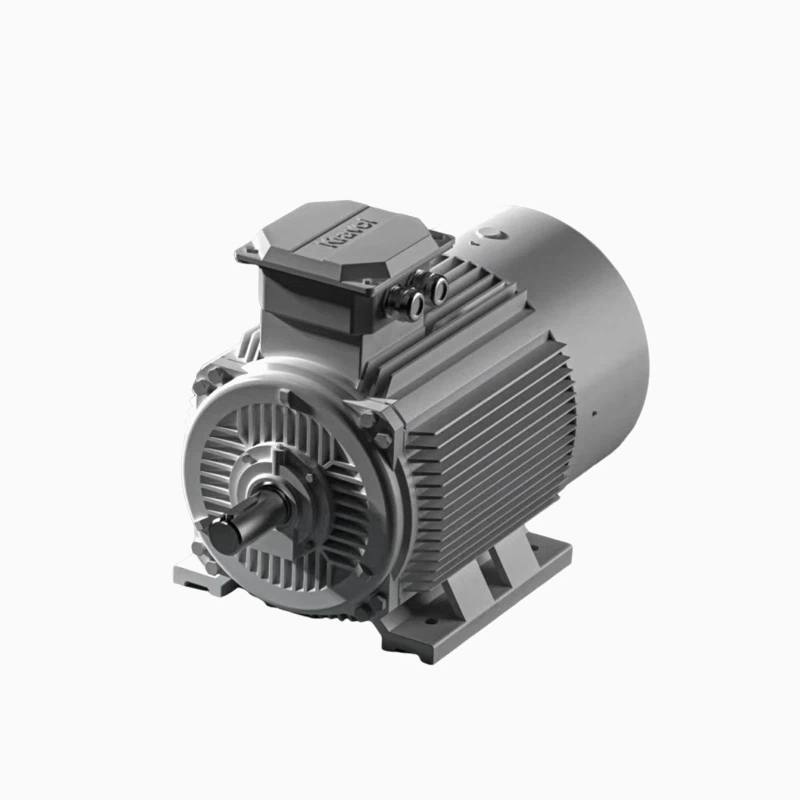
However, in applications where the load changes rapidly, a motor with high inertia might struggle. It might not be able to respond quickly enough to the changes in load, which can lead to fluctuations in speed and reduced efficiency. In these cases, a motor with lower inertia can be more responsive and better able to handle the dynamic loads.
Efficiency
Inertia can also affect the efficiency of an IE2 Electric Motor. A motor with high inertia requires more energy to start and stop, as well as to accelerate and decelerate. This means that it will consume more power during these transient periods, which can reduce its overall efficiency.
On the other hand, a motor with low inertia can start and stop more quickly, using less energy in the process. It can also respond more rapidly to changes in load, which can help maintain a more consistent speed and improve efficiency.
Choosing the Right Inertia
So, how do you choose the right inertia for your IE2 Electric Motor? Well, it depends on your specific application. If you need a motor that can start and stop quickly, or if you have dynamic loads that change rapidly, a motor with lower inertia might be the way to go. On the other hand, if you have constant or slowly changing loads and you're more concerned about maintaining a consistent speed, a motor with higher inertia could be a better fit.
It's also important to consider the size and power of the motor. Generally, larger motors tend to have higher inertia because they have more mass. However, you can also find motors with different inertia ratings within the same size and power range. Make sure to consult with a motor expert or the manufacturer to determine the best inertia for your application.
Comparing with Other Motor Efficiency Classes
When it comes to electric motors, there are different efficiency classes available, such as IE3 Electric Motor and IE4 Electric Motor. These higher efficiency classes often come with advanced designs that can also affect the inertia and performance of the motor.
IE3 and IE4 motors are generally more energy-efficient than IE2 motors, but they might have different inertia characteristics. In some cases, the advanced designs of these motors can result in lower inertia, which can offer better starting, stopping, and load handling capabilities. However, the specific inertia and performance of each motor will depend on its design and specifications.
Conclusion
In conclusion, the inertia of an IE2 Electric Motor has a significant impact on its performance. It affects the motor's starting and stopping capabilities, acceleration and deceleration, load handling, and efficiency. Choosing the right inertia for your application is crucial to ensure optimal performance and energy efficiency.
If you're in the market for an IE2 Electric Motor or have any questions about how inertia affects motor performance, I'd love to help. You can check out our range of IE2 Electric Motor products and get in touch with us to discuss your specific requirements. We're here to provide you with the best solutions for your motor needs.
References
- Electric Motor Handbook, various editions
- Technical papers on motor performance and inertia from industry research institutions