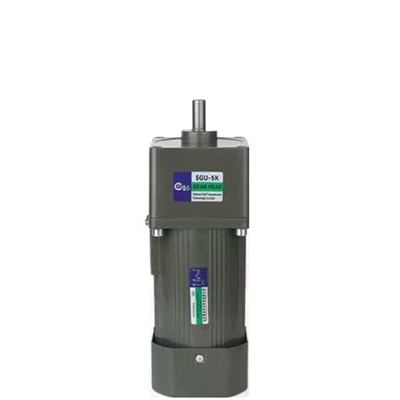
As a supplier of IE4 Electric Motors, I've witnessed firsthand the growing demand for high - efficiency motors in various industries. One of the key performance indicators that often comes under scrutiny is the power factor, and how it changes with the load. In this blog, I'll delve into the intricacies of this relationship and explain its significance for users and businesses.
Understanding the Basics of Power Factor
Before we discuss how the power factor of an IE4 Electric Motor changes with load, let's first understand what power factor is. Power factor (PF) is the ratio of real power (P), which is the power that does useful work, to apparent power (S). Apparent power is the product of the voltage and current in an AC circuit. Mathematically, it can be expressed as:
[PF=\frac{P}{S}]
A power factor of 1 (or 100%) means that all the electrical power supplied to the motor is being used for useful work. A lower power factor indicates that a significant portion of the power is being used to create and maintain the magnetic fields in the motor, rather than doing actual work. This leads to increased energy consumption and higher electricity bills.
The Importance of Power Factor in IE4 Electric Motors
IE4 Electric Motors are known for their high efficiency, which is a measure of how well the motor converts electrical energy into mechanical energy. However, power factor also plays a crucial role in the overall performance of these motors. A high power factor in an IE4 Electric Motor means that it can operate more efficiently, reducing energy losses and saving costs for the end - user.
Moreover, many electricity providers charge industrial customers based on their power factor. A low power factor can result in penalty charges, making it even more important for businesses to ensure that their motors operate with a high power factor.
How Power Factor Changes with Load in IE4 Electric Motors
In general, the power factor of an IE4 Electric Motor varies with the load. At no - load or very light loads, the power factor is relatively low. This is because, at low loads, the motor still needs to maintain the magnetic fields in its core, but the amount of useful work being done is minimal. The current drawn by the motor at no - load is mainly for magnetizing the core, and this reactive current contributes to a lower power factor.
As the load on the IE4 Electric Motor increases, the power factor starts to improve. The motor is now doing more useful work, and the proportion of real power to apparent power increases. The power factor reaches its peak value at a certain load, typically around 75% - 100% of the motor's rated load. At this point, the motor is operating most efficiently in terms of power factor.
Beyond the rated load, if the motor is overloaded, the power factor may start to decline again. This is because overloading can cause the motor to draw more current, leading to increased losses in the windings and a higher proportion of reactive power.
Let's take a closer look at the different load scenarios:
No - Load Condition
When an IE4 Electric Motor is running at no - load, the power factor can be as low as 0.1 - 0.2. The motor is consuming electrical power mainly to overcome the friction and windage losses, and to maintain the magnetic field in the stator and rotor. Since there is very little useful work being done, the real power is very low compared to the apparent power, resulting in a poor power factor.
Light Load
At light loads (less than 25% of the rated load), the power factor remains relatively low, usually in the range of 0.2 - 0.5. The motor is still not operating at its optimal efficiency, and a significant portion of the power is being used for magnetizing the core rather than doing useful work.
Medium Load
As the load increases to around 50% - 75% of the rated load, the power factor of the IE4 Electric Motor improves significantly. It can reach values between 0.8 - 0.9. At this load range, the motor is doing more useful work, and the ratio of real power to apparent power is much higher.
Full Load
At full load (100% of the rated load), the power factor is typically at its best. For well - designed IE4 Electric Motors, the power factor can be as high as 0.9 - 0.95. The motor is operating at its designed capacity, and most of the electrical power is being converted into mechanical power.
Overload
If the motor is overloaded (more than 100% of the rated load), the power factor may start to decrease. Overloading can cause the motor to draw excessive current, leading to increased losses in the windings and a higher proportion of reactive power. The power factor may drop to values similar to those at light loads.
Factors Affecting the Power Factor - Load Relationship
Several factors can affect how the power factor of an IE4 Electric Motor changes with load:
Motor Design
The design of the motor, including the number of poles, the type of winding, and the core material, can influence the power factor - load relationship. Well - designed IE4 Electric Motors are optimized to have a high power factor over a wide range of loads.
Voltage Variations
Fluctuations in the supply voltage can also affect the power factor. If the voltage is too high or too low, it can cause the motor to draw more reactive current, leading to a lower power factor.
Motor Efficiency
Higher - efficiency motors, such as IE4 Electric Motors, generally have better power factor characteristics. This is because they are designed to minimize losses and operate more efficiently, which in turn improves the power factor.
Practical Implications for Users
For users of IE4 Electric Motors, understanding the power factor - load relationship is crucial for optimizing energy consumption and reducing costs. Here are some practical tips:
Proper Sizing
Selecting the right - sized motor for the application is essential. An oversized motor will operate at light loads for most of its life, resulting in a low power factor and increased energy consumption. On the other hand, an undersized motor may be overloaded, also leading to a poor power factor and potential motor damage.
Load Management
Try to operate the motor at or near its rated load as much as possible. This will ensure that the motor operates with a high power factor and maximum efficiency. If the load varies significantly, consider using variable - speed drives to adjust the motor speed and load.
Power Factor Correction
In some cases, power factor correction equipment, such as capacitors, can be used to improve the power factor of the motor. This can help reduce energy losses and avoid penalty charges from electricity providers.
Comparison with Other Motor Types
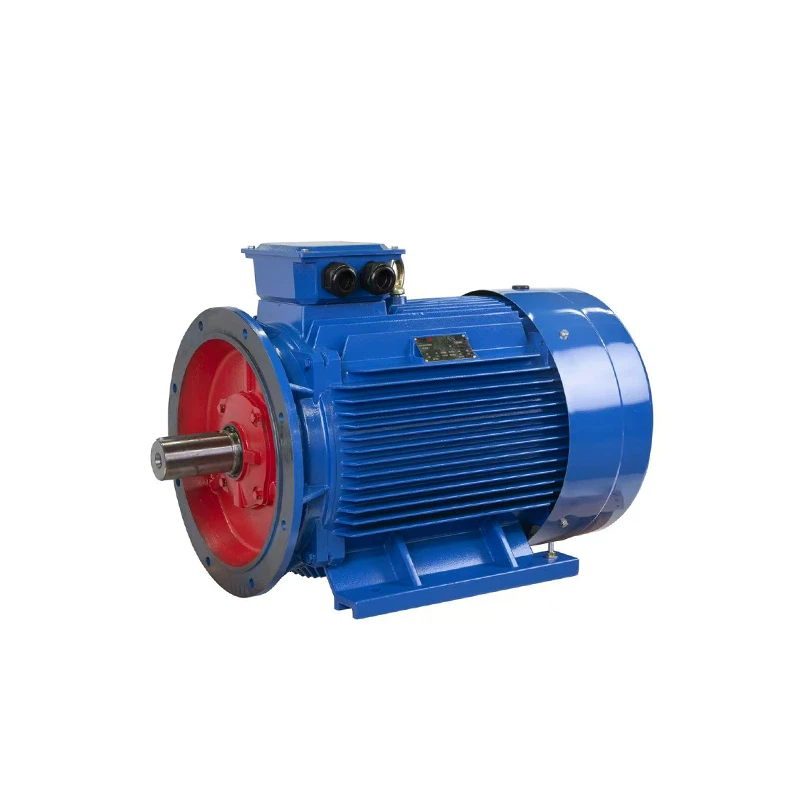
When compared to other motor types, such as IE1 Three Phase Motor, IE4 Electric Motors generally have a better power factor - load relationship. IE1 motors are less efficient and may have lower power factors, especially at light loads.
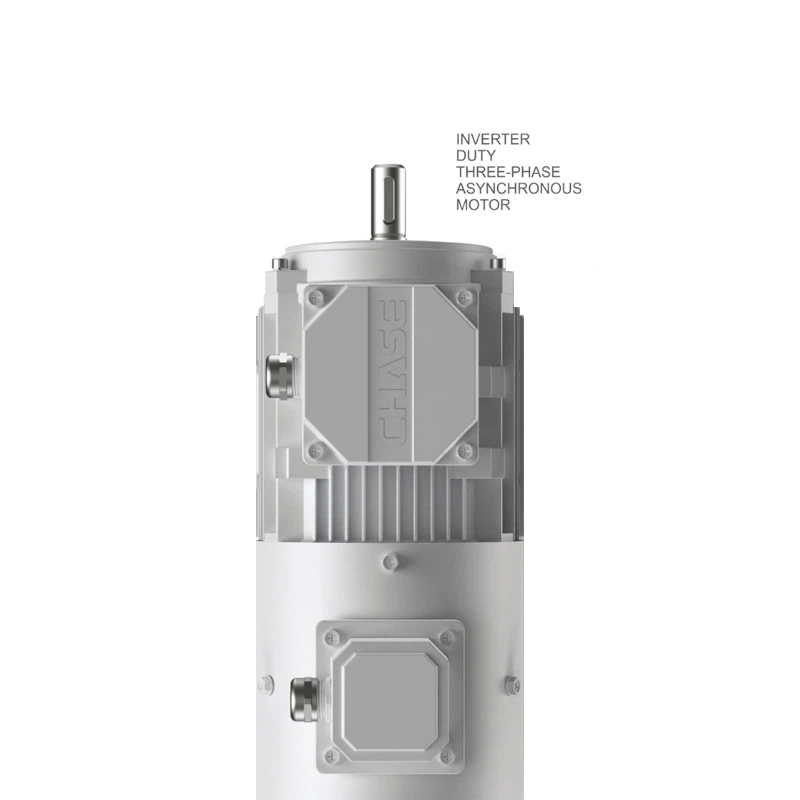
Inverter Duty Motor can also have different power factor characteristics. Inverter - driven motors can offer better control over the motor speed and load, which can potentially improve the power factor. However, the power factor of inverter - duty motors also depends on the design of the inverter and the motor itself.
Conclusion
The power factor of an IE4 Electric Motor changes significantly with the load. At low loads, the power factor is relatively low, while it reaches its peak at or near the rated load. Understanding this relationship is crucial for users to optimize energy consumption, reduce costs, and ensure the efficient operation of their motors.
As a supplier of IE4 Electric Motor, we are committed to providing high - quality motors that offer excellent power factor characteristics over a wide range of loads. If you are interested in learning more about our IE4 Electric Motors or have any questions regarding power factor and motor performance, please feel free to contact us for a procurement discussion. We look forward to helping you find the best motor solutions for your needs.
References
- "Electric Motors and Drives: Fundamentals, Types and Applications" by Austin Hughes and Bill Drury.
- IEEE Standards for Electric Motors and Generators.
- Technical documentation from leading motor manufacturers.