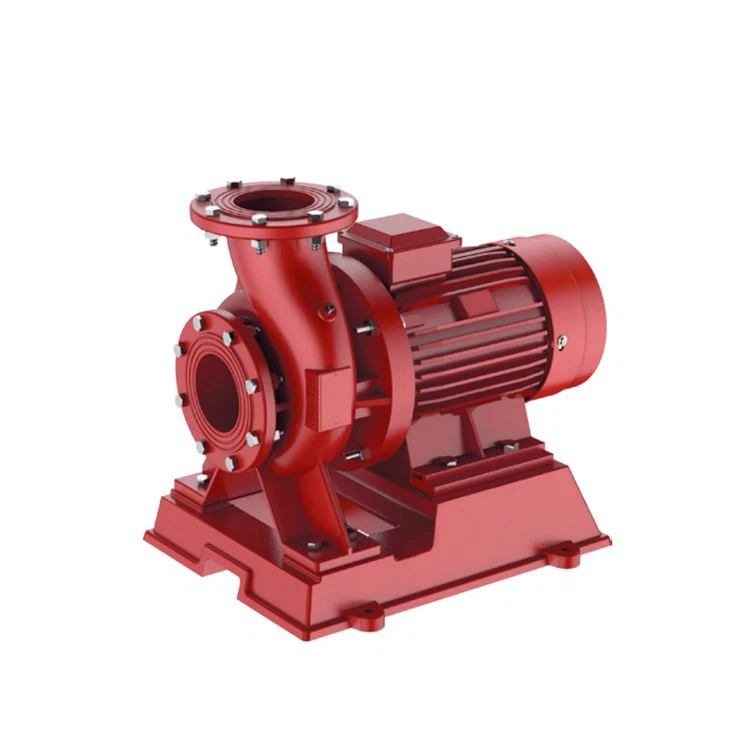
As a supplier of the ISW Horizontal Pump, I'm often asked about the materials used in its construction. Understanding these materials is crucial as they directly impact the pump's performance, durability, and suitability for different applications. In this post, I'll take you through the key materials that make up the ISW Horizontal Pump and explain why they are chosen.
Casing
The casing of the ISW Horizontal Pump is a fundamental component that houses the impeller and other internal parts. It plays a vital role in containing the fluid being pumped and guiding it through the pump. The most common material used for the casing is cast iron. Cast iron is favored for its excellent mechanical properties and cost - effectiveness. It has high strength and can withstand the pressure generated by the pump during operation. Additionally, cast iron has good corrosion resistance in many common industrial and domestic applications, making it suitable for a wide range of fluids, including water and some mildly corrosive liquids.
However, for applications where the pumped fluid is more corrosive, such as in chemical processing plants, stainless steel casings are often used. Stainless steel, typically 304 or 316 grades, offers superior corrosion resistance. These grades contain chromium and nickel, which form a passive oxide layer on the surface, protecting the metal from corrosion. Stainless steel casings can handle a variety of aggressive chemicals, acids, and alkalis, ensuring the long - term reliability of the pump in harsh environments. You can find more information about our ISW Horizontal Pump on our website.
Impeller
The impeller is the heart of the ISW Horizontal Pump. It rotates at high speed to impart kinetic energy to the fluid, causing it to flow through the pump. The material selection for the impeller is critical as it must be able to withstand the forces generated during rotation and resist wear and corrosion.
For general water - pumping applications, bronze is a popular choice for impellers. Bronze is an alloy of copper and tin, and it has good mechanical strength and corrosion resistance in water. It is also relatively easy to machine, allowing for precise manufacturing of the impeller blades. The smooth surface of bronze impellers helps to reduce friction and improve the pump's efficiency.
In more demanding applications, such as pumping abrasive slurries or highly corrosive fluids, stainless steel or special alloys are used. Stainless steel impellers, similar to those used in the casing, offer excellent corrosion resistance. Special alloys, such as those containing tungsten carbide or silicon carbide, are extremely hard and wear - resistant. These alloys can withstand the erosive effects of abrasive particles in slurries, ensuring a longer service life for the impeller. Our Horizontal Pipeline Pump models are equipped with high - quality impellers made from suitable materials for different applications.
Shaft
The shaft is responsible for transmitting the rotational power from the motor to the impeller. It must be strong enough to withstand the torque and bending forces during operation. Carbon steel is commonly used for the shaft in standard ISW Horizontal Pumps. Carbon steel has high strength and good machinability, making it an ideal choice for this component.
To prevent corrosion, the shaft may be coated or treated. For example, a shaft can be coated with a layer of epoxy or other corrosion - resistant materials. In some cases, stainless steel shafts are used, especially in applications where the pump is exposed to corrosive environments. Stainless steel shafts offer better long - term corrosion protection, reducing the risk of shaft failure due to rust.

Seals
Seals are essential to prevent the leakage of fluid from the pump. The two main types of seals used in the ISW Horizontal Pump are mechanical seals and packing seals.
Mechanical seals are widely used due to their high efficiency and reliability. They typically consist of two flat faces in contact with each other, one fixed and one rotating. The materials used for mechanical seals depend on the application. For general water - pumping, carbon and ceramic are common combinations. Carbon is a soft material that can conform to the mating surface, while ceramic is hard and wear - resistant. In corrosive applications, silicon carbide or tungsten carbide may be used for the seal faces, as they offer excellent corrosion and wear resistance.
Packing seals, on the other hand, are made of materials such as asbestos - free fibers, graphite, or PTFE (polytetrafluoroethylene). These materials are compressed around the shaft to form a seal. Packing seals are more suitable for applications where the fluid pressure is relatively low and the leakage rate can be tolerated to some extent. They are also easier to install and maintain compared to mechanical seals.
Bearings
Bearings support the shaft and allow it to rotate smoothly. In the ISW Horizontal Pump, rolling element bearings, such as ball bearings or roller bearings, are commonly used. These bearings are made of high - quality steel, usually bearing - grade steel. The steel used in bearings has high hardness and good fatigue resistance, ensuring a long service life under high - speed rotation.
The bearings are often lubricated to reduce friction and wear. Grease or oil can be used as lubricants, depending on the application and operating conditions. In some cases, sealed bearings are used to prevent the ingress of dirt and moisture, further enhancing their reliability.
Other Components
In addition to the major components mentioned above, there are other smaller parts in the ISW Horizontal Pump, such as gaskets, O - rings, and fasteners. Gaskets and O - rings are typically made of rubber or elastomeric materials, such as nitrile rubber (NBR), ethylene propylene diene monomer (EPDM), or fluorocarbon rubber (FKM). These materials provide a tight seal between different parts of the pump, preventing fluid leakage.
Fasteners, such as bolts and nuts, are usually made of carbon steel or stainless steel. Stainless steel fasteners are preferred in corrosive environments to prevent rusting and ensure the integrity of the pump assembly.
The choice of materials for the ISW Horizontal Pump is a carefully considered process. Each material is selected based on its properties and the specific requirements of the application. Whether it's for general water - pumping in a domestic setting or handling corrosive chemicals in an industrial plant, our Industrial Horizontal Pipeline Pump models are designed with the right materials to ensure optimal performance and durability.
If you're in the market for an ISW Horizontal Pump or have any questions about the materials used in its construction, we'd be more than happy to assist you. Contact us to start a conversation about your specific needs and how our pumps can meet them.
References
- "Centrifugal Pump Handbook" by Igor Karassik et al.
- "Materials Science and Engineering: An Introduction" by William D. Callister Jr. and David G. Rethwisch.