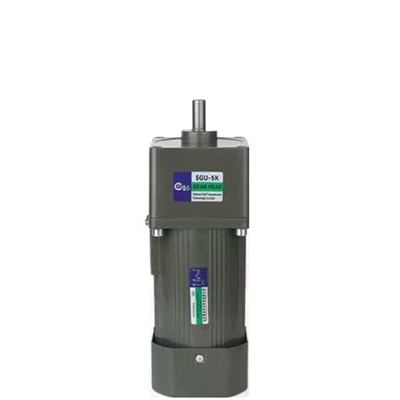
As a supplier of Inverter Duty Motors, I've had the privilege of witnessing firsthand the pivotal role these motors play in a wide range of industrial applications. One of the most critical aspects to understand about Inverter Duty Motors is their torque characteristic. In this blog, I'll delve into what torque characteristics are, how they impact the performance of Inverter Duty Motors, and why they matter to you as a potential customer.
Understanding Torque
Before we dive into the torque characteristics of Inverter Duty Motors, let's first clarify what torque is. Torque can be thought of as the rotational force that causes an object to rotate around an axis. In the context of motors, torque is what enables the motor to start, accelerate, and maintain the rotation of a load. It is typically measured in units such as Newton - meters (N·m) or foot - pounds (ft - lb).
There are several key torque values that are important to understand when evaluating a motor's performance:
- Starting Torque: This is the torque produced by the motor when it starts from a standstill. A high starting torque is essential for applications where the motor needs to overcome a large initial resistance, such as in conveyor belts or crushers.
- Pull - Up Torque: It is the minimum torque developed by the motor during the acceleration period from standstill to the speed at which breakdown torque occurs.
- Breakdown Torque: This is the maximum torque that the motor can develop without an abrupt drop in speed. If the load torque exceeds the breakdown torque, the motor will stall.
- Full - Load Torque: The torque required to drive the load at the rated speed of the motor under normal operating conditions.
Torque Characteristics of Inverter Duty Motors
Inverter Duty Motors are designed to work in conjunction with variable frequency drives (VFDs). The use of VFDs allows for precise control of the motor's speed and torque, which is one of the main advantages of Inverter Duty Motors over standard motors.
Constant Torque Region
In the low - to - medium speed range, Inverter Duty Motors typically operate in the constant torque region. In this region, the motor can provide a relatively constant amount of torque regardless of the speed. This is because the VFD adjusts the voltage and frequency supplied to the motor in a way that maintains a constant magnetic flux in the motor's stator. As a result, the motor can handle heavy loads at low speeds, making it suitable for applications such as hoists, mixers, and extruders.
For example, in a hoist application, the motor needs to lift a heavy load from the ground. The constant torque characteristic of the Inverter Duty Motor ensures that the motor can provide enough force to lift the load smoothly, even at low speeds.
Variable Torque Region
As the speed of the Inverter Duty Motor increases beyond the base speed, it enters the variable torque region. In this region, the torque decreases as the speed increases. This is because the power output of the motor is limited, and according to the power formula (P = T\times\omega) (where (P) is power, (T) is torque, and (\omega) is angular speed), if the power is constant and the speed increases, the torque must decrease.
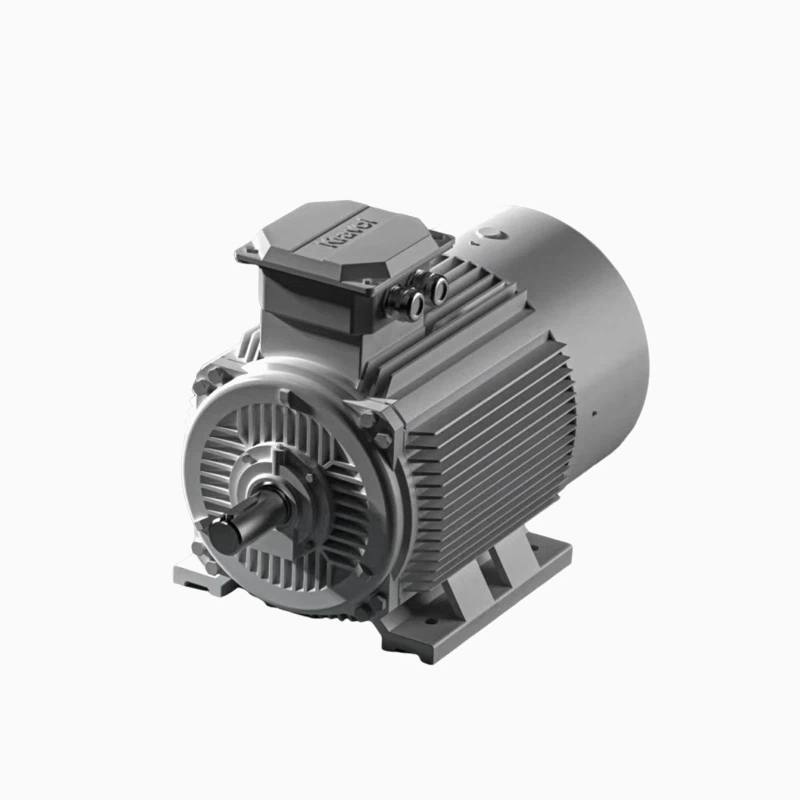
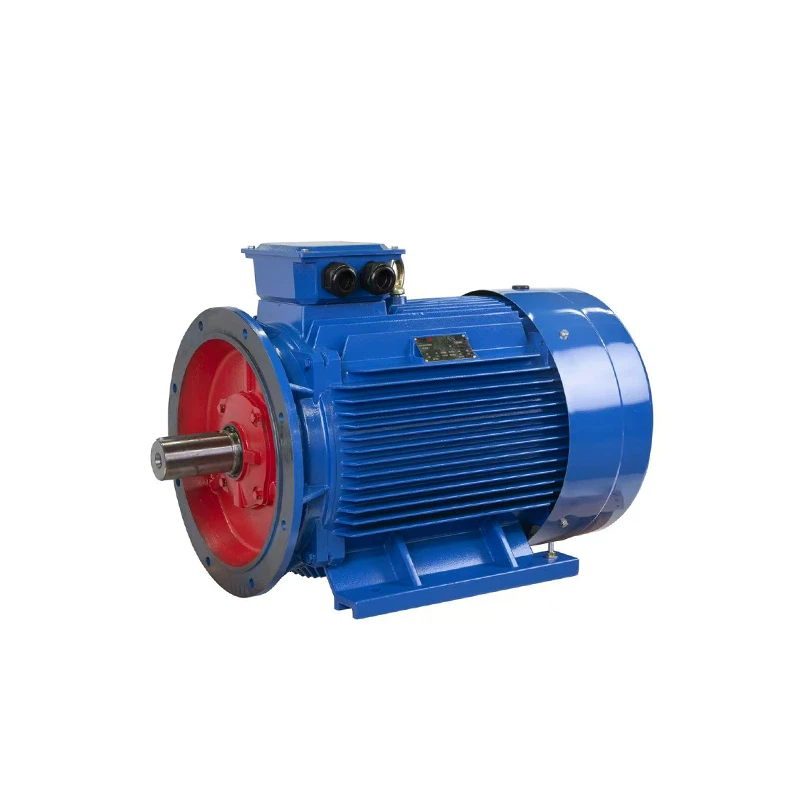
Variable torque applications are common in centrifugal fans and pumps. In these applications, the load torque is proportional to the square of the speed. As the speed of the fan or pump increases, the load torque increases rapidly. The variable torque characteristic of the Inverter Duty Motor allows it to match the load requirements efficiently, resulting in energy savings.
Advantages of Inverter Duty Motors' Torque Characteristics
The unique torque characteristics of Inverter Duty Motors offer several advantages:
- Energy Efficiency: By adjusting the speed and torque according to the load requirements, Inverter Duty Motors can significantly reduce energy consumption. For example, in a pump application, if the flow rate needs to be reduced, the VFD can lower the motor speed, which in turn reduces the torque and power consumption.
- Precise Control: The ability to control the torque precisely allows for more accurate operation of the equipment. This is crucial in applications where precise positioning or speed control is required, such as in robotics or machine tools.
- Soft Starting: Inverter Duty Motors can provide a soft start, which means that the motor gradually ramps up to the operating speed, reducing the mechanical stress on the motor and the connected equipment. This extends the lifespan of the motor and other components.
Comparing with Other Motor Types
When comparing Inverter Duty Motors with other motor types, such as IE2 Electric Motor and IE1 Three Phase Motor, the torque characteristics of Inverter Duty Motors stand out.
IE1 and IE2 motors are standard three - phase asynchronous motors. They typically have a fixed speed and torque characteristic, which means that they are less flexible in adapting to different load requirements. In contrast, Inverter Duty Motors can adjust their torque and speed over a wide range, making them more suitable for applications with variable loads.
Another motor type to consider is the Aluminium Electric Motor. While aluminium electric motors are known for their lightweight and corrosion resistance, they may not offer the same level of torque control as Inverter Duty Motors. Inverter Duty Motors, with their advanced torque characteristics, can provide better performance in terms of load handling and energy efficiency.
Application Considerations
When selecting an Inverter Duty Motor for your application, it's important to consider the torque requirements carefully. You need to determine the starting torque, pull - up torque, breakdown torque, and full - load torque based on the nature of the load.
For example, if you are using the motor in a high - inertia load application, such as a large flywheel, you'll need a motor with a high starting torque to overcome the initial inertia. On the other hand, if you are dealing with a variable - load application, like a fan or a pump, the ability of the motor to operate in the variable torque region is crucial.
It's also important to ensure that the VFD is properly sized and configured to work with the Inverter Duty Motor. A mismatched VFD can lead to poor performance, reduced efficiency, and even motor damage.
Conclusion
The torque characteristic of an Inverter Duty Motor is a complex but essential aspect of its performance. Understanding the constant torque and variable torque regions, as well as the advantages they offer, can help you make an informed decision when selecting a motor for your application.
As a supplier of Inverter Duty Motors, we are committed to providing high - quality motors with excellent torque characteristics. Whether you need a motor for a constant - torque application or a variable - torque application, we have the right solution for you.
If you are interested in learning more about our Inverter Duty Motors or have specific requirements for your project, we encourage you to reach out to us for a detailed discussion. We are ready to assist you in finding the perfect motor to meet your needs and help you achieve optimal performance and energy efficiency in your operations.
References
- Fitzgerald, A. E., Kingsley, C., & Umans, S. D. (2003). Electric Machinery. McGraw - Hill.
- Chapman, S. J. (2012). Electric Machinery Fundamentals. McGraw - Hill.