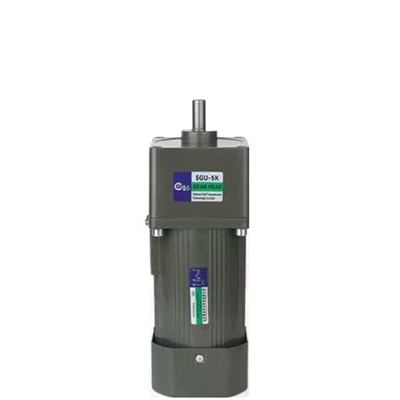
Hey there! As a supplier of 220V AC Gear Motor, I often get asked about the starting torque of these motors. So, I thought I'd write this blog to share some insights on what starting torque is and how it relates to our 220V AC gear motors.
First things first, let's talk about what torque is. Torque is basically a measure of the force that can cause an object to rotate around an axis. In the context of a motor, it's what gets the motor shaft spinning and allows it to do work. Starting torque, then, is the torque that a motor can produce when it's first started. It's crucial because it determines whether the motor can overcome the initial resistance and start rotating the load.
For a 220V AC gear motor, the starting torque is influenced by several factors. One of the main factors is the motor's design. Different motor designs have different ways of generating torque. For example, some motors use a capacitor to help increase the starting torque. The capacitor creates a phase shift in the current, which in turn creates a rotating magnetic field that gives the motor an extra push at startup.
Another factor that affects the starting torque is the gear ratio. A Gear Reduction Motor is designed to reduce the speed of the motor shaft while increasing the torque. The gear ratio determines how much the speed is reduced and how much the torque is increased. A higher gear ratio means more torque at the output shaft, which can be beneficial for applications that require a lot of starting force, like lifting heavy loads or moving large machinery.
The type of load also plays a big role in determining the required starting torque. If the load has a high inertia, like a large flywheel or a heavy conveyor belt, it will require more torque to get it moving. On the other hand, if the load has a low inertia, like a small fan or a light conveyor, the motor may not need as much starting torque.
Let's take a look at a specific example, our 400W AC Gear Motor. This motor is a popular choice for many applications because it offers a good balance of power and torque. The starting torque of the 400W AC gear motor can vary depending on the gear ratio and the specific design of the motor. But generally speaking, it can provide enough torque to start most medium-sized loads.


When selecting a 220V AC gear motor for your application, it's important to consider the starting torque requirements. If you choose a motor with too little starting torque, the motor may not be able to start the load, or it may stall under heavy load conditions. On the other hand, if you choose a motor with too much starting torque, you may end up paying more for a motor than you actually need, and you may also cause unnecessary wear and tear on the motor and the load.
So, how do you determine the right starting torque for your application? Well, the first step is to calculate the load torque. This involves determining the force required to move the load and the distance from the axis of rotation. Once you have the load torque, you can then select a motor with a starting torque that is slightly higher than the load torque to ensure reliable starting.
It's also a good idea to consult with a motor expert or an engineer. They can help you analyze your application and recommend the right motor based on your specific requirements. At our company, we have a team of experienced professionals who are always ready to assist you in choosing the right 220V AC gear motor for your needs.
In addition to the starting torque, there are other factors to consider when selecting a 220V AC gear motor. These include the operating speed, the efficiency, the power consumption, and the durability of the motor. All of these factors can have a significant impact on the performance and cost of your application.
If you're in the market for a 220V AC gear motor, we'd love to hear from you. Whether you're working on a small DIY project or a large industrial application, we have a wide range of motors to choose from. Our motors are known for their high quality, reliability, and performance. We can also provide customized solutions to meet your specific requirements.
So, don't hesitate to reach out to us if you have any questions or if you're ready to start a project. We're here to help you find the perfect 220V AC gear motor for your needs. Let's work together to make your project a success!
References:
- "Electric Motors and Drives: Fundamentals, Types and Applications" by Austin Hughes
- "Motor Handbook" by Arnold Tustin