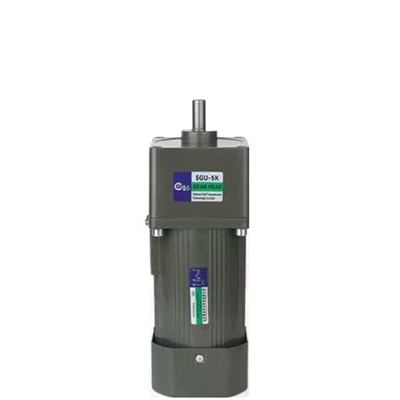
Hey there! As a supplier of IE3 electric motors, I often get asked about the power supply requirements for these motors. So, I thought I'd share some insights on this topic in today's blog post.
First off, let's understand what IE3 electric motors are. IE3 motors are high - efficiency three - phase asynchronous motors. They are designed to meet the IE3 efficiency class standards, which means they consume less energy compared to lower - efficiency motors like the IE2 Electric Motor. This high efficiency not only saves costs in the long run but also contributes to a more sustainable environment.
Voltage Requirements
One of the most basic power supply requirements for IE3 electric motors is the voltage. These motors typically operate on three - phase power systems. The standard voltage levels can vary depending on the region and the specific application. In many industrial settings in the United States, the common three - phase voltage is 480V. In Europe, 400V is a widespread standard.
It's crucial to match the motor's rated voltage with the supply voltage. If the supply voltage is too high, it can cause overheating of the motor windings, leading to premature motor failure. On the other hand, if the voltage is too low, the motor may not be able to develop enough torque to start or run properly. For example, if a 400V rated IE3 motor is supplied with only 350V, it might struggle to drive the load, draw more current, and eventually overheat.
Frequency Requirements
Another important aspect is the frequency of the power supply. Most IE3 electric motors are designed to operate at a frequency of either 50Hz or 60Hz. In Europe, Asia, and many other parts of the world, the standard power frequency is 50Hz. In North America, 60Hz is the norm.
Using a motor at a frequency different from its rated frequency can have significant impacts. If a 50Hz motor is run at 60Hz without proper adjustments, the motor speed will increase, and the magnetic flux in the motor will change. This can lead to increased iron losses and potentially damage the motor. Similarly, running a 60Hz motor at 50Hz will reduce the motor speed and may cause the motor to draw more current to maintain the load, again increasing the risk of overheating.
Power Factor Considerations
Power factor is a measure of how effectively the motor uses the electrical power supplied to it. IE3 electric motors generally have a relatively high power factor compared to lower - efficiency motors. A high power factor means that the motor is using the electrical energy more efficiently, reducing the amount of reactive power in the system.
However, in some cases, the power factor of the motor may need to be improved further. This can be done by using power factor correction capacitors. These capacitors help to offset the reactive power drawn by the motor, improving the overall power factor of the electrical system. A better power factor not only reduces the electricity bill but also helps to avoid penalties from the utility company in some regions.
Starting Current
When an IE3 electric motor starts, it typically draws a high starting current, which can be several times the rated current. This high starting current can cause voltage dips in the electrical system, especially if the system has limited capacity.
There are several methods to reduce the starting current of IE3 motors. One common method is the use of star - delta starters. In a star - delta starter, the motor windings are initially connected in a star configuration during startup. This reduces the voltage across each winding and thus reduces the starting current. Once the motor reaches a certain speed, the windings are reconnected in a delta configuration for normal operation.
Another option is the use of variable frequency drives (VFDs). VFDs can control the voltage and frequency supplied to the motor during startup, allowing for a smooth and controlled start with reduced starting current. VFDs also offer the advantage of speed control, which can be useful in applications where variable speed operation is required.
Protection Requirements
To ensure the safe and reliable operation of IE3 electric motors, proper protection devices are essential. Over - current protection is necessary to prevent the motor from being damaged due to excessive current. This can be achieved using fuses or circuit breakers. These devices will trip if the current exceeds a certain level, disconnecting the motor from the power supply.
Over - temperature protection is also crucial. Thermal overload relays can be used to monitor the temperature of the motor windings. If the temperature rises above a safe level, the relay will trip and disconnect the motor to prevent overheating.
In addition, short - circuit protection is required to protect the motor and the electrical system from damage in case of a short - circuit fault. Short - circuit protection devices, such as high - speed fuses, can quickly interrupt the circuit in the event of a short - circuit.
Compatibility with Other Equipment
IE3 electric motors are often used in conjunction with other equipment in industrial applications. For example, they may be connected to pumps, fans, or conveyor belts. It's important to ensure that the power supply requirements of the motor are compatible with the overall electrical system and the other equipment in the system.
If the motor is being used with a Cast Iron Three Phase Motor or a Three Phase Brake Motor in a combined system, the power supply needs to be carefully designed to meet the requirements of all the motors. This may involve considering factors such as the total load, the starting sequence of the motors, and the overall power factor of the system.
Conclusion
In conclusion, understanding the power supply requirements for IE3 electric motors is essential for their proper operation, efficiency, and longevity. From voltage and frequency to power factor, starting current, and protection, each aspect plays a crucial role in ensuring that the motor performs as expected.
If you're in the market for IE3 electric motors or have any questions about their power supply requirements, I'd love to help. Whether you need advice on choosing the right motor for your application or assistance in designing a suitable power supply system, feel free to reach out for a procurement discussion. We can work together to find the best solutions for your industrial needs.


References
- Electric Motor Handbook, various editions
- Standards and guidelines from international electrical engineering organizations such as IEC and IEEE.