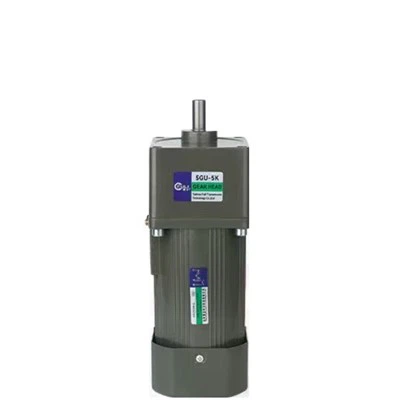
Hey there! As a supplier of inverter duty motors, I'm super stoked to share with you the latest and greatest in this field. Inverter duty motors have come a long way, and there are some pretty cool technologies that are changing the game.
Let's start by understanding what inverter duty motors are. In simple terms, these motors are designed to work with variable frequency drives (VFDs). VFDs are used to control the speed and torque of a motor by adjusting the frequency and voltage of the electrical power supplied to it. This allows for more precise control and energy savings, which is a big deal in today's world.
One of the latest technologies in inverter duty motors is the use of advanced insulation materials. These materials are designed to withstand the high voltages and frequencies that are common in VFD applications. They also help to reduce the risk of electrical breakdown and improve the overall reliability of the motor. For example, some motors now use a class F or H insulation system, which can handle higher temperatures and voltages than traditional insulation systems.
Another important development is the use of permanent magnet motors. These motors use permanent magnets instead of electromagnets to create a magnetic field. This makes them more efficient and powerful than traditional induction motors. Permanent magnet motors also have a higher power density, which means they can produce more power in a smaller package. This is great for applications where space is limited, such as in electric vehicles or robotics.
In addition to advanced insulation and permanent magnet technology, there are also some new control algorithms that are being used in inverter duty motors. These algorithms are designed to optimize the performance of the motor and the VFD. They can adjust the motor's speed and torque based on the load requirements, which helps to improve energy efficiency and reduce wear and tear on the motor. Some control algorithms also use predictive maintenance techniques to detect potential problems before they occur, which can save time and money in the long run.
Now, let's take a look at some of the specific products that are available in the market. We offer a range of inverter duty motors, including the Y2 Three Phase Motor, the IE2 Electric Motor, and the Cast Iron Three Phase Motor.
The Y2 Three Phase Motor is a high-performance motor that is designed for use in a wide range of industrial applications. It has a robust design and is built to last. The motor is also highly efficient, which helps to reduce energy costs.
The IE2 Electric Motor is an energy-efficient motor that meets the IE2 efficiency standard. It is designed to provide reliable performance and long service life. The motor is also easy to install and maintain, which makes it a popular choice for many customers.
The Cast Iron Three Phase Motor is a heavy-duty motor that is designed for use in harsh environments. It has a cast iron frame that provides excellent protection against dust, dirt, and moisture. The motor is also highly efficient and reliable, which makes it a great choice for industrial applications.
So, why should you choose our inverter duty motors? Well, for starters, we have a team of experienced engineers who can help you select the right motor for your application. We also offer a wide range of customization options, so you can get a motor that meets your specific requirements. In addition, we provide excellent customer service and support, which means you can count on us to be there for you when you need us.
If you're interested in learning more about our inverter duty motors or would like to discuss your specific requirements, please don't hesitate to contact us. We'd be happy to answer any questions you may have and help you find the right motor for your application. Let's work together to take your business to the next level!
References:


- "Inverter Duty Motors: A Comprehensive Guide" - Electrical Engineering Magazine
- "The Future of Electric Motors: Permanent Magnet Technology" - Power Electronics Journal
- "Advanced Control Algorithms for Inverter Duty Motors" - IEEE Transactions on Industrial Electronics