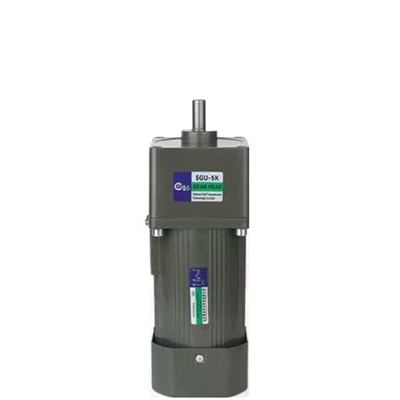
Hey there! As a supplier of 200W AC gear motors, I often get asked about what the inertia of a 200W AC gear motor is. So, I thought I'd break it down for you in this blog post.
First off, let's understand what inertia is all about. In simple terms, inertia is an object's resistance to changes in its state of motion. When it comes to motors, inertia plays a crucial role in how the motor behaves during startup, operation, and stopping.
When we talk about a 200W AC gear motor, its inertia influences a bunch of things. For starters, it affects how quickly the motor can ramp up to its desired speed during startup. A motor with high inertia will take more time and energy to reach its operating speed compared to one with low inertia. That's because more force is needed to overcome the motor's resistance to change its state of rest.
On the other hand, during the stopping phase, a motor with high inertia will also take longer to come to a halt. The stored energy due to its inertia has to be dissipated gradually. So, if you need a motor that can start and stop quickly, like in applications where rapid positioning is required, you'd want a motor with lower inertia.
Now, the inertia of a 200W AC gear motor can vary depending on several factors. One of the main factors is the design of the motor itself. The size and shape of the rotor, for example, have a big impact. A larger and heavier rotor will generally have higher inertia. The materials used in the construction of the motor also matter. Motors made with denser materials will tend to have higher inertia.
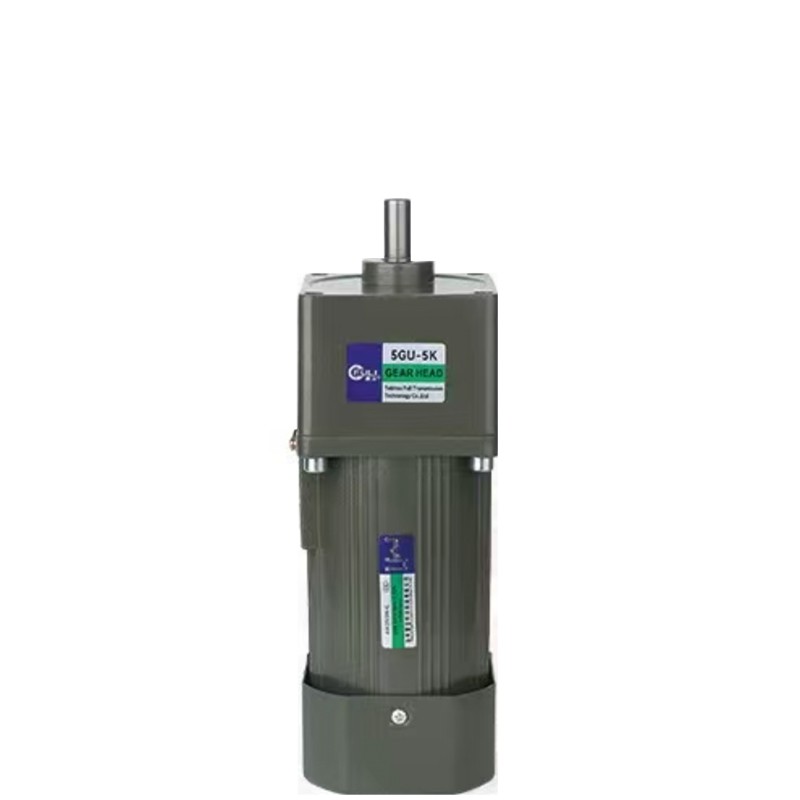

Another factor is the gearbox attached to the motor. Different gear ratios can change the effective inertia of the motor - gearbox combination. A gearbox with a high reduction ratio can magnify the load inertia felt by the motor. This is something you need to consider when selecting a 200W AC gear motor for your application.
For instance, if you're using a Worm Gear Reduction Motor, the worm gear design can introduce additional inertia due to its unique construction. The interaction between the worm and the gear can cause some energy losses and affect the overall inertia characteristics of the motor - gearbox system.
When it comes to applications, understanding the inertia of a 200W AC gear motor is super important. In conveyor systems, for example, if the motor has too high inertia, it might cause jerks or delays during acceleration and deceleration. This can lead to product damage or inconsistent operation. On the other hand, in a packaging machine that requires precise and rapid movements, a motor with low inertia is essential to achieve the desired accuracy and efficiency.
Let's say you're considering upgrading your current motor to a 200W AC gear motor. You need to carefully evaluate the inertia requirements of your application. If your current setup uses a lower - powered motor, and you're stepping up to a 200W motor, you might find that the increased inertia of the new motor affects the overall performance of your system. You'll need to make sure that your control system can handle the new inertia characteristics.
If you're in a situation where you need a motor with even more power, you might want to check out our 400W AC Gear Motor. This motor can offer higher torque and power for applications that demand more. But remember, as the power increases, the inertia also has a tendency to go up. So, you'll need to account for that in your system design.
Many of our customers also use 220V AC Gear Motors in their setups. These motors operate at a standard voltage, which makes them convenient for a wide range of applications. Just like the 200W motors, the inertia of 220V AC gear motors can vary depending on their design and configuration.
As a supplier, I've seen firsthand how choosing the right motor with the appropriate inertia can make or break an application. That's why we're always here to help our customers make informed decisions. If you're not sure which motor is best for your needs, or if you want to understand more about the inertia of our 200W AC gear motors, we're just a message away.
We can work with you to analyze your application requirements, assess the inertia needs, and recommend the most suitable motor. Whether you're a small - scale manufacturer or a large industrial operation, we have the expertise and the products to meet your expectations.
So, if you're in the market for a 200W AC gear motor, or you're just looking to learn more about motor inertia, don't hesitate to reach out. We're committed to providing you with the best products and support to ensure the success of your projects.
In conclusion, the inertia of a 200W AC gear motor is a key factor that can significantly impact its performance in various applications. By understanding the factors that influence inertia and how it relates to your specific needs, you can make a smarter choice when selecting a motor. And if you need any assistance along the way, I'm here to help. Let's work together to find the perfect motor solution for you.
References:
- "Electric Motors and Drives: Fundamentals, Types and Applications" by Austin Hughes and Bill Drury
- "Motor Handbook" by Arnold Tustin