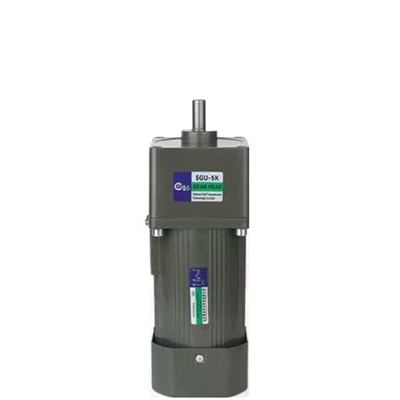
As a single phase motor supplier, I've had the privilege of witnessing the widespread use and continuous evolution of these motors in various industries. One of the most frequently asked questions from our customers is about the electrical efficiency of a single phase motor. In this blog post, I'll delve into the concept of electrical efficiency, factors affecting it, and how it impacts the performance of single phase motors.
Understanding Electrical Efficiency
Electrical efficiency is a measure of how effectively a motor converts electrical energy into mechanical energy. It is expressed as a percentage and is calculated by dividing the output power (mechanical power) by the input power (electrical power) and multiplying by 100. Mathematically, it can be represented as:
Efficiency (%) = (Output Power / Input Power) x 100
For example, if a single phase motor has an input power of 1000 watts and an output power of 800 watts, its efficiency would be:
Efficiency = (800 / 1000) x 100 = 80%
This means that 80% of the electrical energy supplied to the motor is converted into mechanical energy, while the remaining 20% is lost as heat, noise, and other forms of energy dissipation.
Factors Affecting the Electrical Efficiency of Single Phase Motors
Several factors can influence the electrical efficiency of a single phase motor. Understanding these factors is crucial for selecting the right motor for your application and optimizing its performance.
Motor Design
The design of a single phase motor plays a significant role in determining its efficiency. Motors with advanced designs, such as those with high-quality laminations, low-resistance windings, and efficient magnetic circuits, tend to have higher efficiencies. For instance, our YL Series Single Phase Motor is designed with state-of-the-art technology to minimize energy losses and maximize efficiency.
Load Characteristics
The load on a single phase motor can also affect its efficiency. Motors are typically designed to operate at their maximum efficiency at a specific load, known as the rated load. Operating a motor at a load significantly below or above its rated load can reduce its efficiency. For example, if a motor is designed to operate at 100% load and is only operating at 20% load, it may consume more energy than necessary and have a lower efficiency.


Power Supply Quality
The quality of the power supply can have a significant impact on the efficiency of a single phase motor. Voltage fluctuations, frequency variations, and harmonics in the power supply can cause additional losses in the motor and reduce its efficiency. It is important to ensure that the power supply to the motor is stable and within the specified voltage and frequency range.
Maintenance and Lubrication
Proper maintenance and lubrication are essential for ensuring the efficient operation of a single phase motor. Regular maintenance, such as cleaning, inspection, and replacement of worn parts, can help prevent energy losses due to mechanical friction and electrical resistance. Additionally, using the correct lubricants can reduce friction and improve the overall efficiency of the motor.
Importance of Electrical Efficiency in Single Phase Motors
The electrical efficiency of a single phase motor is not only important for reducing energy consumption and operating costs but also for environmental sustainability. Here are some key reasons why efficiency matters:
Energy Savings
High-efficiency single phase motors consume less energy than their less efficient counterparts, resulting in significant energy savings over the motor's lifespan. This can translate into lower electricity bills for businesses and households, making them a cost-effective choice in the long run.
Reduced Carbon Footprint
By consuming less energy, high-efficiency motors also help reduce greenhouse gas emissions and contribute to a more sustainable environment. As the demand for energy-efficient products continues to grow, choosing a single phase motor with high electrical efficiency can help businesses meet their environmental goals and comply with energy regulations.
Improved Performance and Reliability
Efficient motors tend to generate less heat and have lower operating temperatures, which can improve their performance and reliability. This can reduce the risk of motor failures and downtime, resulting in increased productivity and reduced maintenance costs.
Selecting the Right Single Phase Motor for Your Application
When selecting a single phase motor for your application, it is important to consider the electrical efficiency along with other factors such as power rating, speed, torque, and starting method. Here are some tips to help you choose the right motor:
Determine Your Power Requirements
Calculate the power requirements of your application based on the load characteristics, such as the torque and speed required. Choose a motor with a power rating that is slightly higher than your calculated requirements to ensure that it can handle the load without overloading.
Consider the Efficiency Rating
Look for motors with high efficiency ratings, such as those that meet or exceed the Energy Star or NEMA Premium efficiency standards. These motors are designed to consume less energy and provide better performance than standard motors.
Evaluate the Starting Method
Single phase motors can have different starting methods, such as capacitor start, capacitor run, and split-phase start. Choose a starting method that is suitable for your application and provides smooth and reliable starting.
Check the Motor's Compatibility
Ensure that the motor is compatible with your power supply, including the voltage, frequency, and phase. Also, consider the motor's mounting dimensions and shaft size to ensure that it can be easily installed in your application.
Our Single Phase Motor Offerings
As a leading single phase motor supplier, we offer a wide range of high-quality motors to meet the diverse needs of our customers. Our 220 Volt Single Phase Motor is designed for use in a variety of applications, including household appliances, small machinery, and industrial equipment. It features a compact design, high efficiency, and reliable performance.
In addition, our ML Series Single Phase Motor is specifically designed for applications that require high starting torque and smooth operation. It is available in a range of power ratings and speeds, making it suitable for a wide range of industrial and commercial applications.
Contact Us for Your Single Phase Motor Needs
If you are looking for a high-quality single phase motor with excellent electrical efficiency, we would be happy to help. Our team of experts can provide you with detailed information about our products, assist you in selecting the right motor for your application, and offer technical support and after-sales service.
Whether you are a small business owner, an industrial manufacturer, or a homeowner, we have the right single phase motor for you. Contact us today to discuss your requirements and start saving energy and money with our efficient motors.
References
- "Electric Motor Efficiency: A Guide for Industry," U.S. Department of Energy.
- "Single Phase Motors: Principles, Types, and Applications," Electrical4U.
- "Motor Efficiency and Power Factor," IEEE Industry Applications Magazine.