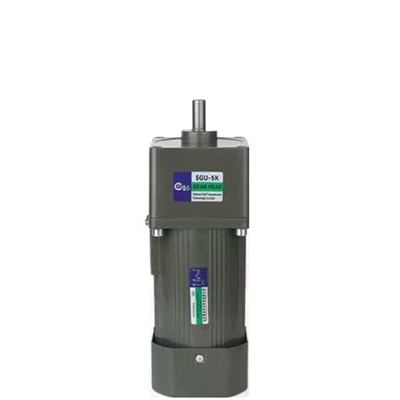
The performance of an inverter duty motor is a critical aspect that directly impacts its efficiency, reliability, and suitability for various applications. As a leading supplier of inverter duty motors, I've witnessed firsthand how the motor size plays a pivotal role in determining these performance factors. In this blog post, I'll delve into the effects of motor size on the performance of an inverter duty motor, exploring key aspects such as power output, efficiency, torque, and thermal management.
Power Output
One of the most obvious effects of motor size is its impact on power output. Generally, larger motors have a higher power rating compared to smaller ones. This is because larger motors can accommodate more windings and a larger magnetic core, which allows them to generate more electromagnetic force and, consequently, more power.
For industrial applications that require high power, such as heavy machinery and large pumps, larger inverter duty motors are often the preferred choice. These motors can handle the high load demands without overheating or experiencing excessive wear and tear. On the other hand, smaller motors are more suitable for applications with lower power requirements, such as small fans and conveyors.
However, it's important to note that simply choosing a larger motor doesn't always guarantee better performance. Oversizing a motor can lead to inefficiencies, as the motor will operate at a lower load factor, consuming more energy than necessary. Therefore, it's crucial to accurately assess the power requirements of the application before selecting the appropriate motor size.
Efficiency
Motor efficiency is another crucial factor affected by motor size. In general, larger motors tend to be more efficient than smaller ones, especially at higher loads. This is because larger motors have a lower resistance in their windings and a more optimized magnetic circuit, which reduces energy losses due to heat and magnetic hysteresis.
When operating at full load, larger inverter duty motors can achieve higher efficiency levels, resulting in lower energy consumption and cost savings over time. For example, an IE4 Electric Motor, which is designed to meet the highest energy efficiency standards, is typically available in larger sizes and can provide significant energy savings compared to less efficient motors.
However, at lower loads, the efficiency advantage of larger motors may diminish. Smaller motors can be more efficient at partial loads, as they are better matched to the load requirements and can operate closer to their peak efficiency point. Therefore, it's essential to consider the load profile of the application when evaluating motor efficiency and selecting the appropriate motor size.
Torque
Torque is the rotational force produced by the motor and is a critical parameter for many applications. The motor size has a direct impact on the torque output. Larger motors generally have a higher torque capacity compared to smaller ones, as they can generate more magnetic force due to their larger size and more substantial windings.
In applications that require high starting torque, such as crushers and mixers, larger inverter duty motors are often necessary. These motors can provide the initial force needed to overcome the inertia of the load and start the equipment smoothly. On the other hand, applications with lower torque requirements, such as fans and blowers, can typically be served by smaller motors.
It's important to note that the torque-speed characteristic of the motor also plays a crucial role in its performance. Inverter duty motors are designed to operate over a wide range of speeds, and the torque output may vary depending on the speed. Therefore, it's essential to select a motor with the appropriate torque-speed characteristic for the specific application.
Thermal Management
Thermal management is a critical aspect of motor performance, as excessive heat can damage the motor windings and reduce its lifespan. The motor size affects the thermal characteristics of the motor, as larger motors have a larger surface area and more mass, which allows them to dissipate heat more effectively.
Larger inverter duty motors are better equipped to handle high temperatures, as they can radiate heat more efficiently and have a larger thermal mass to absorb and dissipate heat. This makes them more suitable for applications that generate a significant amount of heat, such as continuous-duty operations or applications in hot environments.
In contrast, smaller motors may be more prone to overheating, especially when operating at high loads or in confined spaces. To ensure proper thermal management, it's important to provide adequate ventilation and cooling for smaller motors and to select a motor with a suitable insulation class and thermal protection features.
Application Considerations
When selecting the appropriate motor size for an inverter duty motor, it's essential to consider the specific requirements of the application. Different applications have different load profiles, speed requirements, and environmental conditions, which can all influence the motor size selection.
For example, in applications with variable speed requirements, such as conveyor systems and pumps, an inverter duty motor with a wide speed range is often required. In such cases, the motor size should be selected based on the maximum power and torque requirements at the highest operating speed, as well as the efficiency and thermal characteristics at different speeds.


In applications with high starting torque requirements, such as crushers and mills, a motor with a high starting torque capacity is necessary. The motor size should be selected to ensure that it can provide the required starting torque without overloading the motor or the electrical system.
Environmental conditions, such as temperature, humidity, and dust, can also affect the motor size selection. In hot or humid environments, a motor with a higher insulation class and better thermal management features may be required. In dusty or dirty environments, a motor with a sealed enclosure or a high degree of protection may be necessary.
Conclusion
In conclusion, the motor size has a significant impact on the performance of an inverter duty motor, affecting power output, efficiency, torque, and thermal management. When selecting the appropriate motor size, it's essential to consider the specific requirements of the application, including load profile, speed requirements, and environmental conditions.
As a supplier of inverter duty motors, I understand the importance of choosing the right motor size for optimal performance and energy efficiency. We offer a wide range of Cast Iron Three Phase Motor and Three Phase Brake Motor in various sizes and configurations to meet the diverse needs of our customers.
If you're in the market for an inverter duty motor and need assistance in selecting the appropriate motor size for your application, please don't hesitate to contact us. Our team of experts is available to provide you with professional advice and guidance to ensure that you make the right choice.
References
- Fitzgerald, A. E., Kingsley, C., & Umans, S. D. (2003). Electric Machinery (6th ed.). McGraw-Hill.
- Chapman, S. J. (2012). Electric Machinery Fundamentals (5th ed.). McGraw-Hill.
- IEEE Standard 112-2004, Standard Test Procedures for Polyphase Induction Motors and Generators.