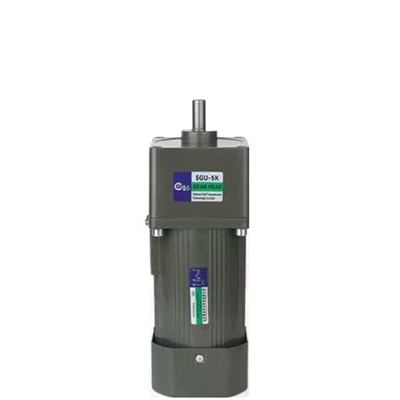
Altitude plays a crucial role in the performance of a vortex blower, specifically affecting its pressure and flow rate. As a vortex blower supplier, I've witnessed firsthand how the operating environment, especially altitude, can significantly influence the functionality of these machines. In this blog post, I'll delve into the scientific aspects of how altitude impacts a vortex blower's pressure and flow rate, and what you need to consider when using these blowers at different elevations.


Understanding Vortex Blowers
Before we explore the effects of altitude, let's briefly understand what a vortex blower is. A vortex blower, also known as a side channel blower, operates on the principle of a rotating impeller. The impeller creates a vortex effect, which draws in air at the center and expels it at high pressure through the sides. These blowers are widely used in various industries, including wastewater treatment, pneumatic conveying, and printing, due to their ability to generate high pressure and flow rates in a compact design.
There are different types of vortex blowers available, such as the Single Phase Vortex Blower and the High Pressure Vortex Blower. The single-phase version is typically used in smaller applications where a lower power supply is sufficient, while the high-pressure variant is designed for more demanding tasks that require a greater pressure differential.
The Impact of Altitude on Air Density
The primary factor that links altitude to a vortex blower's performance is air density. As altitude increases, the air density decreases. This is because the atmosphere becomes thinner, and there are fewer air molecules per unit volume. Air density is a critical parameter for the operation of a vortex blower, as the blower's ability to generate pressure and flow rate depends on the mass of air it can move.
The relationship between altitude and air density can be described by the barometric formula. At sea level, the standard air density is approximately 1.225 kg/m³. However, as you ascend to higher altitudes, the air density decreases. For example, at an altitude of 1,000 meters, the air density drops to around 1.112 kg/m³, and at 2,000 meters, it further decreases to about 1.007 kg/m³.
Effect on Pressure
The pressure generated by a vortex blower is directly related to the air density. A blower works by imparting kinetic energy to the air molecules, which then convert this energy into pressure. When the air density is lower, there are fewer air molecules to be accelerated by the impeller. As a result, the blower is less efficient in generating pressure.
Mathematically, the pressure ratio of a blower is proportional to the air density. A decrease in air density leads to a corresponding decrease in the pressure generated by the blower. For instance, if a vortex blower is rated to produce a certain pressure at sea level, when it is operated at a higher altitude, the actual pressure output will be lower. This can have a significant impact on applications that require a specific pressure level, such as pneumatic conveying systems or wastewater aeration.
In some cases, the decrease in pressure may not be immediately noticeable, especially if the altitude change is relatively small. However, as the altitude increases, the reduction in pressure can become substantial, and the blower may not be able to meet the requirements of the application. To compensate for this, it may be necessary to select a blower with a higher pressure rating or to install additional blowers in parallel.
Effect on Flow Rate
Similar to pressure, the flow rate of a vortex blower is also affected by altitude. The flow rate is the volume of air that the blower can move per unit time. Since the air density decreases with altitude, the mass of air flowing through the blower also decreases, even if the volumetric flow rate remains the same.
The impeller of a vortex blower is designed to move a certain mass of air. When the air density is lower, the blower has to work harder to move the same mass of air. This can result in a decrease in the volumetric flow rate, as the blower may not be able to maintain the same speed or efficiency at higher altitudes.
In applications where a constant flow rate is required, such as in ventilation systems or drying processes, the decrease in flow rate due to altitude can be a significant issue. To ensure that the required flow rate is maintained, it may be necessary to adjust the blower speed or to select a blower with a larger impeller diameter.
Considerations for High-Altitude Applications
When using a vortex blower at high altitudes, there are several considerations to keep in mind. Firstly, it's important to select the right blower for the application. This involves calculating the required pressure and flow rate at the specific altitude where the blower will be operating. You may need to consult the blower manufacturer's performance curves, which provide information on how the blower's performance changes with altitude.
Secondly, it's essential to monitor the blower's performance regularly. This includes measuring the pressure and flow rate and comparing them to the expected values. If there are any significant deviations, it may be necessary to make adjustments to the blower or to the system as a whole.
Finally, proper maintenance is crucial for the long-term performance of the blower. At high altitudes, the blower may experience more wear and tear due to the increased workload. Regular cleaning, lubrication, and inspection of the blower components can help to ensure its reliability and efficiency.
Conclusion
In conclusion, altitude has a significant impact on a vortex blower's pressure and flow rate. As a vortex blower supplier, I understand the importance of considering altitude when selecting and operating these machines. By understanding the relationship between altitude, air density, and blower performance, you can make informed decisions to ensure that your blower meets the requirements of your application, regardless of the altitude.
If you're in the market for a vortex blower and need assistance in selecting the right model for your high-altitude application, don't hesitate to contact us. Our team of experts is available to provide you with the necessary guidance and support to ensure that you get the most out of your blower. We offer a wide range of Single Phase Vortex Blowers and High Pressure Vortex Blowers that are designed to perform optimally in various operating conditions.
References
- Cengel, Y. A., & Cimbala, J. M. (2014). Fluid Mechanics: Fundamentals and Applications. McGraw-Hill Education.
- Holman, J. P. (2009). Heat Transfer. McGraw-Hill Education.
- ASHRAE Handbook - Fundamentals (2017). American Society of Heating, Refrigerating and Air-Conditioning Engineers.