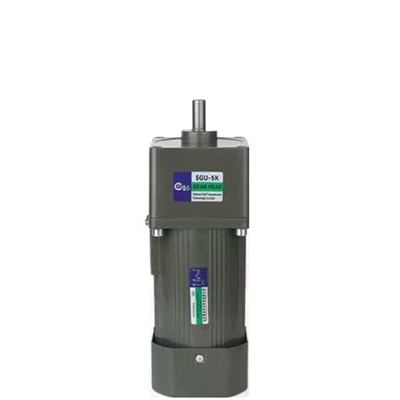
As a dedicated supplier of IE4 Electric Motors, I often receive inquiries about the acceleration and deceleration time of these high - efficiency motors. Understanding these aspects is crucial for optimizing the performance of various industrial applications. In this blog, we will delve into the concept of acceleration and deceleration time in IE4 Electric Motors, exploring the factors that influence them and how they impact overall motor operation.
Understanding Acceleration and Deceleration Time
Acceleration time refers to the period required for an IE4 Electric Motor to reach its rated speed from a standstill. Conversely, deceleration time is the duration it takes for the motor to come to a complete stop from its rated speed. These times are significant because they affect the motor's energy consumption, mechanical stress on the system, and the overall productivity of the application.
For instance, in conveyor belt systems, a short acceleration time can quickly get the belt moving, reducing the time between product loading and transportation. On the other hand, in precision machining operations, a controlled deceleration time is necessary to ensure accurate positioning of the cutting tools and prevent damage to the workpiece.


Factors Affecting Acceleration and Deceleration Time
Load Inertia
One of the primary factors influencing the acceleration and deceleration time of an IE4 Electric Motor is the load inertia. Load inertia is a measure of the resistance of a rotating object to changes in its rotational speed. Higher load inertia means that more energy is required to accelerate or decelerate the load.
For example, in a large - scale industrial mixer, the heavy mixing blades have a high inertia. As a result, the IE4 Electric Motor driving the mixer will take longer to accelerate and decelerate compared to a motor driving a lighter load, such as a small fan.
Motor Power and Torque
The power and torque of the IE4 Electric Motor itself play a crucial role. A motor with higher power and torque can provide more force to accelerate or decelerate the load more quickly. When selecting an IE4 Electric Motor for an application, it is essential to choose a motor with sufficient power and torque to meet the acceleration and deceleration requirements.
For instance, if an application requires rapid acceleration and deceleration, a high - power IE4 Electric Motor with a high starting torque should be considered. Our IE4 Electric Motor offers a wide range of power ratings and torque characteristics to suit different industrial needs.
Control System
The control system used with the IE4 Electric Motor also affects the acceleration and deceleration time. Advanced control systems can precisely regulate the motor's speed and torque, allowing for optimized acceleration and deceleration profiles.
For example, variable frequency drives (VFDs) can adjust the motor's input frequency and voltage, enabling smooth and controlled acceleration and deceleration. By programming the VFD, users can set specific acceleration and deceleration times according to the requirements of the application.
Calculating Acceleration and Deceleration Time
The calculation of acceleration and deceleration time involves several parameters, including load inertia, motor torque, and the desired speed change. The basic formula for calculating acceleration time (t_a) is:
[t_a=\frac{J\times\Delta\omega}{T_a}]
where (J) is the load inertia, (\Delta\omega) is the change in angular velocity, and (T_a) is the available accelerating torque.
Similarly, the deceleration time (t_d) can be calculated using the formula:
[t_d=\frac{J\times\Delta\omega}{T_d}]
where (T_d) is the available decelerating torque.
It is important to note that these calculations are simplified and may need to be adjusted based on real - world factors such as friction, losses, and the dynamic characteristics of the motor and load.
Importance of Optimizing Acceleration and Deceleration Time
Energy Efficiency
Optimizing the acceleration and deceleration time can significantly improve the energy efficiency of the IE4 Electric Motor. A smooth and well - controlled acceleration and deceleration process reduces energy waste during start - up and stop phases.
For example, if a motor accelerates too quickly, it may draw excessive current, leading to higher energy consumption. By adjusting the acceleration and deceleration time, the motor can operate more efficiently, resulting in cost savings over time.
Equipment Lifespan
Proper acceleration and deceleration times also contribute to the longevity of the motor and the connected equipment. Abrupt starts and stops can cause mechanical stress on the motor shaft, bearings, and other components, leading to premature wear and failure.
By using a controlled acceleration and deceleration process, the mechanical stress on the equipment is reduced, extending its lifespan and reducing maintenance costs.
Applications and Acceleration/Deceleration Requirements
Conveyor Systems
In conveyor systems, the acceleration and deceleration time should be carefully considered to ensure smooth product flow. A short acceleration time is desirable to quickly move products from one point to another, while a controlled deceleration time is necessary to prevent products from toppling or colliding at the end of the conveyor.
Our Three Phase Brake Motor can be an excellent choice for conveyor systems, as it provides reliable braking and can be configured to achieve the desired acceleration and deceleration times.
Machine Tools
Machine tools, such as lathes and milling machines, require precise acceleration and deceleration to ensure accurate machining. A rapid but controlled acceleration is needed to quickly reach the cutting speed, while a smooth deceleration is necessary to stop the spindle without causing damage to the workpiece or the tool.
The Y2 Three Phase Motor offers high - precision control and can be customized to meet the specific acceleration and deceleration requirements of machine tool applications.
Conclusion
In conclusion, the acceleration and deceleration time of an IE4 Electric Motor are critical factors that impact its performance, energy efficiency, and the lifespan of the connected equipment. By understanding the factors that influence these times, such as load inertia, motor power and torque, and the control system, users can optimize the motor's operation for their specific applications.
As a leading supplier of IE4 Electric Motors, we are committed to providing high - quality products and technical support to help our customers achieve the best performance from their motors. Whether you need a motor for a conveyor system, a machine tool, or any other industrial application, we have the expertise and products to meet your needs.
If you are interested in learning more about our IE4 Electric Motors or have specific requirements regarding acceleration and deceleration time, we encourage you to contact us for a detailed discussion and procurement negotiation. Our team of experts will be happy to assist you in finding the most suitable motor solution for your application.
References
- Fitzgerald, A. E., Kingsley, C., & Umans, S. D. (2003). Electric Machinery. McGraw - Hill.
- Chapman, S. J. (2012). Electric Machinery Fundamentals. McGraw - Hill.