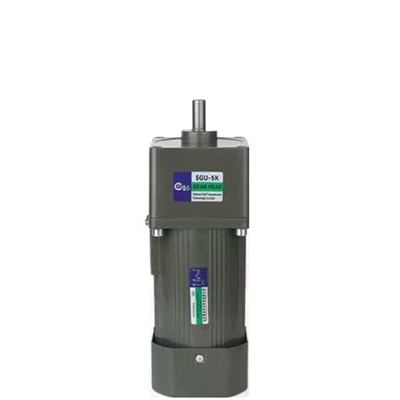
As a supplier of IE3 electric motors, I've had the privilege of delving deep into the technical intricacies of these remarkable machines. In this blog, I'll explore the thermal characteristics of IE3 electric motors, shedding light on their importance and implications for various applications.
Understanding the Basics of IE3 Electric Motors
Before we dive into the thermal characteristics, let's briefly review what IE3 electric motors are. IE3 motors fall under the high - efficiency category as defined by the International Electrotechnical Commission (IEC). These motors are designed to minimize energy losses, offering significant advantages in terms of energy savings and environmental impact compared to lower - efficiency motor classes.
Heat Generation in IE3 Electric Motors
One of the fundamental aspects of the thermal behavior of IE3 electric motors is heat generation. Heat is primarily produced due to two main factors: copper losses and iron losses.
Copper losses, also known as I²R losses, occur in the motor's windings. When an electric current passes through the copper conductors of the windings, the resistance of the copper causes some of the electrical energy to be converted into heat. The amount of heat generated is proportional to the square of the current (I²) and the resistance (R) of the windings. In IE3 motors, manufacturers use high - quality copper with low resistivity to reduce these losses.
Iron losses, on the other hand, are related to the magnetic properties of the motor's core. They consist of hysteresis losses and eddy - current losses. Hysteresis losses occur because the magnetic domains in the core material constantly realign as the magnetic field alternates. Eddy - current losses are caused by circulating currents induced in the core due to the changing magnetic field. To minimize iron losses, IE3 motors often use high - grade electrical steel with low hysteresis and eddy - current characteristics for the core.
Thermal Management in IE3 Electric Motors
Effective thermal management is crucial for the reliable operation and longevity of IE3 electric motors. Overheating can lead to insulation degradation, reduced motor efficiency, and even premature motor failure. There are several methods employed to manage the heat generated in these motors.
Cooling Systems
Most IE3 motors are equipped with cooling systems. The most common type is the self - ventilated cooling system, where a fan mounted on the motor shaft draws air over the motor's surface. This air circulation helps to dissipate the heat generated inside the motor. The design of the cooling fins on the motor's housing is also optimized to increase the surface area available for heat transfer.
In some applications where more efficient cooling is required, liquid - cooled systems may be used. These systems use a coolant, such as water or a water - glycol mixture, to absorb the heat from the motor. The coolant is then circulated through a heat exchanger, where the heat is transferred to the surrounding environment.
Insulation Materials
The choice of insulation materials also plays a vital role in thermal management. High - quality insulation materials with good thermal resistance are used in IE3 motors. These materials can withstand high temperatures without degrading, ensuring the integrity of the motor's windings. The insulation class of a motor indicates the maximum temperature at which the insulation can operate safely. IE3 motors typically use insulation classes such as F or H, which can tolerate relatively high temperatures.
Impact of Thermal Characteristics on Motor Performance
The thermal characteristics of IE3 electric motors have a direct impact on their performance.
Efficiency
As mentioned earlier, excessive heat can reduce motor efficiency. When a motor overheats, the resistance of the windings increases, leading to higher copper losses. Additionally, the magnetic properties of the core material can be affected, increasing iron losses. By maintaining proper thermal management, IE3 motors can operate at their optimal efficiency levels, resulting in energy savings over the motor's lifetime.
Torque and Power Output
The thermal conditions of a motor can also affect its torque and power output. At high temperatures, the magnetic field strength in the motor may decrease, which can lead to a reduction in torque. This can be a significant issue in applications where constant torque is required, such as conveyor systems or industrial pumps. To ensure stable torque and power output, it is essential to keep the motor within its specified temperature range.
Comparison with Other Motor Types
When comparing IE3 electric motors with other motor types, such as Cast Iron Three Phase Motor, IE4 Electric Motor, and Inverter Duty Motor, their thermal characteristics show some differences.
Compared to lower - efficiency cast - iron three - phase motors, IE3 motors generate less heat due to their improved design and higher - quality materials. This means that they require less intensive cooling and are less prone to overheating.
IE4 electric motors, which are even more efficient than IE3 motors, have even better thermal characteristics. They are designed to minimize both copper and iron losses to an even greater extent, resulting in lower heat generation. However, the cost of IE4 motors is generally higher, and in some applications, the additional efficiency may not justify the extra expense.


Inverter - duty motors are designed to operate with variable - frequency drives. These motors need to be able to handle the additional heat generated by the harmonic currents produced by the inverter. IE3 motors can also be used with inverters, but they may require additional thermal protection measures to ensure reliable operation.
Applications and Considerations
The thermal characteristics of IE3 electric motors make them suitable for a wide range of applications. In industrial settings, they are commonly used in pumps, fans, compressors, and conveyor systems. In these applications, the motors need to operate continuously for long periods, and efficient thermal management is essential to prevent overheating and ensure reliable performance.
When selecting an IE3 electric motor for a specific application, it is important to consider the ambient temperature, the duty cycle of the motor, and the available cooling options. For example, in a hot industrial environment, a motor with a higher insulation class and a more efficient cooling system may be required.
Conclusion
In conclusion, the thermal characteristics of IE3 electric motors are a critical aspect of their design and performance. Understanding how these motors generate and dissipate heat is essential for ensuring their reliable operation, energy efficiency, and long - term durability. As a supplier of IE3 electric motors, I am committed to providing high - quality products that meet the thermal requirements of various applications.
If you are interested in learning more about our IE3 electric motors or have any specific requirements for your application, I encourage you to reach out to us for a detailed discussion and potential procurement. We are ready to assist you in finding the most suitable motor solution for your needs.
References
- International Electrotechnical Commission (IEC) standards on motor efficiency.
- Technical literature from motor manufacturers on IE3 motor design and thermal management.