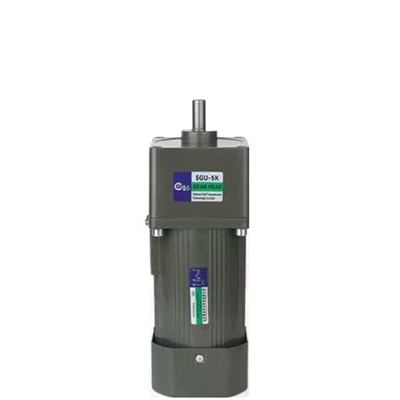
Hey there! As a gear motor supplier, I've seen firsthand the many benefits these motors bring to various industries. They're super useful for reducing speed and increasing torque, making them a staple in countless applications. But like any product, gear motors aren't without their drawbacks. In this blog, I'll be diving into some of the disadvantages of gear motors that you should be aware of.
1. Efficiency Loss
One of the biggest cons of gear motors is efficiency loss. When power is transferred through the gears, some of it is lost as heat due to friction. This means that not all of the electrical energy you put into the motor gets converted into useful mechanical energy. For example, in a Gear Reduction Motor, the more gears there are in the system, the more friction there is, and the greater the efficiency loss.
This efficiency loss can have a few implications. First, it means that you'll end up using more electricity to achieve the same amount of work. Over time, this can lead to higher energy bills, especially in applications where the motor runs continuously. Second, the heat generated by the friction can cause the motor to overheat, which can shorten its lifespan and increase the risk of breakdowns.
2. Noise and Vibration
Gear motors can be pretty noisy, especially when they're running at high speeds or under heavy loads. The meshing of the gears creates vibrations and noise, which can be a nuisance in quiet environments. For instance, in a home appliance like a blender or a washing machine, the noise from a gear motor can be quite annoying.
The noise and vibration can also have a negative impact on the performance and reliability of the motor. The vibrations can cause the gears to wear out faster, leading to increased maintenance costs and a shorter lifespan. Additionally, the noise can make it difficult to detect other potential problems with the motor, such as unusual rattling or grinding sounds that could indicate a more serious issue.
3. Maintenance Requirements
Gear motors require regular maintenance to keep them running smoothly. The gears need to be lubricated to reduce friction and wear, and the motor needs to be inspected for any signs of damage or wear. This can be time-consuming and costly, especially for large industrial applications where there are multiple gear motors to maintain.
In addition to regular lubrication and inspection, gear motors may also need to have their gears replaced periodically. Over time, the gears can wear down due to the constant meshing and friction, which can affect the performance of the motor. Replacing the gears can be a complex and expensive process, especially if the motor is part of a larger system.
4. Size and Weight
Gear motors tend to be larger and heavier than other types of motors, such as direct-drive motors. This can be a problem in applications where space is limited or where weight is a concern. For example, in a portable device or a robotic arm, the size and weight of a gear motor can make it difficult to design a compact and lightweight system.
The larger size and weight of gear motors can also make them more difficult to install and transport. You may need to use special equipment or tools to install the motor, and you may need to take extra precautions when transporting it to avoid damage.
5. Cost
Gear motors can be more expensive than other types of motors. The cost of the gears, the housing, and the additional components required for the gear system can add up quickly. Additionally, the maintenance and repair costs associated with gear motors can also be higher compared to other types of motors.
For small-scale applications or low-budget projects, the higher cost of gear motors may not be feasible. In these cases, you may need to consider other types of motors that offer similar performance at a lower cost.
6. Limited Speed Range
Gear motors typically have a limited speed range. The speed of the motor is determined by the gear ratio, and once the gear ratio is set, it can be difficult to change the speed of the motor without replacing the gears. This can be a problem in applications where you need to vary the speed of the motor, such as in a conveyor belt or a mixer.
In some cases, you may be able to use a variable frequency drive (VFD) to adjust the speed of the motor, but this can add to the cost and complexity of the system.
7. Backlash
Backlash is another issue that can occur with gear motors. Backlash refers to the amount of play or clearance between the gears. When the direction of the motor changes, the gears need to overcome this clearance before they can start transmitting power in the new direction. This can result in a delay or a jerky motion, which can be a problem in applications where precise control is required.
For example, in a robotic arm or a CNC machine, the backlash can affect the accuracy and repeatability of the system. To minimize backlash, you may need to use high-precision gears or additional components, which can increase the cost of the motor.
8. Environmental Sensitivity
Gear motors can be sensitive to environmental conditions, such as temperature, humidity, and dust. Extreme temperatures can affect the viscosity of the lubricant, which can reduce its effectiveness and increase the risk of wear and tear on the gears. High humidity can cause the gears to rust and corrode, while dust and debris can get into the motor and cause damage to the gears and other components.
In harsh environments, such as outdoor applications or industrial settings, you may need to take extra precautions to protect the gear motor. This can include using a sealed motor housing, installing a dust filter, or using a special lubricant that is resistant to extreme temperatures and environmental conditions.
Despite these disadvantages, gear motors are still widely used in many applications because of their ability to provide high torque at low speeds. If you're considering using a gear motor for your project, it's important to weigh the pros and cons carefully and choose a motor that is suitable for your specific needs.
If you're in the market for a gear motor, we offer a wide range of options, including 220V AC Gear Motor and Worm Gear Reduction Motor. Our team of experts can help you find the right motor for your application and provide you with all the support you need. If you have any questions or would like to discuss your requirements further, feel free to reach out to us for a purchasing negotiation. We're here to help you make the best decision for your project.

References
- "Motor Handbook" by Arnold Tustin
- "Electric Machinery Fundamentals" by Stephen Chapman