As a supplier of IE4 Electric Motors, I often encounter inquiries from customers regarding the suitability of these motors for intermittent operation. This blog post aims to delve into this topic, providing a comprehensive analysis based on scientific principles and real - world applications.
Understanding Intermittent Operation
Intermittent operation refers to a mode where a motor runs for a certain period, followed by a rest period. This cycle can vary in duration depending on the specific application. Industries such as conveyor systems, hoists, and some manufacturing processes often require motors to operate intermittently. The key factors in intermittent operation include the duty cycle (the ratio of running time to the total cycle time), the load during the running period, and the frequency of start - stop cycles.
Characteristics of IE4 Electric Motors
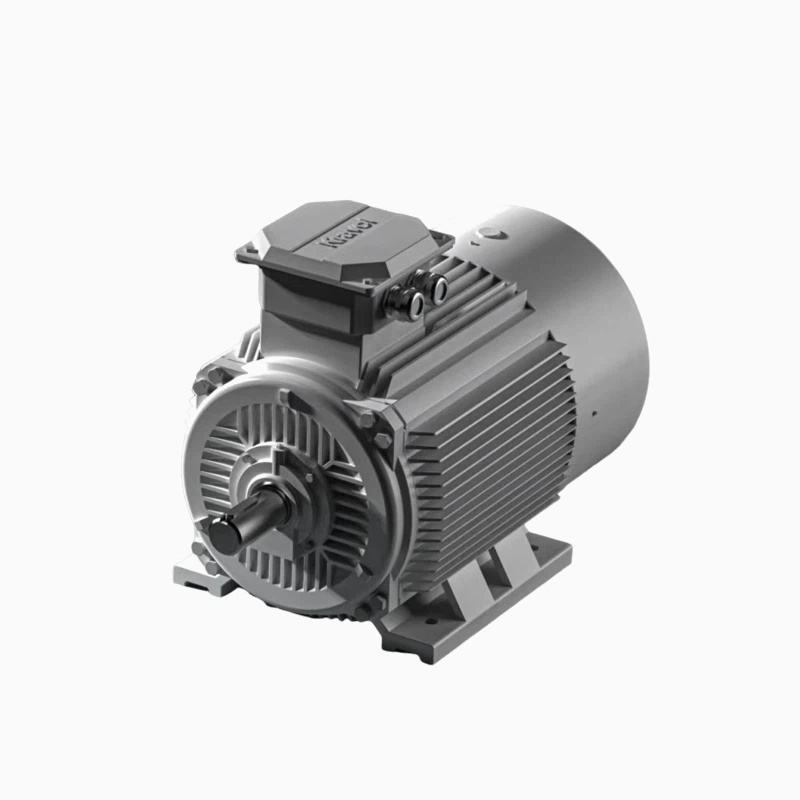
The IE4 Electric Motor is known for its high efficiency. It is designed to meet the most stringent energy - efficiency standards, offering significant energy savings compared to its predecessors, such as the IE3 Electric Motor and IE2 Electric Motor. These motors typically have advanced designs, including improved magnetic circuits, low - loss materials, and optimized cooling systems.
Advantages of IE4 Electric Motors for Intermittent Operation
Energy Efficiency
One of the primary advantages of using an IE4 Electric Motor for intermittent operation is energy efficiency. During the running period, the motor consumes less power compared to lower - efficiency motors. Since the motor is not running continuously, the energy savings can be substantial over time. For example, in a conveyor system that operates for 30 minutes in an hour, an IE4 motor will use less electricity during that 30 - minute running period, resulting in lower overall energy costs.
Thermal Management
IE4 motors are often equipped with better cooling systems. In intermittent operation, the rest periods allow the motor to dissipate heat effectively. The advanced cooling mechanisms in IE4 motors ensure that the temperature rise during the running period is well - controlled. This helps to extend the motor's lifespan and reduces the risk of overheating - related failures. For instance, in a hoist application where the motor operates for short bursts to lift heavy loads, the efficient cooling system of an IE4 motor can prevent excessive heat build - up.
Fast Response and High Torque
IE4 motors typically have a fast response time and high starting torque. In intermittent operation, where the motor needs to start and stop frequently, these characteristics are crucial. The high starting torque allows the motor to quickly reach the required speed, while the fast response time enables precise control of the motor's operation. This is particularly beneficial in applications such as automated manufacturing processes, where quick and accurate movements are required.
Challenges and Considerations
Initial Cost
One of the main challenges of using IE4 Electric Motors is the higher initial cost compared to lower - efficiency motors. However, it is important to consider the long - term savings in energy costs and maintenance. In intermittent operation, the energy savings can offset the higher upfront investment over time. For example, although the purchase price of an IE4 motor may be 20% higher than an IE3 motor, the energy savings over a few years of operation can make the IE4 motor a more cost - effective choice.
Over - Sizing
In some cases, improper sizing of the motor can be an issue. In intermittent operation, it is essential to accurately calculate the load requirements during the running period. Over - sizing the motor can lead to inefficiencies, as the motor may operate at a lower load factor, reducing its overall efficiency. On the other hand, under - sizing the motor can result in overheating and premature failure. Therefore, a detailed analysis of the application's load profile is necessary to select the appropriate IE4 motor.
Real - World Applications and Case Studies
Conveyor Systems
In a large - scale distribution center, conveyor systems are often used to transport goods. These conveyors operate intermittently, depending on the flow of goods. By using IE4 Electric Motors, the distribution center was able to reduce its energy consumption by up to 15% compared to using IE3 motors. The fast response time of the IE4 motors also improved the overall efficiency of the conveyor system, reducing the time required to move goods.
Hoist Applications
In a construction site, hoists are used to lift heavy materials. The hoist motors operate intermittently, with short running periods to lift the loads and longer rest periods. The use of IE4 motors in these hoists not only reduced energy consumption but also improved the reliability of the hoist system. The high starting torque of the IE4 motors allowed for smooth and quick lifting of heavy loads, while the efficient cooling system ensured that the motors could withstand the frequent start - stop cycles.
Conclusion
In conclusion, the IE4 Electric Motor is generally well - suited for intermittent operation. Its high energy efficiency, excellent thermal management, fast response, and high torque make it a great choice for a wide range of applications. Although there are challenges such as the higher initial cost and the need for proper sizing, the long - term benefits in terms of energy savings and reliability outweigh these drawbacks.
If you are considering using IE4 Electric Motors for your intermittent operation applications, I encourage you to contact us for a detailed consultation. We can help you select the most appropriate motor for your specific needs and provide you with a cost - benefit analysis. Our team of experts is ready to assist you in making an informed decision.
References
- International Electrotechnical Commission (IEC). IEC 60034 - 30 - 1:2014, Rotating electrical machines - Part 30 - 1: Efficiency classes of single - speed, three - phase, cage induction motors (IE code).
- IEEE Transactions on Industry Applications. Various research papers on motor efficiency and performance in intermittent operation.