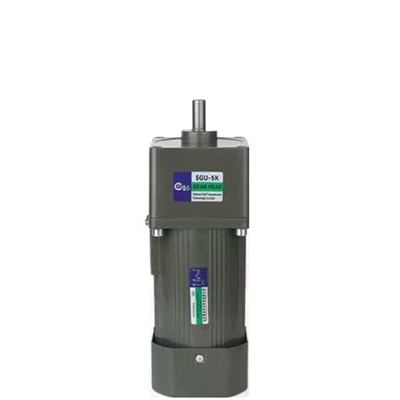
Hey there! I'm a supplier of 400W AC Gear Motors, and I've seen my fair share of motor issues. In this blog, I'll walk you through how to troubleshoot a 400W AC Gear Motor. Whether you're a DIY enthusiast or a professional in the industry, these tips can save you time and money.
1. Initial Checks
Before you dive into the more complex troubleshooting steps, it's always a good idea to start with the basics.
Power Supply
First things first, check the power supply. Make sure the motor is properly plugged in and that the power source is working. You can use a multimeter to measure the voltage at the motor terminals. For a 400W AC Gear Motor, the typical voltage is around 220V. If you're interested in a 220V AC Gear Motor, we also have a great selection.
A common problem is a blown fuse. Check the fuse in the power circuit. If it's blown, replace it with a fuse of the same rating. Also, make sure there are no loose connections in the wiring. A loose wire can cause intermittent power supply or no power at all to the motor.
Motor Overheating
If the motor seems to be overheating, it could be due to several reasons. One of the most common causes is overloading. Check if the motor is being asked to do more work than its rated capacity. If you're operating a mechanism that requires more power, you might consider upgrading to a higher - wattage motor. We also supply 200W AC Gear Motor if you have a lower - power requirement.
Another reason for overheating could be poor ventilation. Make sure the motor's cooling fins are clean and not blocked by dust or debris. If the motor is enclosed, ensure that the enclosure has proper ventilation holes and that they are not obstructed.
2. Mechanical Issues
The mechanical components of the gear motor can also cause problems.
Gearbox Inspection
The gearbox is a crucial part of the AC gear motor. Check for any signs of wear or damage to the gears. If the gears are worn out, they may not mesh properly, which can lead to reduced efficiency or even complete failure of the motor. You can listen for unusual noises coming from the gearbox. A grinding or clicking sound could indicate a problem with the gears.
If you find that the gears are damaged, you'll need to replace them. Make sure to use the correct replacement gears that are compatible with your 400W AC Gear Motor. You can find high - quality replacement parts for our 400W AC Gear Motor from us.
Shaft Alignment
Proper shaft alignment is essential for the smooth operation of the gear motor. Misaligned shafts can cause excessive vibration, which can lead to premature wear of the bearings and other components. Use a dial indicator to check the alignment of the motor shaft and the driven shaft. If the alignment is off, adjust it according to the manufacturer's specifications.
3. Electrical Issues
Electrical problems can also plague 400W AC Gear Motors.
Capacitor Check
Many AC gear motors use capacitors to start and run. A faulty capacitor can cause the motor to have trouble starting or to run inefficiently. You can use a capacitor tester to check the capacitance value of the capacitor. If the value is outside the specified range, replace the capacitor.
Winding Resistance
Check the winding resistance of the motor using a multimeter. Compare the measured resistance values with the manufacturer's specifications. A significant deviation from the normal values could indicate a short - circuit or an open - circuit in the motor windings. If the windings are damaged, the motor may need to be rewound or replaced.
4. Control System Problems
If the motor is part of a control system, issues with the controls can also affect its operation.
Switch and Relay Checks
Check the switches and relays in the control circuit. A faulty switch or relay can prevent the motor from starting or cause it to stop unexpectedly. Look for signs of arcing or burning on the contacts. If the contacts are damaged, replace the switch or relay.
Programmable Logic Controller (PLC), if applicable
If the motor is controlled by a PLC, make sure the programming is correct. Review the ladder logic or the control program to ensure that it is sending the correct signals to the motor. Check for any error codes on the PLC display and refer to the PLC manual for troubleshooting.
5. Testing and Verification
After you've made the necessary repairs or adjustments, it's time to test the motor.
Initial Start - Up
Before running the motor at full load, do a short test start - up. Listen for any unusual noises and check for any vibrations. If everything seems okay, gradually increase the load on the motor.

Performance Monitoring
Monitor the motor's performance over a period of time. Check the temperature, current draw, and speed of the motor. If you notice any abnormal changes in these parameters, there may still be an underlying problem that needs to be addressed.
Conclusion and Call to Action
Troubleshooting a 400W AC Gear Motor can seem daunting, but by following these steps, you can identify and fix most common problems. As a supplier, we're here to support you. Whether you need replacement parts, technical advice, or are looking to purchase a new 400W AC Gear Motor, we've got you covered.
If you're experiencing motor issues or are interested in our products, don't hesitate to reach out for a friendly chat and explore a potential purchase. We're eager to help you find the best solutions for your needs.
References
- Electrical Motor Handbook
- Gear Motor Maintenance Manuals