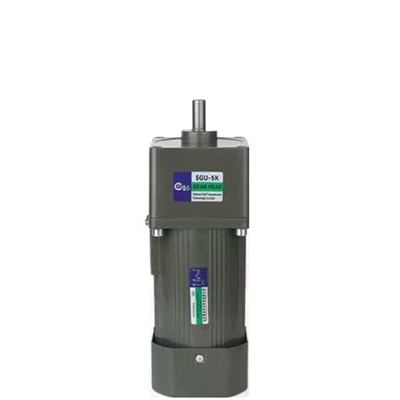
Hey there! I'm a supplier of IE3 Electric Motors, and today I wanna talk about how the price of an IE3 electric motor varies with power.
First off, let me give you a quick rundown on what an IE3 Electric Motor is. These motors are super efficient, and they've become quite popular in various industries. You can learn more about them on this page: IE3 Electric Motor.
When it comes to the relationship between power and price, it's not as simple as you might think. Generally speaking, as the power of an IE3 electric motor goes up, the price also increases. But there are a bunch of factors that can influence this relationship.

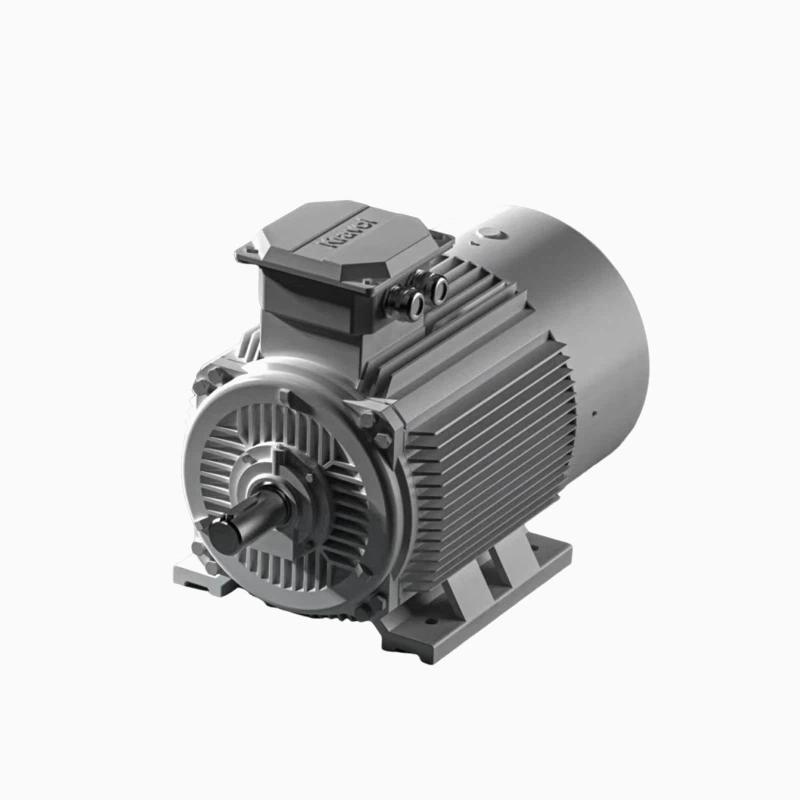
Basic Cost Drivers
One of the main reasons why higher - power motors cost more is the materials. A more powerful motor needs larger and more robust components. For example, the stator windings in a high - power motor have to handle more current, so they're made of thicker and longer copper wires. Copper is a significant cost factor, and as the power requirement goes up, the amount of copper needed also increases substantially.
The core of the motor, usually made of laminated steel, also needs to be larger for high - power motors. This is because it has to handle the magnetic flux generated by the high - power operation. The manufacturing process for these larger cores is more complex and time - consuming, which adds to the cost.
Manufacturing Complexity
Higher - power motors are also more complex to manufacture. They require more precise machining and assembly. The tolerances for high - power motors are often tighter because any small misalignment or imbalance can lead to significant performance issues, such as excessive vibration or overheating.
For instance, the rotor of a high - power motor has to be balanced very accurately. If it's not, the motor can vibrate, which not only reduces its efficiency but also shortens its lifespan. Balancing a large and heavy rotor is a more difficult and expensive process compared to a small one.
Performance and Efficiency
IE3 motors are known for their high efficiency, but maintaining this efficiency at higher powers is a challenge. High - power motors have to dissipate more heat, and special cooling mechanisms may be required. For example, some high - power IE3 motors come with forced - air cooling or liquid - cooling systems. These cooling systems add to the cost of the motor.
However, it's important to note that even though high - power motors cost more, they can be more cost - effective in the long run. A high - power motor can do more work in less time, which can lead to increased productivity. And because of their high efficiency, they consume less energy over their lifetime, which can result in significant savings on electricity bills.
Market Demand and Competition
The market demand for different power levels of IE3 motors also affects the price. If there's a high demand for a particular power range, the price may be more competitive. For example, in some industries, there's a high demand for medium - power IE3 motors. As a result, manufacturers may offer more competitive prices to capture a larger market share.
On the other hand, if there's limited demand for a very high - power or very low - power motor, the price may be higher. This is because the production volume is lower, and the fixed costs of production (such as research and development, tooling, etc.) are spread over fewer units.
Examples of Price Variation
Let's take a look at some rough price ranges for different power levels of IE3 motors. A small - power IE3 motor, say around 0.75 kW, might cost around a few hundred dollars. These motors are often used in small appliances or light - duty industrial applications.
As we move up to medium - power motors, say in the range of 5 - 10 kW, the price can be anywhere from a couple of thousand dollars. These motors are commonly used in pumps, fans, and conveyors.
For high - power IE3 motors, such as those above 50 kW, the price can easily exceed ten thousand dollars. These motors are used in heavy - duty industrial applications like large compressors, crushers, and rolling mills.
Other Related Products
We also offer other types of motors that are related to IE3 motors. For example, Aluminium Electric Motor. Aluminium motors are lighter and more corrosion - resistant, which makes them suitable for some specific applications.
Another type is the Three Phase Brake Motor. These motors come with a built - in brake, which is useful in applications where quick stopping is required, such as in hoists or cranes.
Buying Considerations
When you're considering buying an IE3 electric motor, it's important to think about your specific needs. Don't just focus on the price. Consider the long - term operating costs, such as energy consumption and maintenance. A slightly more expensive high - efficiency motor can save you a lot of money in the long run.
Also, make sure to choose a reliable supplier. At our company, we have years of experience in manufacturing and supplying IE3 motors. We can provide you with high - quality motors that meet your power requirements and budget.
Contact Us for Purchase
If you're in the market for an IE3 electric motor or any of our related products, we'd love to have a chat with you. Whether you need a small - power motor for a simple application or a high - power motor for heavy - duty industrial use, we can help you find the right solution. Contact us today to start the procurement negotiation process, and let's work together to get you the best motor for your needs.
References
- Motor Handbook, by Paul Krause, Oleg Wasynczuk, and Scott Sudhoff.
- Electric Machinery Fundamentals, by Stephen Chapman.