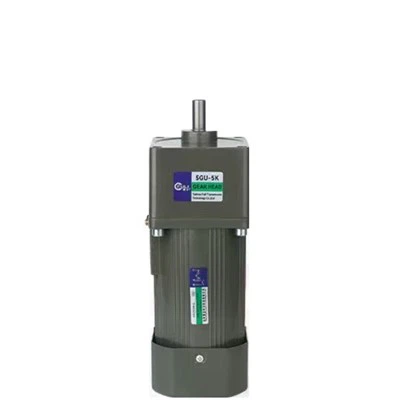
As a supplier of 220V AC gear motors, I often encounter questions from customers about the suitability of our products in various environments. One of the frequently asked questions is whether a 220V AC gear motor can be used in a dusty environment. In this blog post, I will delve into this topic, exploring the factors involved and providing practical advice based on my experience in the industry.
Understanding the Basics of 220V AC Gear Motors
Before we discuss the use of 220V AC gear motors in dusty environments, let's first understand what these motors are. A 220V AC gear motor is an electric motor that operates on a 220-volt alternating current (AC) power supply. The "gear" in the name refers to the gearbox that is integrated with the motor. The gearbox serves to reduce the speed of the motor and increase the torque, making it suitable for applications that require high torque at low speeds.
These motors are widely used in various industries, including manufacturing, automation, and robotics. They are known for their reliability, efficiency, and versatility. Some common applications of 220V AC gear motors include conveyor systems, packaging machines, and industrial mixers.
The Impact of Dust on Gear Motors
Dust is a common environmental factor that can have a significant impact on the performance and lifespan of gear motors. When dust enters the motor, it can cause several problems:


- Friction and Wear: Dust particles can act as abrasives, increasing the friction between moving parts. This can lead to accelerated wear and tear on the gears, bearings, and other components of the motor, reducing its efficiency and lifespan.
- Overheating: Dust can accumulate on the motor's windings and cooling fins, reducing the motor's ability to dissipate heat. This can cause the motor to overheat, which can damage the insulation and other components, leading to motor failure.
- Electrical Problems: Dust can also cause electrical problems, such as short circuits and insulation breakdown. This can be particularly dangerous in high-voltage applications, such as those involving 220V AC gear motors.
Can a 220V AC Gear Motor be Used in a Dusty Environment?
The answer to this question is not a simple yes or no. It depends on several factors, including the type and amount of dust, the design of the motor, and the level of protection provided.
- Type and Amount of Dust: Different types of dust have different properties and can have different effects on gear motors. For example, fine dust particles are more likely to enter the motor and cause problems than larger dust particles. Similarly, a high concentration of dust in the environment will increase the risk of damage to the motor.
- Motor Design: The design of the motor can also affect its suitability for use in a dusty environment. Some motors are designed with sealed enclosures to prevent dust from entering the motor. These motors are often referred to as "dust-tight" or "dust-proof" motors. Other motors may have additional features, such as air filters or cooling fans, to help protect the motor from dust.
- Level of Protection: The level of protection provided by the motor's enclosure is an important factor to consider. The International Electrotechnical Commission (IEC) has established a standard for the degree of protection provided by enclosures, known as the IP (Ingress Protection) code. The IP code consists of two digits, with the first digit indicating the level of protection against solid objects (such as dust) and the second digit indicating the level of protection against liquids. For example, an IP54-rated motor provides a high level of protection against dust (the first digit is 5) and a moderate level of protection against splashing water (the second digit is 4).
Protecting 220V AC Gear Motors in Dusty Environments
If you need to use a 220V AC gear motor in a dusty environment, there are several steps you can take to protect the motor and ensure its reliable operation:
- Choose the Right Motor: When selecting a motor for a dusty environment, look for a motor that is designed with a high level of protection against dust. Consider choosing a motor with an IP54 or higher rating. You may also want to consider a motor with additional features, such as air filters or cooling fans, to help protect the motor from dust.
- Install the Motor Properly: Proper installation is essential to ensure the motor's reliability and performance. Make sure the motor is installed in a clean, dry, and well-ventilated location. Avoid installing the motor in areas where dust is likely to accumulate, such as near conveyor belts or in areas with high traffic.
- Maintain the Motor Regularly: Regular maintenance is crucial to keep the motor in good working condition. This includes cleaning the motor regularly to remove dust and debris, checking the motor's lubrication levels, and inspecting the motor for signs of wear and damage.
- Use Additional Protection: In some cases, it may be necessary to use additional protection to protect the motor from dust. This can include installing dust covers or shields around the motor, using air filters or dust collectors to remove dust from the air, or using a ventilation system to keep the air in the motor's environment clean.
Conclusion
In conclusion, a 220V AC gear motor can be used in a dusty environment, but it requires careful consideration and proper protection. By choosing the right motor, installing it properly, maintaining it regularly, and using additional protection if necessary, you can ensure the reliable operation of the motor and extend its lifespan.
If you are looking for a high-quality 220V AC gear motor for your application, we offer a wide range of Gear Reduction Motor options, including 200W AC Gear Motor and 400W AC Gear Motor. Our motors are designed with high-quality materials and advanced technology to provide reliable performance and long service life.
If you have any questions or need further information about our products, please feel free to contact us. We are always happy to help you find the right motor for your application and provide you with the support and advice you need.
References
- International Electrotechnical Commission (IEC). (20XX). IEC 60529 - Degrees of protection provided by enclosures (IP Code).
- Motor and Generator Handbook. (20XX). [Publisher].