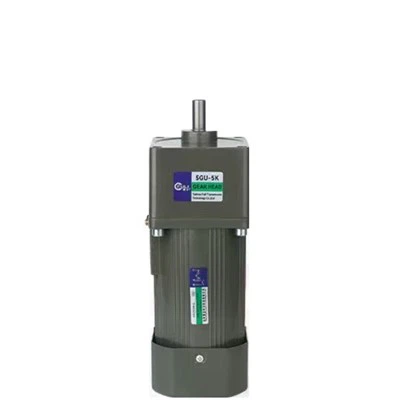
As a dedicated supplier of single-phase motors, I've encountered numerous inquiries about the starting torque of these motors. Starting torque is a critical concept that can significantly impact the performance and suitability of a single-phase motor for various applications. In this blog, I'll delve into what starting torque is, why it matters, and how it relates to the single-phase motors we offer.
What is Starting Torque?
Starting torque refers to the torque produced by an electric motor when it starts from a standstill. Torque, in simple terms, is the rotational force that causes an object to rotate around an axis. In the context of a single-phase motor, the starting torque is the force that initiates the rotation of the motor's shaft and overcomes the inertia of the load connected to it.
When a single-phase motor is turned on, it needs to generate enough torque to start moving the load. If the starting torque is insufficient, the motor may not be able to start at all, or it may start very slowly and struggle to reach its rated speed. This can lead to overheating, premature wear and tear, and even motor failure.
Why is Starting Torque Important?
The importance of starting torque cannot be overstated, especially in applications where the motor needs to start under heavy loads. For example, in a pump application, the motor needs to overcome the resistance of the fluid in the pipes and start the flow. If the starting torque is too low, the pump may not be able to start, or it may operate inefficiently, leading to increased energy consumption and reduced performance.
In other applications, such as conveyor belts or compressors, the motor needs to start with a sudden load. A high starting torque ensures that the motor can handle these sudden loads without stalling or experiencing excessive wear. Additionally, in some applications, the motor may need to start and stop frequently. A motor with a high starting torque can handle these frequent starts and stops more effectively, reducing the risk of damage and improving the overall reliability of the system.
Factors Affecting Starting Torque in Single-Phase Motors
Several factors can affect the starting torque of a single-phase motor. One of the most important factors is the design of the motor itself. Different types of single-phase motors have different starting torque characteristics. For example, capacitor-start motors typically have a higher starting torque than split-phase motors.
The capacitor in a capacitor-start motor creates a phase shift in the current, which helps to generate a rotating magnetic field. This rotating magnetic field produces a higher starting torque compared to a split-phase motor, which relies on a simple phase difference between the main and auxiliary windings.
Another factor that affects starting torque is the size and type of the load. Heavy loads require more torque to start, so a motor with a higher starting torque is needed. The inertia of the load also plays a role. A load with a high inertia, such as a large flywheel, requires more torque to start than a load with a low inertia.
The supply voltage can also affect the starting torque. A lower supply voltage can reduce the starting torque of a motor, while a higher supply voltage can increase it. However, it's important to note that operating a motor at a voltage outside its rated range can damage the motor and reduce its lifespan.
Starting Torque in Our Single-Phase Motors
At our company, we offer a wide range of single-phase motors, each designed to meet different application requirements. Our ML Series Single Phase Motor is known for its high starting torque and efficient operation. This motor is suitable for applications that require a high starting torque, such as pumps, compressors, and conveyors.
The YL Series Single Phase Motor is another popular choice. It offers a good balance between starting torque and energy efficiency. This motor is ideal for applications where the load is not too heavy, but still requires a reliable starting torque.
Our 220 Volt Single Phase Motor is designed to operate at a standard 220-volt supply voltage. It provides a consistent starting torque and is suitable for a variety of applications, including household appliances and small industrial equipment.
Testing and Verification
To ensure that our single-phase motors meet the highest standards of quality and performance, we conduct rigorous testing and verification procedures. We test the starting torque of each motor using specialized equipment to ensure that it meets or exceeds the specified requirements.
Our testing process includes measuring the starting torque at different loads and supply voltages to ensure that the motor performs reliably under various conditions. We also conduct long-term durability tests to ensure that the motor can withstand the rigors of continuous operation.
Choosing the Right Single-Phase Motor Based on Starting Torque
When choosing a single-phase motor for your application, it's important to consider the starting torque requirements. First, determine the size and type of the load. If the load is heavy or has a high inertia, you'll need a motor with a high starting torque.
Next, consider the application requirements. If the motor needs to start and stop frequently, a motor with a high starting torque and good durability is essential. You should also consider the supply voltage and ensure that the motor is compatible with the available power supply.
Our team of experts is always available to help you choose the right single-phase motor for your application. We can provide technical advice and guidance based on your specific requirements, ensuring that you get the best motor for your needs.


Contact Us for Your Single-Phase Motor Needs
If you're in the market for a single-phase motor, we invite you to contact us for more information. Whether you need a motor with a high starting torque for a heavy load application or a more energy-efficient motor for a light load application, we have the right solution for you.
Our commitment to quality, performance, and customer satisfaction ensures that you'll get a reliable and efficient single-phase motor that meets your needs. Don't hesitate to reach out to us to discuss your requirements and explore our range of single-phase motors.
References
- Fitzgerald, A. E., Kingsley, C., & Umans, S. D. (2003). Electric Machinery. McGraw-Hill.
- Chapman, S. J. (2012). Electric Machinery Fundamentals. McGraw-Hill.