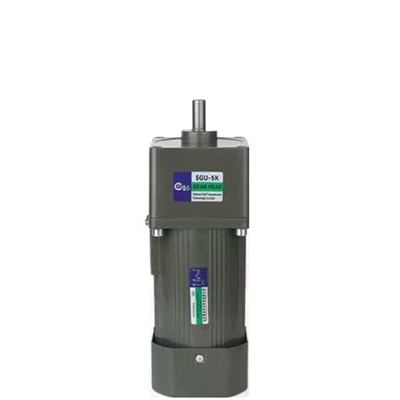
As a supplier of inverter duty motors, I've often been asked about the differences between inverter duty motors and regular motors. This blog post aims to shed light on this topic, providing valuable insights for those in the market for electric motors.
Basic Working Principles
To understand the differences, we first need to grasp the basic working principles of both types of motors. A regular motor, also known as a standard induction motor, operates on a fixed frequency and voltage supplied by the power grid. It is designed to run at a constant speed determined by the number of poles and the frequency of the power source. For example, in a 50 Hz power grid, a four - pole regular motor typically runs at around 1500 RPM.
On the other hand, an inverter duty motor is designed to work in conjunction with a variable frequency drive (VFD). A VFD can adjust the frequency and voltage supplied to the motor, allowing the motor to operate at variable speeds. This flexibility is a key advantage of inverter duty motors, as it enables precise control of the motor's speed and torque according to the specific requirements of the application.
Construction and Design
The construction of inverter duty motors and regular motors also differs significantly. Regular motors are built with standard insulation systems designed to withstand the electrical stress associated with a fixed - frequency power supply. They usually have a simple design, optimized for operation at a single speed.
Inverter duty motors, however, require more robust insulation systems. The variable frequency and voltage output from a VFD can generate high - frequency voltage spikes, which can cause premature insulation breakdown in a regular motor. Inverter duty motors are equipped with insulation materials that can withstand these voltage spikes, such as epoxy - coated magnet wire and additional insulation layers.
Another aspect of design is the cooling system. Since inverter duty motors can operate at variable speeds, their cooling requirements change. Some inverter duty motors are equipped with independent cooling fans that can run at a constant speed regardless of the motor's operating speed, ensuring effective cooling even at low speeds. Regular motors, on the other hand, often rely on the motor's rotation to drive the cooling fan, which may not provide sufficient cooling at low speeds.
Performance Characteristics
When it comes to performance, the differences between inverter duty motors and regular motors are quite evident. Regular motors are highly efficient when operating at their rated speed and load. They are suitable for applications where a constant speed is required, such as in conveyor belts running at a fixed speed or in some types of pumps.
Inverter duty motors, however, offer greater flexibility in terms of speed control. They can be adjusted to run at different speeds, which is beneficial in applications where the load varies. For example, in a HVAC system, an inverter duty motor can adjust its speed according to the temperature and airflow requirements, resulting in energy savings.
In terms of torque, regular motors typically have a fixed torque - speed curve. They provide high starting torque but may experience a drop in torque at low speeds. Inverter duty motors, with the help of a VFD, can provide high torque at low speeds, which is useful in applications such as crane hoists and some industrial mixers.
Energy Efficiency
Energy efficiency is a crucial factor in today's industrial and commercial applications. Regular motors are designed for optimal efficiency at a specific operating point. If the load or speed requirements deviate from this point, the motor's efficiency may decrease significantly.
Inverter duty motors, when used with a VFD, can offer significant energy savings. By adjusting the motor's speed to match the load requirements, the motor consumes only the amount of energy needed. For instance, in a water pumping system, if the demand for water is low, the inverter duty motor can run at a lower speed, consuming less power compared to a regular motor running at a constant speed.
We offer a range of energy - efficient motors, including the IE4 Electric Motor and the IE2 Electric Motor. These motors are designed to meet the highest energy - efficiency standards, helping our customers reduce their energy costs and environmental impact.
Application Suitability
The choice between an inverter duty motor and a regular motor depends largely on the application. Regular motors are well - suited for applications with a constant load and speed requirement. For example, in a simple manufacturing process where a machine needs to run at a fixed speed continuously, a regular motor can be a cost - effective choice.
Inverter duty motors, on the other hand, are ideal for applications where speed control, variable load, and energy efficiency are important. They are commonly used in industries such as food and beverage, where precise control of mixing and conveying equipment is required, and in the automotive industry for applications such as conveyor systems and robotic arms.
Our Cast Iron Three Phase Motor is a versatile option that can be used in both regular and inverter - duty applications. Its robust cast - iron construction provides durability and reliability, making it suitable for a wide range of industrial environments.
Cost Considerations
Cost is an important factor when choosing between an inverter duty motor and a regular motor. Regular motors are generally less expensive to purchase than inverter duty motors. They have a simpler design and do not require the additional components such as a VFD.
However, when considering the total cost of ownership, inverter duty motors may offer better value in the long run. Their energy - saving capabilities can result in significant cost savings over time, especially in applications with variable loads. Additionally, the longer lifespan of inverter duty motors, due to their more robust insulation and cooling systems, can reduce maintenance and replacement costs.
Conclusion
In summary, the main differences between inverter duty motors and regular motors lie in their working principles, construction, performance, energy efficiency, application suitability, and cost. Regular motors are a good choice for applications with constant speed and load requirements, while inverter duty motors offer greater flexibility, energy savings, and performance in applications with variable loads.
If you are in the market for an electric motor and are unsure whether an inverter duty motor or a regular motor is the right choice for your application, I encourage you to contact us for more information. Our team of experts can provide you with detailed technical advice and help you select the most suitable motor for your needs. We are committed to providing high - quality products and excellent customer service, and we look forward to the opportunity to work with you on your next project.

References
- “Electric Motors and Drives: Fundamentals, Types and Applications” by Austin Hughes.
- Technical documents from major motor manufacturers such as Siemens and ABB.
- Industry standards and guidelines related to electric motors and variable frequency drives.