In the realm of horizontal pumps, the choice between a closed and an open impeller is a crucial decision that significantly impacts the pump's performance, efficiency, and suitability for various applications. As a trusted horizontal pump supplier, we understand the importance of this choice and are here to shed light on the differences between these two types of impellers.

Structural Design
The most apparent difference between closed and open impellers lies in their structural design. A closed impeller consists of vanes enclosed between two side plates, creating a sealed passage for the fluid to flow through. The side plates help to direct the fluid flow and prevent leakage, ensuring that the pump operates efficiently. This design is similar to a wheel with blades inside, where the fluid enters the center and is propelled outwards by the rotating vanes.
On the other hand, an open impeller has vanes that are not enclosed by side plates. They are exposed on one or both sides, giving them a more open and accessible structure. This type of impeller is often used when dealing with fluids that contain large particles or debris, as the open design allows the particles to pass through more easily without getting trapped.
Performance Characteristics
The structural differences between closed and open impellers lead to distinct performance characteristics. Closed impellers are generally more efficient in transferring energy from the impeller to the fluid. The sealed design reduces internal leakage, which means that more of the energy generated by the rotating impeller is used to move the fluid, resulting in higher flow rates and pressures. Closed impellers are ideal for applications where high efficiency and a precise control of flow and pressure are required, such as in water supply systems, chemical processing plants, and HVAC systems.
Open impellers, while not as efficient as closed impellers, offer other advantages. Their open structure allows them to handle fluids with a higher concentration of solids and larger particles. This makes them suitable for applications in industries such as mining, wastewater treatment, and pulp and paper, where the fluid being pumped may contain sand, gravel, fibers, or other debris. However, because of the potential for leakage around the exposed vanes, open impellers typically have lower efficiencies and are not as effective in generating high pressures.
Wear and Maintenance
The design of the impeller also affects its wear characteristics and maintenance requirements. Closed impellers are more prone to wear if the fluid contains abrasive particles. The trapped particles can cause erosion on the inner surfaces of the side plates and the vanes, reducing the impeller's efficiency and lifespan. However, if the fluid is clean, the closed design provides a more stable and reliable operation, and the maintenance can be relatively simple, mainly involving regular inspections and minor adjustments.
Open impellers, due to their exposed nature, are more resilient to the presence of abrasive particles. The open design allows the particles to pass through without causing significant damage to the impeller. This means that open impellers generally have a longer lifespan when used in applications with dirty or abrasive fluids. However, they may require more frequent maintenance to ensure that the vanes are not damaged or broken. Additionally, the open structure makes it easier to access and clean the impeller, which can be an advantage in terms of maintenance.
Application Suitability
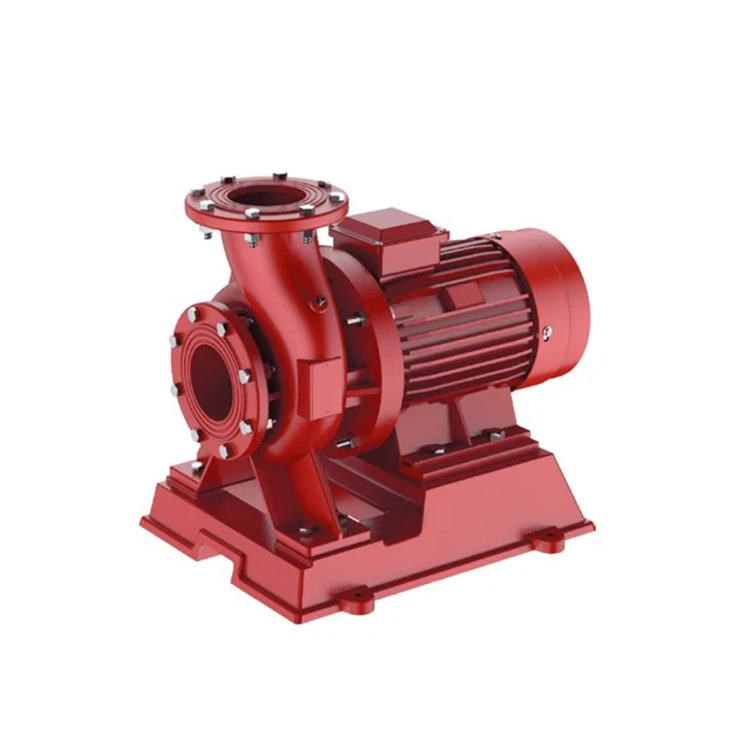
Based on their performance and maintenance characteristics, closed and open impellers are suitable for different types of applications. Closed impellers are commonly used in applications where the fluid is clean and free of debris, and where high efficiency and pressure are required. For example, in a Horizontal Pipeline Pump, a closed impeller can ensure a smooth and efficient flow of water through the pipeline. In an ISW Horizontal Pump, which is often used in building water supply and drainage systems, a closed impeller can provide the necessary pressure and flow rate to meet the building's needs.
Open impellers, on the other hand, are better suited for applications where the fluid contains solids or debris. In an Industrial Horizontal Pipeline Pump used in a mining or wastewater treatment plant, an open impeller can handle the abrasive and dirty fluids without clogging or excessive wear.
Cost Considerations
Cost is another important factor to consider when choosing between a closed and an open impeller. Closed impellers are generally more expensive to manufacture due to their complex design and the need for precise machining. The additional side plates and the sealing requirements increase the production cost. However, in applications where their high efficiency and performance justify the cost, the investment in a closed impeller can be worthwhile.
Open impellers are typically less expensive to produce because of their simpler design. They require less material and less precise machining, which reduces the manufacturing cost. For applications where cost is a major concern and the fluid characteristics do not require the high efficiency of a closed impeller, an open impeller can be a more economical choice.
Making the Right Choice
As a horizontal pump supplier, we understand that every application is unique, and the choice between a closed and an open impeller should be based on a careful consideration of the fluid characteristics, performance requirements, maintenance capabilities, and cost constraints. We work closely with our customers to understand their specific needs and provide them with the most suitable pump solutions.
If you are facing a decision on which type of impeller to choose for your horizontal pump, or if you have any questions about our products, we encourage you to get in touch with our team of experts. We are here to help you make an informed decision and ensure that you get the best pump for your application. Whether you need a high - efficiency closed impeller pump for a clean fluid application or a robust open impeller pump for a dirty fluid application, we have the expertise and the products to meet your needs. Contact us today to start a discussion about your pump requirements and explore the possibilities of our horizontal pump solutions.
References
- Karassik, I. J., Messina, J. P., Cooper, P. T., & Heald, C. C. (2008). Pump Handbook. McGraw - Hill Professional.
- Stepanoff, A. J. (1957). Centrifugal and Axial Flow Pumps: Theory, Design, and Application. John Wiley & Sons.