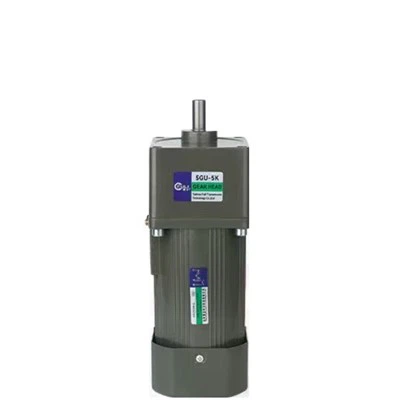
In the field of mechanical engineering, gear motors are indispensable components used in a wide range of applications, from industrial machinery to household appliances. As a gear motor supplier, I've encountered numerous clients who are concerned about the cost of gear motors. Understanding what factors affect the cost of a gear motor is crucial for both suppliers like me and customers looking for the most suitable and cost - effective solutions.
Motor Type
The type of motor used in a gear motor significantly impacts its cost. For example, AC (alternating current) motors and DC (direct current) motors have different price points. AC motors are generally more common and often less expensive for standard industrial applications. Our 400W AC Gear Motor is a popular choice for many customers due to its relatively lower cost and reliable performance in applications such as conveyors and fans. These motors are typically more straightforward in design and construction, which helps to keep the production cost down.
On the other hand, DC motors are more expensive. They offer better speed control and are often used in applications where precise speed regulation is required, such as in robotics and automation systems. The additional components and technology needed to achieve this level of control contribute to the higher cost. Brushless DC motors, in particular, are even more costly as they eliminate the need for brushes, reducing maintenance requirements and increasing durability, but at a higher manufacturing cost.
Gear Type and Gear Ratio
The type of gear used in a gear motor is another critical factor in determining its price. There are several types of gears, including spur gears, helical gears, and worm gears, each with its own cost implications.
Spur gears are the simplest and most common type of gears. They are relatively inexpensive to manufacture because of their straightforward design. They are used in many basic gear motor applications where high precision is not necessary. However, they can be noisy and are not suitable for high - torque applications.


Helical gears, on the other hand, are more complex in design. The teeth of helical gears are cut at an angle, which allows for smoother and quieter operation compared to spur gears. They can also handle higher loads. The increased complexity in manufacturing helical gears results in a higher cost.
Worm gears are used when a large gear ratio is required in a compact space. Our Worm Gear Reduction Motor is a prime example. Worm gears have a unique design where a worm (a screw - like gear) meshes with a worm wheel. This design provides high reduction ratios and self - locking capabilities, which are useful in applications such as hoists and lifts. However, the materials and manufacturing processes involved in making worm gears are more expensive, leading to a higher overall cost of the gear motor.
The gear ratio also affects the cost. A higher gear ratio means more gears are required, or the gears need to be designed to have specific tooth profiles to achieve the desired reduction. This increases the complexity of manufacturing and thus the cost of the gear motor. For instance, a gear motor with a very high gear ratio may require more precise machining and better - quality materials to ensure smooth operation and long - term durability.
Power Rating
The power rating of a gear motor is a fundamental factor in determining its cost. Generally, the higher the power rating, the more expensive the gear motor. A higher - power gear motor needs larger and more robust components, such as a bigger motor and stronger gears, to handle the increased load.
The materials used in high - power gear motors also need to be of higher quality. For example, the windings in the motor need to be made of thicker copper wire to carry more current without overheating. The gears need to be made of stronger alloys to withstand the higher torque. All these factors contribute to the increased cost of high - power gear motors. Our Gear Reduction Motor comes in various power ratings, and customers will notice a significant price difference between the lower - power and higher - power models.
Quality and Precision
The quality and precision of a gear motor have a direct impact on its cost. High - quality gear motors are manufactured to strict tolerances, which means the components are made with a high degree of accuracy. This results in smoother operation, less noise, and longer service life.
Precision manufacturing requires advanced machinery and skilled labor. For example, gears need to be cut with high - precision gear - cutting machines to ensure the correct tooth profile and pitch. The motor components also need to be assembled with great care to ensure proper alignment. All these processes add to the cost of production.
In addition, high - quality gear motors often use better - quality materials. The bearings, for example, may be made of high - grade steel or ceramic to reduce friction and increase durability. The motor housing may be made of a more robust material to protect the internal components from damage. These high - quality materials are more expensive, but they also contribute to the overall performance and reliability of the gear motor.
Brand and Reputation
The brand and reputation of the gear motor supplier can also influence the cost. Well - known brands with a long - standing reputation for quality and reliability often charge a premium for their products. Customers are willing to pay more for a brand they trust because they believe they will get a better - performing and more durable product.
A reputable supplier invests in research and development to improve the performance of their gear motors. They also have strict quality control measures in place to ensure that every product meets high standards. These additional costs are reflected in the price of the gear motors. However, choosing a well - known brand can also provide peace of mind for customers, as they know they are getting a product that is backed by the supplier's reputation and customer support.
Quantity of Order
The quantity of the order is an important cost - influencing factor. When a customer orders a large quantity of gear motors, the unit cost usually decreases. This is because suppliers can take advantage of economies of scale.
For large - scale production, suppliers can negotiate better prices for raw materials from their suppliers. They can also optimize their production processes, reducing the labor and overhead costs per unit. Additionally, the cost of packaging and shipping can be spread over a larger number of units, further reducing the overall cost.
On the other hand, small - quantity orders are more expensive per unit. The setup costs for production, such as tooling and programming of machinery, are the same regardless of the order size. When these costs are分摊 over a small number of units, the unit cost becomes significantly higher.
Market Conditions
Market conditions, including supply and demand, raw material prices, and currency exchange rates, can also affect the cost of gear motors.
If the demand for gear motors is high and the supply is limited, the prices will naturally increase. This can happen during periods of rapid industrial growth or when there are disruptions in the supply chain. For example, if a major manufacturer of a key raw material experiences a production outage, the supply of that material will decrease, leading to an increase in its price and, consequently, the cost of gear motors.
Raw material prices, such as the cost of steel, copper, and aluminum, can fluctuate significantly. These materials are essential for manufacturing gear motors, and any increase in their prices will be passed on to the customers. Currency exchange rates also play a role, especially for suppliers who import raw materials or export their products. A change in the exchange rate can either increase or decrease the cost of production, depending on the direction of the change.
Customization Requirements
Many customers have specific requirements for their gear motors, such as special dimensions, unique gear ratios, or non - standard features. Custom - made gear motors are generally more expensive than standard off - the - shelf models.
Customization requires additional design work, which involves the expertise of engineers and designers. The manufacturing process may also need to be adjusted, which can increase the production time and cost. For example, if a customer needs a gear motor with a specific gear ratio that is not available in the standard product line, the supplier may need to design and manufacture new gears, which is a time - consuming and costly process.
In conclusion, there are multiple factors that affect the cost of a gear motor. As a gear motor supplier, I understand that each customer has unique needs and budget constraints. By having a clear understanding of these factors, customers can make more informed decisions when purchasing gear motors. Whether you are looking for a high - performance, high - cost solution or a more budget - friendly option, we are here to help you find the most suitable gear motor for your application. If you have any questions or are interested in purchasing gear motors, please contact us to discuss your specific requirements and explore the best options for you.
References
- "Mechanical Engineering Design Handbook"
- "Motor Technology and Applications"
- Industry - specific trade publications on gear motors and machinery.