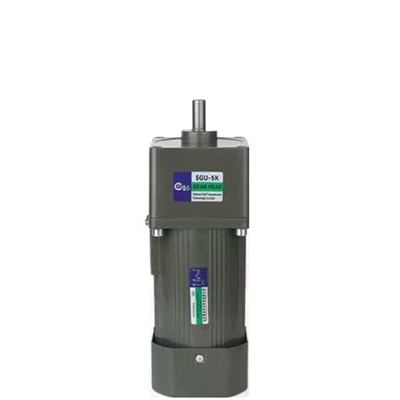
As a supplier of 400W AC Gear Motors, I understand that proper installation is crucial for the optimal performance and longevity of these motors. In this blog post, I'll delve into the installation requirements for a 400W AC Gear Motor, providing you with a comprehensive guide to ensure a smooth and successful installation process.
1. Electrical Requirements
Voltage and Frequency
The 400W AC Gear Motor operates on alternating current (AC). It is essential to match the motor's rated voltage and frequency with the power supply. Most 400W AC Gear Motors are designed to work with standard household or industrial power supplies. For instance, in many regions, the standard voltage is 220V - 240V at a frequency of 50Hz or 60Hz. Check the motor's nameplate for the specific voltage and frequency requirements. Connecting the motor to an incorrect voltage or frequency can lead to overheating, reduced performance, or even permanent damage. If you need a motor with a different voltage, such as a 220V AC Gear Motor, we can provide suitable options.
Wiring
Proper wiring is fundamental for the safe and efficient operation of the motor. Use high - quality electrical cables that can handle the current drawn by the 400W motor. The cable size should be determined based on the motor's current rating and the length of the cable run. Ensure that all connections are tight and secure to prevent loose connections, which can cause arcing and overheating. Follow the wiring diagram provided with the motor carefully. In general, the motor will have terminals for power input (line and neutral), and possibly additional terminals for control functions if applicable.
Protection Devices
Install appropriate protection devices in the electrical circuit. A circuit breaker or a fuse should be used to protect the motor from over - current situations. The rating of the circuit breaker or fuse should be selected according to the motor's full - load current. Additionally, a motor overload protector can be installed to prevent the motor from running under excessive load conditions, which can lead to overheating and premature failure.
2. Mechanical Requirements
Mounting
The 400W AC Gear Motor should be mounted on a stable and rigid surface. The mounting surface should be flat and level to ensure that the motor operates smoothly without excessive vibration. Use the appropriate mounting holes and fasteners provided with the motor. Tighten the fasteners to the recommended torque values to prevent the motor from loosening during operation. Vibration can not only cause noise but also lead to premature wear of the motor's components. If the application requires the motor to be mounted in a non - standard position, make sure to consult the motor's technical documentation or our technical support team.
Shaft Alignment
Proper shaft alignment between the motor and the driven equipment is crucial. Misaligned shafts can cause increased stress on the motor's bearings, coupling, and other components, leading to premature failure. Use alignment tools such as dial indicators to ensure that the motor shaft and the driven shaft are in perfect alignment. The alignment should be checked both axially and radially. If you are using a coupling to connect the motor to the driven equipment, make sure to select a coupling that can accommodate a certain degree of misalignment while still transmitting power efficiently.


Lubrication
Some 400W AC Gear Motors may require lubrication for their gears and bearings. Check the motor's user manual to determine the type of lubricant required and the recommended lubrication intervals. Over - lubrication or under - lubrication can both have negative impacts on the motor's performance. For example, over - lubrication can cause the lubricant to leak, attract dirt, and increase operating temperatures, while under - lubrication can lead to increased friction and wear.
3. Environmental Requirements
Temperature and Humidity
The operating environment of the 400W AC Gear Motor should be within the specified temperature and humidity ranges. Most motors are designed to operate in a temperature range of - 20°C to 40°C. High temperatures can cause the motor's insulation to degrade, leading to electrical failures. On the other hand, low temperatures can affect the viscosity of the lubricant and the performance of the motor's electronic components. Humidity can also cause corrosion of the motor's metal parts. If the operating environment has high humidity, consider using a motor with appropriate moisture - resistant coatings or enclosures.
Dust and Contaminants
The motor should be installed in an environment that is relatively free of dust, dirt, and other contaminants. Dust can accumulate on the motor's windings and cooling fins, reducing the motor's cooling efficiency and potentially causing overheating. In dusty environments, it may be necessary to install a dust - proof enclosure or use air filters to protect the motor. If the motor is exposed to chemicals or other corrosive substances, make sure to select a motor with a corrosion - resistant finish or enclosure.
4. Safety Requirements
Grounding
The 400W AC Gear Motor must be properly grounded to protect against electrical shock. Connect the grounding terminal of the motor to a reliable ground source. A good ground connection provides a low - resistance path for electrical current in the event of a fault, ensuring the safety of operators and preventing damage to the motor and other equipment.
Safety Guards
Install appropriate safety guards around the motor and its moving parts. Safety guards prevent accidental contact with the motor's rotating shafts, belts, and gears, reducing the risk of injury to operators. The safety guards should be made of durable materials and be securely attached to the motor or its mounting structure.
5. Commissioning and Testing
After the installation is complete, it is important to perform a series of commissioning and testing procedures. First, visually inspect all the electrical and mechanical connections to ensure that everything is in place and secure. Then, apply power to the motor and check for any abnormal noises, vibrations, or overheating. Measure the motor's current and voltage to ensure that they are within the normal operating range. Run the motor under no - load conditions for a short period to verify its basic functionality. If the motor passes the no - load test, gradually introduce the load and monitor the motor's performance.
If you are considering purchasing a 400W AC Gear Motor for your application, or if you have any questions regarding the installation requirements or other aspects of our products, we are here to assist you. Our team of experts can provide detailed technical support and guidance to ensure that you select the right motor and install it correctly. Whether you need a 400W motor or a 200W AC Gear Motor for a different application, we have a wide range of products to meet your needs. Contact us to start a procurement discussion and find the best solution for your project.
References
- Motor Manufacturer's User Manual
- Electrical Installation Standards (e.g., National Electrical Code)
- Mechanical Engineering Handbooks for Shaft Alignment and Lubrication Guidelines