Hey there! As a supplier of horizontal pumps, I've seen firsthand how crucial it is to test the performance of a newly installed horizontal pump. It's not just about making sure it works; it's about ensuring it operates at its best, saving you time, money, and headaches down the line. In this blog, I'll walk you through the steps to test the performance of a newly installed horizontal pump, so you can be confident that your investment is paying off.
Pre - Test Preparations
Before you start testing, there are a few things you need to do. First, make sure the pump is properly installed according to the manufacturer's instructions. Check all the connections, including the inlet and outlet pipes, to ensure they are tight and leak - free. You also need to verify that the power supply is correct and that the motor is properly grounded.
Next, gather all the necessary tools and equipment for the test. This includes pressure gauges, flow meters, and a thermometer. Make sure these instruments are calibrated correctly to get accurate readings.
Visual Inspection
The first step in testing the pump is a visual inspection. Walk around the pump and look for any obvious signs of damage or misalignment. Check the pump casing for cracks, and make sure the impeller rotates freely without any obstructions. Look at the seals and gaskets to ensure they are in good condition and not leaking. This initial inspection can help you catch any major issues before you start running the pump.
Priming the Pump
If your horizontal pump is a centrifugal pump, it needs to be primed before it can start pumping effectively. Priming involves filling the pump casing and suction line with the liquid to be pumped. This removes any air from the system, allowing the pump to create the necessary suction. Follow the manufacturer's instructions for priming your specific pump model. Some pumps may have a built - in priming mechanism, while others may require manual priming.
Starting the Pump
Once the pump is primed, it's time to start it up. Before you hit the start button, make sure all the valves are in the correct position. The suction valve should be fully open, and the discharge valve can be partially closed to reduce the initial load on the pump. Start the pump and let it run for a few minutes at a low speed. Listen for any unusual noises, such as grinding or rattling, which could indicate a problem with the impeller or bearings.
Measuring Flow Rate
One of the most important performance indicators of a horizontal pump is its flow rate. To measure the flow rate, you can use a flow meter installed in the discharge line. There are different types of flow meters available, such as electromagnetic, ultrasonic, and turbine flow meters. Choose the one that is most suitable for your application.
Record the flow rate at different operating conditions. You can vary the speed of the pump or adjust the discharge valve to change the flow rate. Compare the measured flow rate with the pump's rated flow rate, which is specified by the manufacturer. If the measured flow rate is significantly lower than the rated flow rate, there could be a problem with the pump, such as a clogged impeller or a leak in the system.
Measuring Pressure
In addition to the flow rate, you also need to measure the pressure at the inlet and outlet of the pump. Install pressure gauges at these points and record the pressure readings. The difference between the outlet pressure and the inlet pressure is called the differential pressure. The differential pressure is related to the pump's head, which is the height that the pump can lift the liquid.

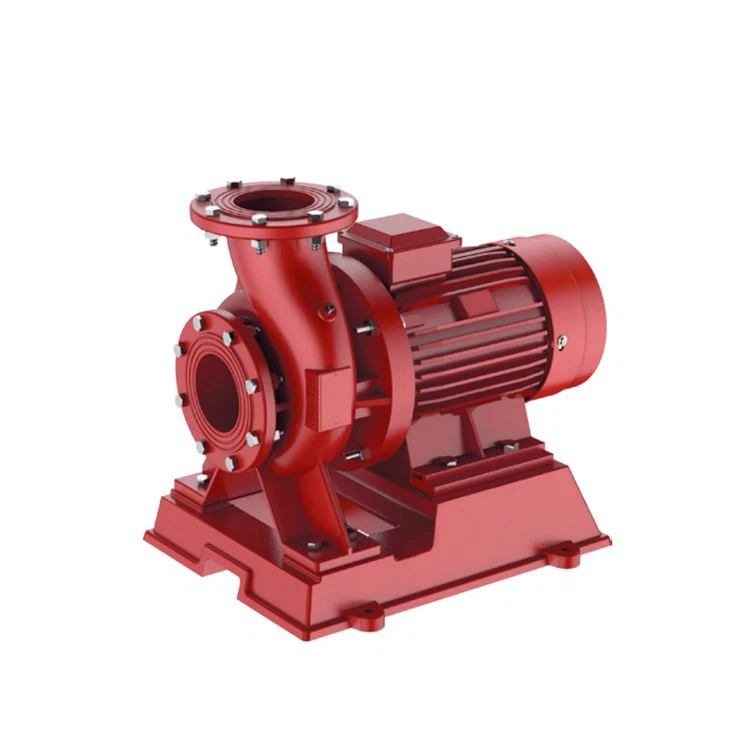
Compare the measured differential pressure with the pump's rated head. If the differential pressure is lower than expected, it could mean that the pump is not generating enough pressure to overcome the system resistance. This could be due to a worn - out impeller, a misaligned pump, or a problem with the motor.
Checking Efficiency
The efficiency of a horizontal pump is an important factor in its performance. Efficiency is the ratio of the useful power output of the pump (the power used to move the liquid) to the power input (the power consumed by the motor). To calculate the efficiency, you need to measure the flow rate, pressure, and power consumption of the pump.
The power consumption can be measured using a power meter connected to the motor. Once you have all the necessary measurements, you can use the following formula to calculate the pump efficiency:
[ \eta=\frac{\rho g Q H}{P_{input}} ]
where (\eta) is the efficiency, (\rho) is the density of the liquid, (g) is the acceleration due to gravity, (Q) is the flow rate, (H) is the head, and (P_{input}) is the power input.
A high - efficiency pump will save you energy and reduce operating costs. If the measured efficiency is lower than the pump's rated efficiency, you may need to investigate the cause and take corrective actions.
Testing at Different Conditions
To get a comprehensive understanding of the pump's performance, it's important to test it at different operating conditions. Vary the flow rate by adjusting the discharge valve or changing the speed of the pump (if it is a variable - speed pump). Record the flow rate, pressure, and power consumption at each condition. This will help you create a performance curve for the pump, which shows how the pump behaves at different operating points.
Monitoring Temperature
During the test, it's also important to monitor the temperature of the pump and the motor. High temperatures can indicate a problem, such as overloading, poor lubrication, or a blocked cooling system. Use a thermometer to measure the temperature of the pump casing and the motor housing. If the temperature exceeds the manufacturer's recommended limits, stop the pump immediately and investigate the cause.
Post - Test Inspection
After you have completed the performance tests, shut down the pump and conduct a post - test inspection. Check all the connections again to make sure they are still tight and there are no new leaks. Look at the pump and motor for any signs of overheating or excessive vibration. If you notice any issues, address them before putting the pump back into regular operation.
Types of Horizontal Pumps and Their Performance Testing
We offer a variety of horizontal pumps, such as the ISW Horizontal Pump, Industrial Horizontal Pipeline Pump, and Horizontal Pipeline Pump. Each type of pump may have slightly different performance testing requirements. For example, some pumps are designed for high - pressure applications, while others are more suitable for large - flow applications. Make sure to refer to the specific product documentation for detailed testing instructions for each pump model.
Conclusion
Testing the performance of a newly installed horizontal pump is a critical step in ensuring its proper operation. By following these steps, you can identify any potential problems early and take corrective actions to optimize the pump's performance. Remember, a well - tested and maintained pump will last longer, operate more efficiently, and save you money in the long run.
If you're in the market for a horizontal pump or need more information about our products, don't hesitate to reach out. We're here to help you find the right pump for your application and ensure it performs at its best. Contact us to start the procurement discussion and let's find the perfect solution for your pumping needs.
References
- Pump Handbook, by Igor Karassik et al.
- Centrifugal Pumps: Design and Application, by Heinz P. Bloch.