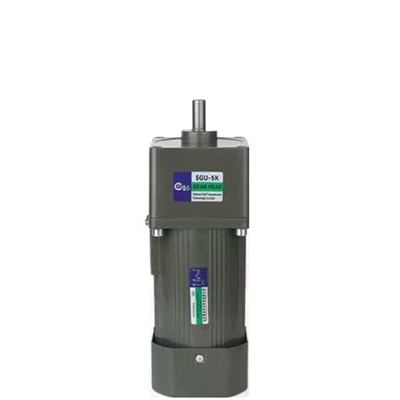
As a supplier of Spindle Servo Motors, optimizing the inertia ratio of these motors is a crucial aspect that can significantly impact their performance. In this blog post, I'll share some in - depth insights on how to optimize the inertia ratio of a spindle servo motor.
Understanding the Inertia Ratio
Before delving into the optimization methods, it's essential to understand what the inertia ratio is. The inertia ratio is the ratio of the load inertia to the motor inertia. In a spindle servo motor system, the load inertia includes all the components connected to the motor shaft, such as the spindle, tools, and any other mechanical parts. The motor inertia is an inherent property of the motor itself.
A well - balanced inertia ratio is vital for the proper functioning of the spindle servo motor. If the inertia ratio is too high, the motor may struggle to accelerate and decelerate the load effectively, leading to poor dynamic response, increased settling time, and potential issues with accuracy. On the other hand, if the inertia ratio is too low, the motor may be oversized for the load, resulting in unnecessary energy consumption and higher costs.
Factors Affecting the Inertia Ratio
Several factors can influence the inertia ratio of a spindle servo motor system.
Load Design
The physical design of the load has a direct impact on its inertia. For example, the shape, size, and mass distribution of the spindle and attached tools play a significant role. A long and heavy spindle will have a higher inertia compared to a shorter and lighter one. When designing the load, engineers should aim to minimize the inertia by using lightweight materials without sacrificing the required strength and rigidity. For instance, carbon fiber composites can be used in some applications to reduce the overall mass of the load.
Motor Selection
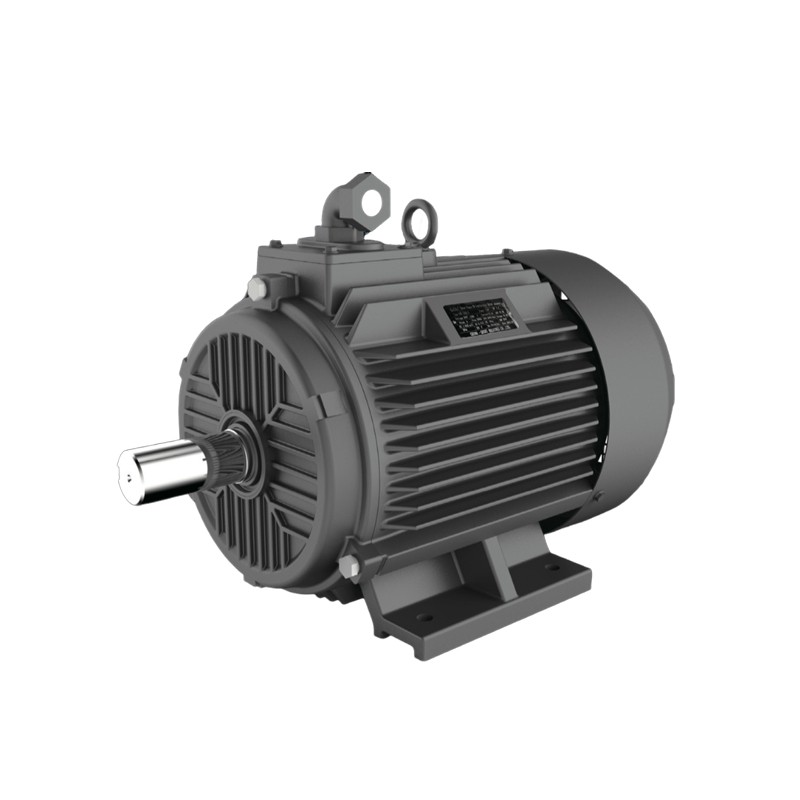
Choosing the right motor is also crucial. Different Spindle Servo Motor models have different inertia values. When selecting a motor, it's important to consider the expected load inertia. A motor with a higher rated torque may not always be the best choice if its inertia is too high for the load. Instead, a motor with an appropriate inertia value that can match the load requirements should be selected.

Transmission System
The transmission system between the motor and the load, such as belts, gears, or couplings, can also affect the inertia ratio. Each component in the transmission system adds to the overall inertia. For example, a gearbox with a high reduction ratio can increase the reflected load inertia at the motor shaft. Therefore, when designing the transmission system, it's important to select components that minimize the additional inertia while still providing the necessary speed and torque transmission.
Optimization Methods
Inertia Matching
One of the most common methods for optimizing the inertia ratio is inertia matching. This involves selecting a motor with an inertia value that is close to the load inertia. A general rule of thumb is to aim for an inertia ratio between 1:1 and 5:1. However, this ratio can vary depending on the specific application requirements.
To achieve inertia matching, engineers need to accurately calculate the load inertia. This can be done by using engineering formulas based on the physical properties of the load components. Once the load inertia is known, a motor can be selected with an appropriate inertia value. In some cases, it may be necessary to adjust the load design or the transmission system to achieve a better inertia match.
Tuning the Servo Controller
The servo controller plays a crucial role in optimizing the performance of the spindle servo motor system. By adjusting the controller parameters, such as the proportional, integral, and derivative (PID) gains, the system can be tuned to handle different inertia ratios more effectively.
For a higher inertia ratio, increasing the proportional gain can improve the system's response speed. However, too high a gain can lead to instability and oscillations. The integral gain can be used to eliminate steady - state errors, while the derivative gain can help dampen the oscillations. Tuning these parameters requires a careful balance and often involves testing and fine - tuning the system in a real - world environment.
Reducing Load Inertia
As mentioned earlier, reducing the load inertia is an effective way to optimize the inertia ratio. This can be achieved through various means.
- Material Selection: Using lightweight materials for the load components, such as aluminum or titanium instead of steel, can significantly reduce the inertia. For example, in high - speed machining applications, using aluminum spindles can reduce the inertia and improve the motor's dynamic response.
- Shape Optimization: Designing the load components with a more compact and streamlined shape can also reduce the inertia. For instance, a spindle with a tapered shape will have a lower inertia compared to a cylindrical spindle of the same mass.
Using a Gearbox or Belt Drive
In some cases, using a gearbox or a belt drive can help optimize the inertia ratio. A gearbox with a proper reduction ratio can reduce the reflected load inertia at the motor shaft. This allows the motor to handle the load more effectively. Similarly, a belt drive can provide a flexible and efficient way to transmit power while also reducing the inertia. However, it's important to select the right gearbox or belt drive to ensure that the additional inertia introduced by these components is minimized.
Importance of Optimization in Different Applications
High - Speed Machining
In high - speed machining applications, optimizing the inertia ratio is crucial for achieving high - precision and high - speed cutting. A well - optimized inertia ratio allows the motor to quickly accelerate and decelerate the spindle, reducing the cycle time and improving the surface finish of the machined parts. For example, in aerospace component manufacturing, where high - precision machining is required, a small improvement in the inertia ratio can lead to significant improvements in productivity and quality.
Robotics
In robotics, the spindle servo motor is often used to drive the joints of the robot. Optimizing the inertia ratio is essential for ensuring smooth and accurate movement of the robot. A balanced inertia ratio allows the robot to move quickly and precisely, reducing the energy consumption and improving the overall performance of the robot. For example, in industrial robots used for pick - and - place operations, a well - optimized inertia ratio can increase the speed and accuracy of the operations.
Conclusion
Optimizing the inertia ratio of a spindle servo motor is a complex but essential task. It involves understanding the factors that affect the inertia ratio, such as load design, motor selection, and transmission system, and using appropriate optimization methods, such as inertia matching, servo controller tuning, and reducing load inertia.
As a Spindle Servo Motor supplier, we are committed to providing our customers with high - quality motors and technical support to help them optimize the inertia ratio of their motor systems. If you are looking for a reliable spindle servo motor or need assistance in optimizing your motor system, we invite you to contact us for a detailed discussion and procurement negotiation. Our team of experts will be happy to help you find the best solution for your specific application.
References
- Dorf, R. C., & Bishop, R. H. (2016). Modern Control Systems. Pearson.
- Krause, P. C., Wasynczuk, O., & Sudhoff, S. D. (2013). Analysis of Electric Machinery and Drive Systems. Wiley.