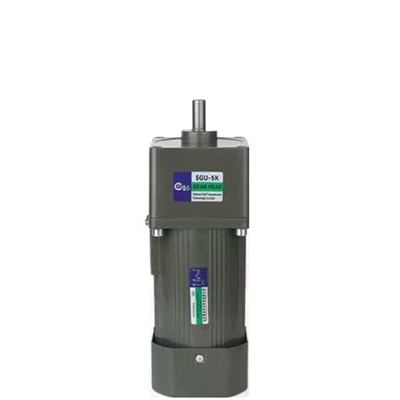
Hey there! As a single phase motor supplier, I often get asked about how to measure the speed of a single phase motor. It's a crucial aspect, whether you're an engineer working on a project, a maintenance guy keeping things running smoothly, or just someone curious about these motors. In this blog, I'll walk you through the different methods to measure the speed of a single phase motor, and also tell you a bit about the motors we offer.
Why Measuring Motor Speed Matters
Before we dive into the measurement methods, let's quickly talk about why it's important to measure the speed of a single phase motor. The speed of a motor affects its performance and the efficiency of the equipment it's powering. If the motor is running too fast or too slow, it can lead to issues like overheating, premature wear and tear, and even failure. So, by accurately measuring the speed, you can ensure that the motor is operating within its optimal range, which in turn can save you time and money in the long run.
Methods to Measure the Speed of a Single Phase Motor
1. Tachometer
A tachometer is one of the most common and straightforward tools for measuring motor speed. There are two main types: contact and non - contact tachometers.
Contact Tachometers: These tachometers need to be in direct contact with the motor shaft. You simply press the tip of the tachometer against the rotating shaft, and it measures the speed based on the rotation. They're pretty accurate but can be a bit tricky to use in some situations, especially if the motor is in a hard - to - reach place or if the shaft is spinning at a very high speed.
Non - Contact Tachometers: These are my personal favorite. They use infrared or laser technology to measure the speed without touching the motor shaft. You just point the tachometer at a reflective tape placed on the shaft, and it can quickly and accurately measure the speed. They're great because they're safe to use, and you can measure the speed from a distance.
2. Stroboscope
A stroboscope works by flashing a light at a controlled frequency onto the motor shaft. When the flash frequency matches the rotational speed of the shaft, the shaft appears to stand still. By adjusting the flash frequency until this happens, you can calculate the speed of the motor. It's a bit more complex than using a tachometer, but it can be very useful in some applications, especially when you need to visualize the rotation of the shaft.
3. Frequency Measurement
If you know the frequency of the power supply and the number of poles in the motor, you can calculate the synchronous speed of the motor using the following formula:
[N_s=\frac{120f}{P}]
Where (N_s) is the synchronous speed in revolutions per minute (RPM), (f) is the frequency of the power supply in Hertz (Hz), and (P) is the number of poles in the motor.
However, it's important to note that the actual speed of a single phase motor is usually slightly less than the synchronous speed due to slip. Slip is the difference between the synchronous speed and the actual speed of the motor. To find the actual speed, you'll need to measure it directly or use other methods to account for the slip.
Our Single Phase Motors
At our company, we offer a wide range of single phase motors to meet different needs.
The 220 Volt Single Phase Motor is a popular choice for many applications. It's designed to work with a 220 - volt power supply, which is common in many residential and small - scale commercial settings. These motors are known for their reliability and energy efficiency.
We also have the ML Series Single Phase Motor. This series is designed for high - performance applications. They have a robust construction and can handle heavy loads, making them suitable for industrial machinery and equipment.


Another great option is the YL Series Single Phase Motor. These motors are known for their smooth operation and low noise levels. They're often used in applications where noise is a concern, such as in household appliances and small - scale workshops.
How to Ensure Accurate Speed Measurement
To get accurate speed measurements, there are a few things you need to keep in mind:
- Calibration: Make sure your measuring tools, such as tachometers and stroboscopes, are properly calibrated. An uncalibrated tool can give you inaccurate readings.
- Environmental Conditions: Extreme temperatures, humidity, and vibration can affect the performance of the motor and the accuracy of your measurements. Try to measure the speed under normal operating conditions as much as possible.
- Multiple Readings: Take multiple readings at different times and under different loads to get a more accurate picture of the motor's speed. This can help you identify any variations in speed due to changes in load or other factors.
Conclusion
Measuring the speed of a single phase motor is an important part of ensuring its proper operation and performance. Whether you're using a tachometer, stroboscope, or frequency measurement method, it's essential to choose the right tool for the job and follow the proper procedures to get accurate results.
If you're in the market for a single phase motor, we've got a great selection to choose from. Our motors are designed to meet the highest standards of quality and performance. Don't hesitate to [contact us] if you have any questions or if you're interested in purchasing a motor. We're always happy to help you find the right motor for your needs.
References
- Electric Machinery Fundamentals, Stephen J. Chapman
- Motors and Drives: A Practical Technology Guide, Austin Hughes