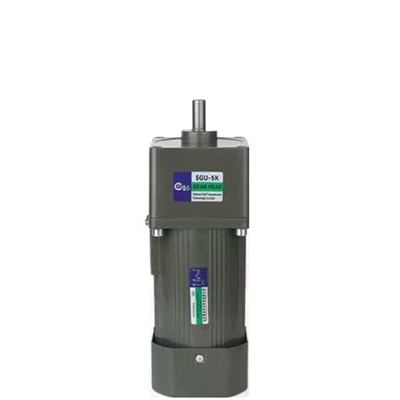
When it comes to industrial motors, efficiency is a crucial factor that directly impacts operational costs, environmental footprint, and overall performance. As a supplier of IE4 Electric Motors, I often get asked about how the efficiency of IE4 Electric Motors compares to that of servo motors. In this blog post, I'll delve into this topic, providing a detailed analysis based on scientific facts and real - world applications.


Understanding IE4 Electric Motors
IE4 Electric Motors, as the name suggests, belong to the IE4 energy efficiency class, which is the highest standard in the International Electrotechnical Commission (IEC) classification for electric motors. These motors are designed to minimize energy losses, mainly through improved magnetic materials, advanced manufacturing techniques, and optimized design. The IE4 Electric Motor is typically a three - phase asynchronous motor, known for its robustness, reliability, and wide range of applications in industrial settings.
One of the key features of IE4 Electric Motors is their high efficiency across a broad load range. They are engineered to operate with minimal losses, which means less wasted energy in the form of heat. This not only reduces the electricity consumption but also extends the motor's lifespan by reducing the thermal stress on its components.
Servo Motors: A Brief Overview
Servo motors, on the other hand, are a type of motor that can precisely control the angular position, velocity, and acceleration. They are commonly used in applications that require high - precision motion control, such as robotics, CNC machines, and automated manufacturing systems. Servo motors consist of a motor, a feedback device (usually an encoder), and a controller. The feedback device continuously monitors the motor's position and speed, allowing the controller to make real - time adjustments to ensure accurate performance.
Servo motors are known for their excellent dynamic response and high torque - to - inertia ratio. They can quickly accelerate and decelerate, making them ideal for applications where rapid and precise movements are required. However, their design and operation characteristics also mean that they have different efficiency profiles compared to IE4 Electric Motors.
Efficiency Comparison
Full - Load Efficiency
At full load, IE4 Electric Motors generally have a very high efficiency. The IEC standard for IE4 motors requires a minimum efficiency of around 96% for motors in the 7.5 - 375 kW power range. This high efficiency is achieved through the use of high - quality magnetic materials and optimized stator and rotor designs.
Servo motors, while highly efficient in their own right, may not reach the same full - load efficiency as IE4 Electric Motors in some cases. Servo motors are designed to prioritize precision and dynamic performance over pure energy efficiency. Their controllers and feedback systems consume additional power, which can reduce the overall efficiency. However, in applications where the motor operates at full load for extended periods, modern servo motors can achieve efficiencies in the high 90s as well, especially those with advanced control algorithms and power electronics.
Part - Load Efficiency
One of the significant advantages of IE4 Electric Motors is their efficiency at part - load conditions. Industrial motors often operate at less than full load for a significant portion of their service life. IE4 motors are designed to maintain high efficiency even at low load levels. For example, an IE4 motor may still operate at over 90% efficiency at 25% of its rated load.
Servo motors, in contrast, tend to have lower efficiency at part - load conditions. The power consumption of the servo controller remains relatively constant regardless of the motor load, which means that the overall efficiency drops significantly when the motor is operating at low loads. This is an important consideration for applications where the motor load varies widely over time.
Efficiency Over Time
IE4 Electric Motors are known for their long - term efficiency stability. Their simple and robust design means that there are fewer components that can degrade over time, resulting in a more consistent efficiency throughout their service life. The high - quality materials used in IE4 motors also resist wear and tear, ensuring that the motor maintains its high - efficiency performance for years.
Servo motors, due to their more complex design and the presence of electronic components, may experience a gradual decline in efficiency over time. The encoder, which is a critical component for precise control, can wear out or become less accurate, affecting the motor's performance and efficiency. Additionally, the power electronics in the servo controller may also degrade over time, leading to increased power losses.
Application - Specific Considerations
The choice between an IE4 Electric Motor and a servo motor also depends on the specific application requirements.
Industrial Conveyors and Pumps
In applications such as industrial conveyors and pumps, where the load is relatively constant and high - precision motion control is not required, IE4 Electric Motors are an excellent choice. Their high efficiency at full and part - load conditions can result in significant energy savings over the long term. For example, a large - scale conveyor system that operates continuously can benefit greatly from the use of IE4 motors, reducing the overall electricity bill and the environmental impact.
Robotics and Automated Manufacturing
For robotics and automated manufacturing applications, servo motors are often the preferred option. The high - precision control and rapid dynamic response of servo motors are essential for tasks such as pick - and - place operations, welding, and machining. While the efficiency may not be as high as an IE4 motor in all operating conditions, the benefits of precise motion control outweigh the slightly higher energy consumption in these applications.
Conclusion
In conclusion, both IE4 Electric Motors and servo motors have their own unique advantages in terms of efficiency and performance. IE4 Electric Motors excel in applications where high - efficiency operation at various load levels and long - term reliability are the primary concerns. Servo motors, on the other hand, are indispensable for applications that require high - precision motion control.
As a supplier of IE4 Electric Motor, I understand the importance of choosing the right motor for your specific needs. If you are looking for a motor that can provide high - efficiency operation, low energy consumption, and long - term reliability, our IE4 Electric Motors are an excellent choice. We also offer Inverter Duty Motor and Aluminium Electric Motor options to meet different application requirements.
If you are interested in learning more about our products or discussing your motor needs, please feel free to contact us for a detailed consultation and to start the procurement process.
References
- International Electrotechnical Commission (IEC) standards for electric motors.
- Technical literature from motor manufacturers on IE4 Electric Motors and servo motors.
- Industry reports on energy efficiency in industrial motors.