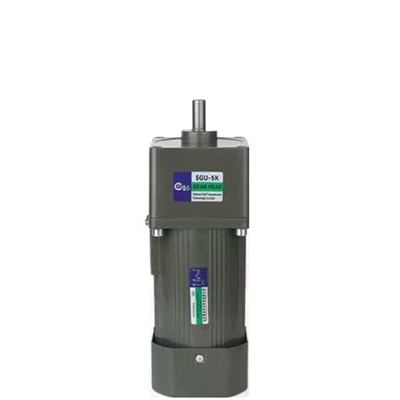
Hey there! As a supplier of 220V AC gear motors, I often get asked whether these motors can hold up in a vibration - prone environment. It's a super important question, especially for industries where vibrations are a common occurrence. So, let's dig into this topic and find out if our 220V AC gear motors are up to the task.
First off, let's understand what a 220V AC gear motor is. It's a motor that runs on 220 volts of alternating current and is equipped with a gear system. The gear system helps to adjust the speed and torque of the motor, making it suitable for a wide range of applications. You can check out our Gear Reduction Motor for more details on the different types of gear motors we offer.
Now, let's talk about vibration - prone environments. These are places where vibrations are constantly present, like factories with heavy machinery, construction sites, or even some transportation equipment. Vibrations can come from various sources, such as the operation of other machines, the movement of vehicles, or the natural forces at work in certain processes.
So, can a 220V AC gear motor handle all this shaking? Well, it depends on a few factors.
1. Motor Design and Construction
Our 220V AC gear motors are designed with durability in mind. We use high - quality materials in the construction of both the motor and the gearbox. For example, the motor housing is made of sturdy metals that can resist the impact of vibrations. The gears inside are precisely machined to ensure smooth operation, even under stress.
However, in a really extreme vibration - prone environment, some additional features might be necessary. We offer Worm Gear Reduction Motor which has a unique design that can provide better stability. The worm gear mechanism has a high reduction ratio and can absorb some of the shock and vibration, making it a good choice for tough conditions.
2. Mounting and Installation
How the motor is mounted and installed plays a huge role in its ability to withstand vibrations. A proper mounting system can isolate the motor from the source of vibrations. We always recommend using vibration - damping mounts. These mounts are made of rubber or other flexible materials that can absorb and reduce the impact of vibrations before they reach the motor.
During installation, it's also crucial to ensure that the motor is properly aligned. Misalignment can cause uneven stress on the motor and gears, which can lead to premature wear and failure, especially in a vibration - prone environment.
3. Maintenance and Monitoring
Regular maintenance is key to keeping a 220V AC gear motor running smoothly in a vibration - prone environment. This includes checking the motor's lubrication levels, inspecting the gears for wear, and tightening any loose bolts or connections. Vibration can cause bolts to loosen over time, so it's important to do these checks frequently.
We also recommend using vibration monitoring tools. These tools can detect any abnormal vibrations in the motor early on, allowing you to take corrective action before a major problem occurs. By keeping an eye on the motor's vibration levels, you can ensure its long - term reliability.
4. Power Supply and Electrical Considerations
In a vibration - prone environment, the electrical connections of the motor can be at risk. Vibrations can cause loose connections, which can lead to electrical arcing, overheating, and even motor failure. To prevent this, we use high - quality electrical connectors and secure them properly during installation.
It's also important to ensure a stable power supply. Fluctuations in the 220V AC power can affect the motor's performance, especially when combined with vibrations. Using a voltage stabilizer can help to maintain a consistent power supply to the motor.
Real - World Examples
Let's take a look at some real - world scenarios where our 220V AC gear motors have been used in vibration - prone environments.
In a construction site, our 200W AC Gear Motor was used in a concrete mixer. The mixer was constantly vibrating due to the mixing process and the movement of the construction site. By using vibration - damping mounts and proper maintenance, the motor was able to operate reliably for a long time, without any major issues.


In a factory with heavy machinery, our gear motors were installed in conveyor systems. The vibrations from the nearby machines could have easily affected the motors, but with the right design and installation, they continued to function smoothly, ensuring the efficient operation of the conveyor.
Conclusion
So, to answer the question, yes, a 220V AC gear motor can be used in a vibration - prone environment, but it requires careful consideration of design, installation, maintenance, and electrical factors. With the right approach, our motors can provide reliable performance even in the toughest conditions.
If you're in an industry where vibrations are a concern and you're looking for a high - quality 220V AC gear motor, we're here to help. Our team of experts can work with you to determine the best motor for your specific needs, and provide you with all the support you need for installation, maintenance, and troubleshooting.
Don't hesitate to reach out to us if you have any questions or if you're ready to start a procurement discussion. We're eager to help you find the perfect solution for your business.
References
- General knowledge of electrical motor design and operation
- Industry standards for motor use in vibration - prone environments
- Case studies from our own experience with 220V AC gear motor applications