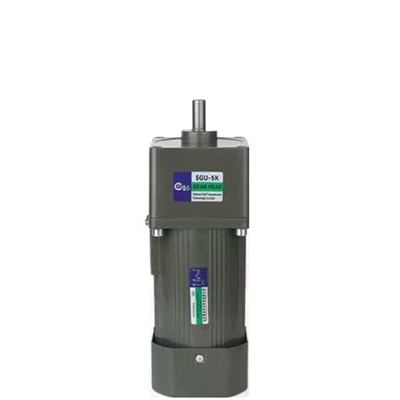
When it comes to industrial applications and automation projects, selecting the right motor is crucial. One common query from many customers is whether a 220V AC Gear Motor can be used in a humid environment. As a reliable supplier of 220V AC Gear Motors, I'll delve into the technical aspects, potential risks, and solutions to help you make an informed decision.
Understanding the Basics of a 220V AC Gear Motor
A 220V AC Gear Motor is a type of electric motor that operates on a 220 - volt alternating current power supply. The addition of a gearbox to the motor is intended to reduce the output speed and increase the torque, making it suitable for a wide range of applications such as conveyors, packaging machines, and small - scale manufacturing equipment.
The 220V AC Gear Motor we offer at our supply boasts high reliability, efficiency, and durability. It is designed to meet different power requirements and can be customized to fit specific industrial needs. For instance, our 200W AC Gear Motor is a popular choice for low - to medium - power applications due to its stable performance and energy - saving features.
Humid Environment: A Double - Edged Sword
Humidity is a factor that brings both challenges and, in some cases, opportunities in motor applications. On one hand, a certain level of humidity can help in dissipating heat generated by the motor during operation. However, high humidity levels can have detrimental effects on the motor's performance and lifespan.
High humidity means an increased amount of water vapor in the air. Water is a conductor of electricity, and when it comes into contact with the electrical components of the 220V AC Gear Motor, it can cause short - circuits, which are extremely dangerous. The presence of moisture also accelerates the corrosion process of metal parts inside the motor. For example, the gear teeth made of metal can corrode, leading to increased wear and tear, reduced torque transmission efficiency, and eventually, mechanical failure.


Technical Challenges in Humid Conditions
Electrical Insulation
The electrical insulation of the motor is one of the most critical components. In a humid environment, moisture can penetrate the insulation materials. Over time, this can degrade the insulation resistance, increasing the risk of electrical leakage. Once electrical leakage occurs, it not only affects the motor's normal operation but also poses a safety hazard to the operators and the entire system.
Lubrication
The gearbox in the 220V AC Gear Motor relies on lubricants to reduce friction between moving parts. High humidity can cause the lubricant to absorb water, which changes its viscosity and lubrication properties. As a result, the lubricant may fail to provide adequate protection, leading to increased friction, heat generation, and premature wear of gears and bearings.
Condensation
Temperature variations in a humid environment can lead to condensation inside the motor. When the temperature drops, water vapor in the air can turn into liquid water on the cooler surfaces of the motor. This condensed water can accumulate in the motor's internal cavities, causing short - circuits or corrosion of the internal components.
Can a 220V AC Gear Motor Be Used in a Humid Environment?
The answer is yes, but with proper precautions. Our company has developed several solutions to enable our Worm Gear Reduction Motor and other 220V AC Gear Motors to operate effectively in humid conditions.
Sealed Design
We use advanced sealing technologies to prevent moisture from entering the motor. The motor housing is designed with high - quality gaskets and seals to create a barrier against water and dust. This helps to protect the internal electrical and mechanical components from the harmful effects of humidity.
Corrosion - Resistant Materials
We select corrosion - resistant materials for the motor's construction. For example, the metal parts are made of stainless steel or coated with anti - corrosion materials to slow down the corrosion process. This ensures the long - term reliability of the motor in humid environments.
Moisture - Resistant Insulation
We use moisture - resistant insulation materials for the motor windings. These materials have high insulation resistance even in the presence of moisture, reducing the risk of electrical leakage and short - circuits.
Heaters and Drainage
To prevent condensation, we can equip the motor with built - in heaters. These heaters keep the internal temperature of the motor slightly higher than the ambient temperature, preventing water vapor from condensing inside the motor. Additionally, we design the motor with proper drainage channels to remove any accumulated water.
Case Studies
In a recent project, a food processing plant located near a coastal area needed to install conveyors in a humid production room. The plant initially used a regular motor, which suffered from frequent breakdowns due to corrosion and short - circuits caused by high humidity. After switching to our 220V AC Gear Motor with enhanced moisture - protection features, the conveyors have been operating smoothly for over a year without any major issues. This case demonstrates the effectiveness of our solutions in real - world humid environments.
Conclusion and Call to Action
In summary, while a 220V AC Gear Motor can face challenges in a humid environment, with proper design and protection measures, it can not only be used but also perform reliably over an extended period. Our company is dedicated to providing high - quality and moisture - resistant 220V AC Gear Motors to meet the needs of various industrial applications.
If you are in the market for a 220V AC Gear Motor for a humid environment or any other application, I encourage you to contact us for a detailed discussion. Our team of experts is ready to help you select the most suitable motor and provide you with customized solutions.
References
- "Electric Motor Handbook" by Heinz Magnus Schneider
- "Industrial Motor Drives and Their Control" by David A. Cartwright
- ASTM International Standards for Electrical Equipment in Humid Environments